Anthropic gas generator deal — Anthropic has committed $3.4 billion to secure 1.7 gigawatts of gas-fired generating capacity for its AI data centers, according to a Reuters report. The arrangement, finalized in late September, involves the Claude developer assuming equipment orders that Texas-based supplier OnePWR Solutions had already placed with Caterpillar roughly two years ago. The deal also covers engineering and construction services needed to install the machinery, though Anthropic is not acquiring OnePWR itself.
The transaction gives Anthropic a way around a punishing bottleneck in power equipment. Global turbine orders have reportedly surpassed 100 gigawatts, while manufacturing capacity is estimated at only 60 to 70 gigawatts. Average delivery times in the United States have stretched to six years, with some orders pushed into 2030 or 2031. By stepping into OnePWR’s existing commitments—which had required additional financing—Anthropic avoids starting from scratch and waiting for Caterpillar to slot a new order into its production schedule.
A growing queue for gas-fired generation
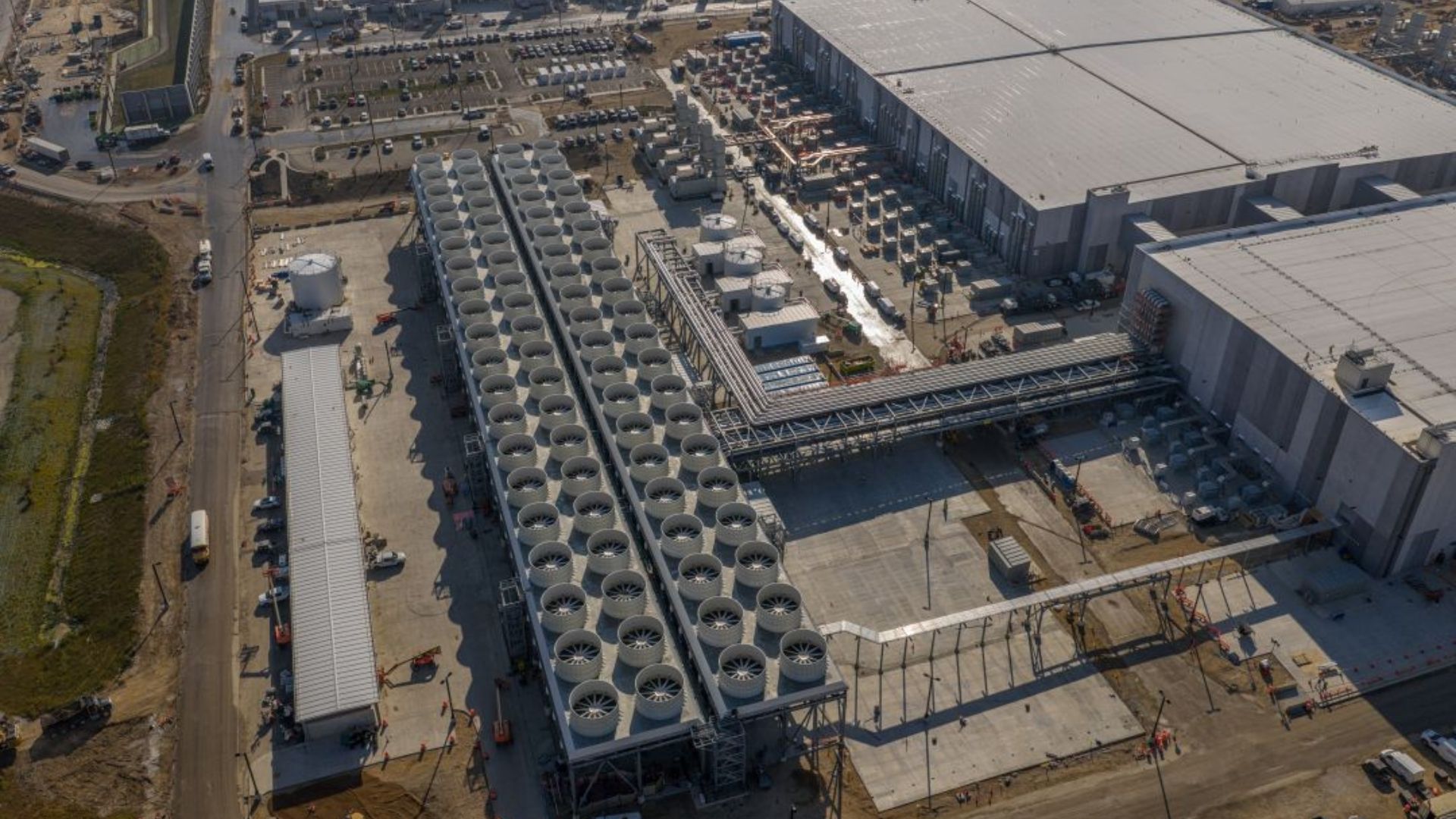
The purchase places Anthropic alongside other AI developers that have turned to on-site gas generation to bring computing facilities online without waiting for conventional grid connections. Elon Musk’s xAI recently installed eight converted General Electric jet turbines at a Mississippi data center, each capable of producing up to 50 megawatts for a potential combined output of 400 megawatts. That deployment has drawn environmental scrutiny, with the Southern Environmental Law Center challenging the site’s emissions permits.
OpenAI has taken a similar route for its first Stargate data center in Abilene, Texas. Crusoe, the company developing the facility, acquired 29 GE Vernova LM2500XPRESS gas turbines rated at 34 megawatts each, for a combined potential output of 986 megawatts. Anthropic’s approach differs in that it is absorbing an existing order rather than placing a new one, securing generators that were already in the manufacturing pipeline.
Musk’s companies have also moved deeper into equipment production. In August, it emerged that the company was bringing turbine-blade and vane manufacturing in-house, with Musk identifying components production as a major constraint on generator deliveries; some turbine blades reportedly take 60 to 90 weeks to manufacture. Earlier, in July, SpaceX acquired APR Energy, whose fleet of trailer-mounted gas and diesel generators can produce more than 1 gigawatt.
Environmental costs accompany the shortcut
The environmental implications of relying on gas-fired generators have drawn criticism. Shakeel Hashim, founder of ReadTransformer, described the generators as environmentally harmful in a social media comment on Anthropic’s purchase. His reaction highlights an issue Anthropic will face as it expands its power infrastructure: securing electricity quickly does not eliminate the environmental costs of generating it.
The power shortage has also pushed AI companies toward used and refurbished turbines, including retired jet engines converted to generate electricity. Those alternatives carry their own limits, including maintenance requirements, remaining service life and suitability for continuous operations. For Anthropic, taking over OnePWR’s Caterpillar orders may provide a way around some of those hurdles, and the agreement’s inclusion of installation capabilities means the company is securing more than the generators themselves.