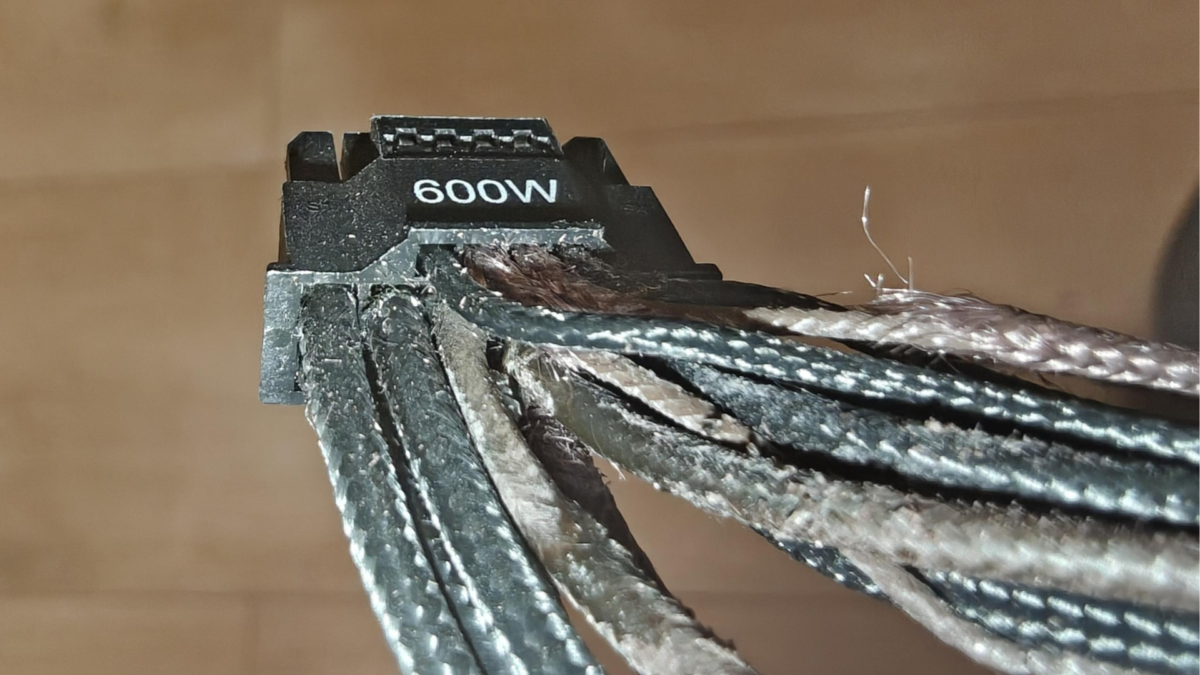
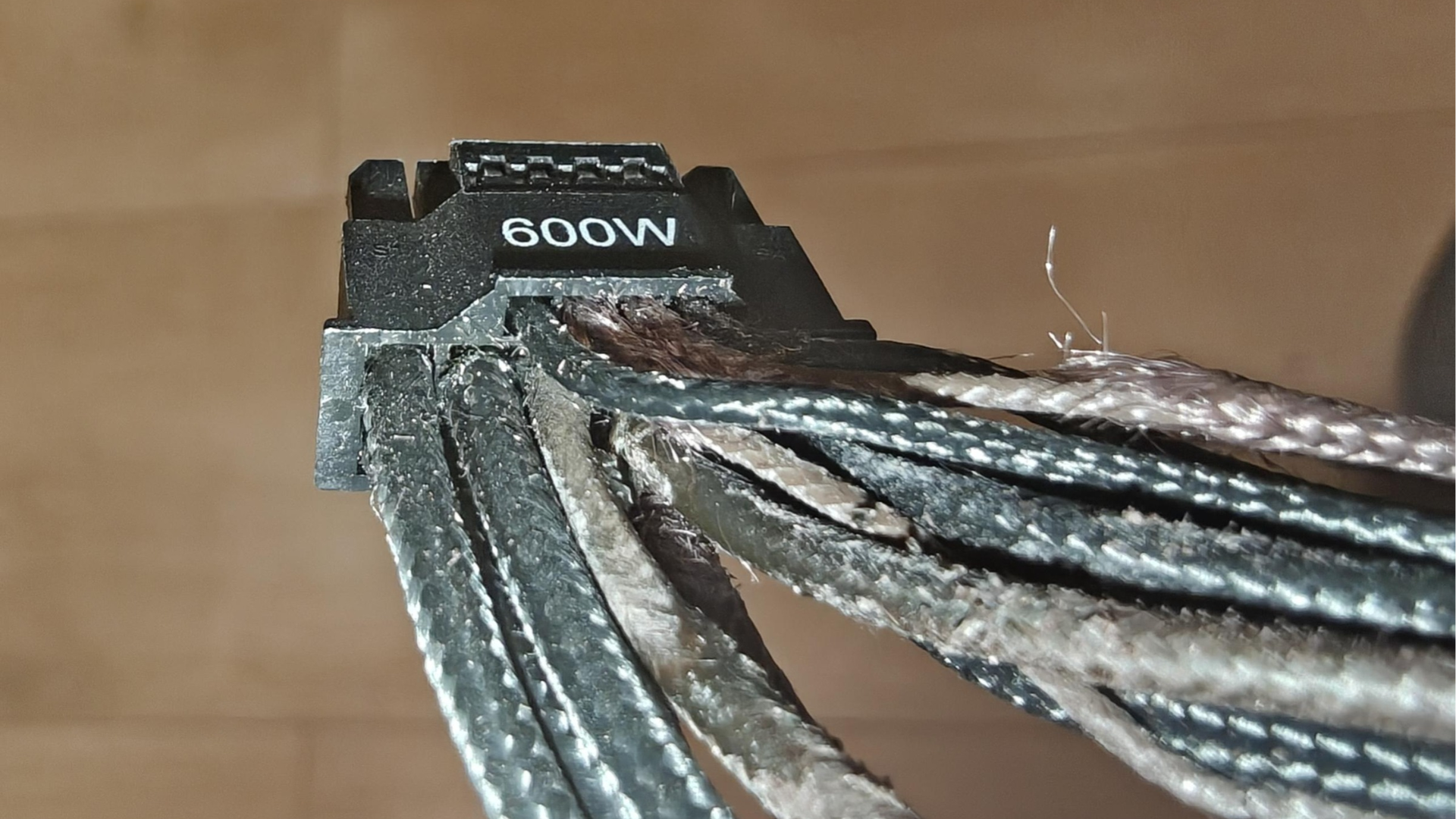
Two Nvidia RTX PRO 6000 Blackwell Workstation GPUs have raised fresh concerns about the 12V-2×6 power connector after a user reported damaged cable sleeving despite running the cards below their maximum rated power. The RTX PRO 6000 cables in question showed frayed braided sleeving, stiff sections, and material that peeled away easily, according to a Reddit post from u/Doomslayer606 on r/PcBuild.
The user, who titled the post “Did I just save my RTX PRO 6000 GPUs from melting?”, asked whether the damage was normal wear, a manufacturing defect, or a sign of overheating. Commenters were quick to conclude that heat was the likely culprit, noting that the stiff, cracked, and peeling sleeves appeared on only some of the wires rather than across the entire cable.
Power Limited to 500W, Yet Damage Appeared
The poster confirmed that both GPUs had been lowered to a 500W power limit, below the 600W maximum draw for the RTX PRO 6000. When another commenter asked why the limit was not set even lower, to 300W, the poster explained that doing so would cut performance by up to 50 percent and that meeting deadlines required the higher power level.
In theory, a 500W load should not be enough to significantly heat 16 AWG wire. Each positive pin would carry roughly 6.94 A, a current level that would not normally cause excessive warming. The problem, according to the discussion, is that current does not always flow evenly across all pins in a 12V-2×6 connector.
Because only two pins on each cable showed signs of melting, the likely explanation is that those pins repeatedly received high-current spikes. That uneven distribution can cause localized heat buildup even when the total wattage remains within the cable’s nominal rating. The result is damage concentrated on a small number of wires rather than uniform warming across the whole connector.
Why Uneven Current Distribution Matters
The 12V-2×6 connector has become a familiar flashpoint in high-power GPU discussions. While the standard is designed to carry substantial current, real-world conditions can push individual pins beyond their share. When one or two pins take on more current than the rest, they can heat up faster and degrade the surrounding insulation or sleeving.
In this case, the affected cables were still functioning, and the GPUs were reportedly safe. But the visible damage—stiff, cracked, and easily peeling sleeves—is consistent with thermal stress. The user’s decision to inspect and ask about the cables may have prevented a more serious failure.
Suggested Fixes Focus on Monitoring and Balancing
Commenters offered several aftermarket solutions aimed at preventing similar problems. One suggestion was the Corsair ThermalProtect 12V-2×6 cable, which is designed to detect overheating. Others pointed to devices such as the Thermal Grizzly WireView Pro II or the Aqua Computing AMPINEL, both of which provide active current balancing to keep any single wire from carrying too much load.
More elaborate DIY approaches have also emerged. One recent project involved a custom power distributor that splits the 12 pins into two 8-pin cables through a custom-designed PCB, reportedly lowering cable temperatures significantly. Another modder took a more extreme route, soldering thick cables directly to the power pins of an RTX 5090.
Such workarounds highlight a broader frustration: consumers should not need extra hardware or modifications to keep a premium graphics card from damaging its own power connection. GPUs have grown more power-hungry, yet the trend has been toward fewer wires of the same thickness rather than more robust cabling.
Multiple 8-pin connectors can be cumbersome and messy, which helps explain the push toward the smaller 12V-2×6 standard. But the recurring reports of heat damage suggest that the current approach may be reaching its limits. A connector built specifically for high-power GPUs, with thicker pins and thicker wires, might be a more reliable path forward than asking users to monitor, balance, or re-engineer their cables after the fact.