
Warp Sciences raises $215M in Series A funding to build automated chemistry labs in the United States, the company announced Thursday as it emerged from stealth. The startup, led by former OpenAI science chief Kevin Weil, aims to use artificial intelligence and robotics to speed up a costly and time-consuming phase of drug development.
Lightspeed Venture Partners led the round, which valued Warp at $865 million post-money. IVP, Premji Invest, Lux Capital, and Mayfield also participated, alongside angel investors including OpenAI CFO Sarah Friar, Coinbase CEO Brian Armstrong, LinkedIn co-founder Reid Hoffman, and Palantir CTO Shyam Sankar.
Targeting lead optimization

Warp is not pursuing drug discovery itself. Instead, it is building a contract research organization focused on lead optimization—the stage after researchers identify a promising molecule, when they must create and test hundreds or thousands of variants to improve potency, reduce side effects, and refine other properties before human trials can begin.
Much of this labor-intensive work has historically been outsourced to Chinese firms such as WuXi AppTec, which offer lower costs and faster turnaround. Warp’s pitch is to bring that work back to the United States by combining experienced chemists with AI models and robotic automation. The company’s initial facility will be in South San Francisco, and its first service will produce analogs of promising molecules for lead optimization.
Humans first, automation later
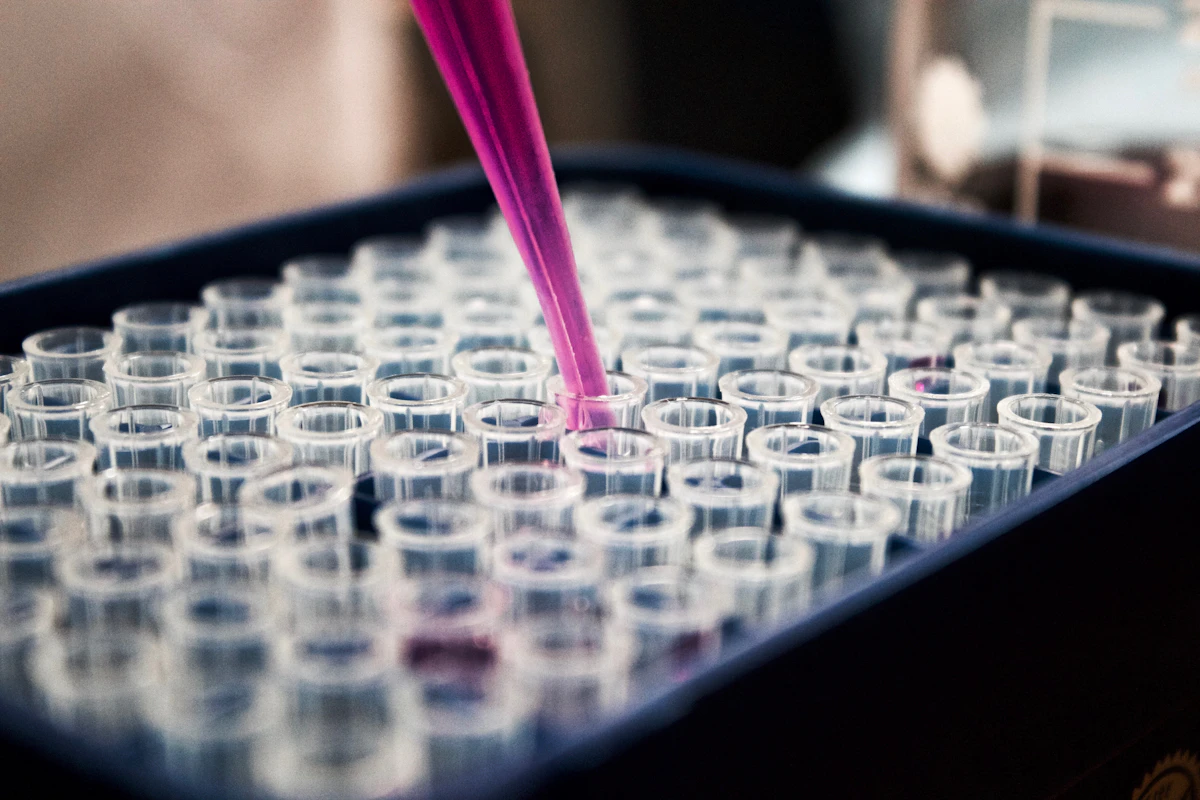
On day one, experienced chemists will perform most synthesis by hand, according to Sol Reisberg, Warp’s co-founder and chief scientific officer. Automation will be introduced gradually. Chemists wearing cameras and pressure-sensing gloves will generate data that trains Warp’s AI models, which will eventually guide robotic systems to perform routine lab tasks.
Weil has described the process as a feedback loop in which the lab improves the AI and the AI improves the lab. The goal is to run experiments around the clock, generating real-world data that Weil argues is missing from current AI models for science. He has noted that while AI has transformed software engineering and mathematics, the physical sciences remain experimentally driven and require direct exposure to lab results to advance.
Geopolitical concerns
Warp’s launch comes amid growing unease in Washington and the pharmaceutical industry about reliance on Chinese research partners. In June, the Pentagon added WuXi AppTec to a list of companies allegedly linked to China’s military, though a federal judge blocked the designation in August after WuXi challenged it. The episode underscored concerns about intellectual property protection and supply chain vulnerability.
Weil has framed Warp’s mission in explicitly patriotic terms, writing that the company does not want to lose the pharmaceutical industry to China the way it lost solar, drones, and manufacturing. Reisberg, who previously worked with overseas chemistry partners, has said the new venture aims to offer US-based services without the price premium typically charged by domestic boutique CROs.
Founding team and next steps
Weil is serving as CEO. His co-founders bring a mix of AI research and drug discovery experience. Manohar Paluri, a former vice president at Meta’s Superintelligence Labs and co-founder of Facebook AI Research, is the chief technology officer. DJ Patil, the White House’s first chief data scientist, is the chief operating officer. Solomon Reisberg, formerly of Terremoto Biosciences, rounds out the founding team as chief scientific officer.
The company has approximately 20 employees and has already acquired robotic arms and AI chips. Warp faces a significant commercial challenge: matching the price and speed of established overseas laboratories. US contract research organizations typically charge three to five times as much per compound as offshore competitors, according to Reisberg. Warp plans to compete by charging per compound delivered rather than by hours worked, but whether that model proves viable will depend on how effectively its automation strategy reduces costs over time.
For now, the company has substantial runway and a clear thesis: that the next frontier for AI is not just in software, but in the physical lab. Whether that thesis translates into faster, cheaper drug development remains to be proven.