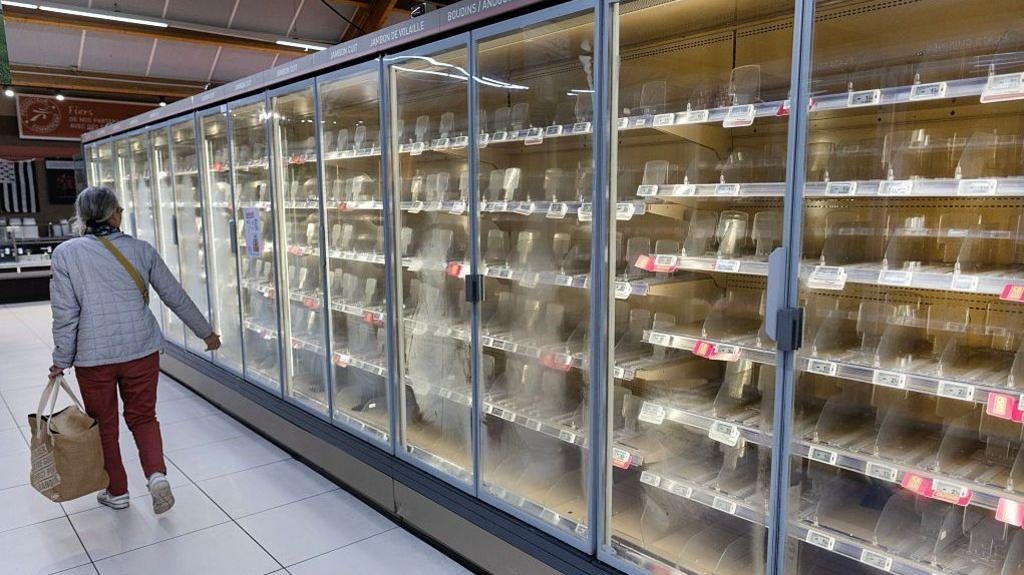
France has formally accused Iran’s Islamic Revolutionary Guard Corps of carrying out a supermarket freezer cyber-attack that disrupted refrigeration systems in hundreds of stores across the country last month, according to Foreign Minister Jean-Noël Barrot. The operation, which raised temperatures in fridges and freezers, spoiled fresh and frozen food valued at millions of euros.
Barrot described the incident as “unprecedented in both its scale and its level of aggression” and said France would pursue sanctions at the European level against everyone responsible. The IRGC has not yet responded to the allegation.
How the attack unfolded

On 11 October, hackers took control of software that regulates the temperatures of refrigeration units used by many French supermarkets. The software, supplied by Danish engineering firm Danfoss, allows retailers to manage cold units remotely. In some stores, temperatures reportedly climbed to 50C (120F) overnight.
More than 100 Coopérative U supermarkets were affected, along with 180 stores from Intermarché and its Netto brand. Other major retailers, including Carrefour, Monoprix and E.Leclerc, were also hit. The following week, dozens of supermarkets in seven other European countries experienced a similar cyber-attack targeting fridges and freezers, though it remains unclear whether the two waves are connected. Belgium and Luxembourg reported affected stores, while a smaller number were hit in Sweden, Ireland, the Netherlands, Estonia and Finland.
Judicial investigation targets IRGC cyber unit

Separately on Monday, Paris prosecutor Laure Beccuau announced that an investigation had been opened into the head of an offensive cyber unit linked to the IRGC, as well as his two deputies. She identified the unit as Shahid Kaveh and said it is affiliated with the IRGC’s electronic and cyber centre.
The French government has not disclosed how it reached the conclusion that Iran was responsible. Attribution in cyber-attacks is notoriously difficult because hackers can conceal their locations. Earlier in the week, two Russian-aligned hacktivists claimed responsibility for the attacks, but few experts found the claim credible. Since the freezer breaches, speculation had focused on several possible hacking groups, with Iran appearing on the list of suspects.
The scale of the disruption—spanning hundreds of stores and two separate waves—has drawn attention to the vulnerability of connected refrigeration systems used widely in the food retail sector. French authorities have not commented on the potential motive behind the operation, and the IRGC has remained silent on the accusations.