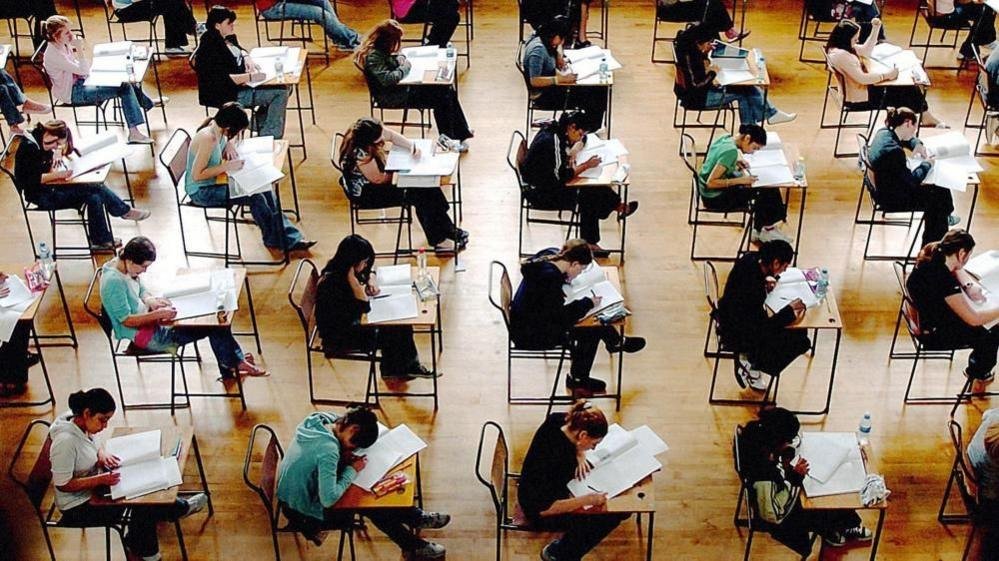
Secondary schools in England are being instructed to stop starting GCSE courses before Year 10, as part of a government effort to give the first three years of secondary education a clearer identity. The Department for Education (DfE) announced on Sunday that Key Stage 3 should become a more distinct phase, with less emphasis on exam preparation and more on a broader, more engaging curriculum. The move directly targets early GCSE teaching, which the government says has narrowed the experience of pupils in Years 7 to 9.
A Shift Away From Exam Pressure

Education Secretary Lucy Powell said the early years of secondary school should be a time when children are excited to attend and can explore the specialist teaching available to them. She argued that protecting Key Stage 3 would allow more time for deeper understanding and a richer experience that helps young people discover their passions. The DfE said the changes respond to two reviews showing that pupils become increasingly disengaged in their early teenage years, which affects attendance and achievement.
The announcement marks a reversal of the direction set by the previous Conservative government. Former Education Secretary Michael Gove prioritised English, maths and science, raised grade boundaries, made exams harder, limited resits and made GCSEs linear so they are taken at the end of Year 11. According to the DfE, those reforms led teachers to begin exam preparation earlier, often at the expense of parts of subjects that are not examined.
Absence and Curriculum Narrowing
The department pointed to persistent absence nearly doubling between Year 6 and Year 9, rising from 13% to 15%. It also cited a recent survey commissioned by the International Baccalaureate in which 57% of teachers said GCSE preparation was the leading influence on the Key Stage 3 curriculum. Powell said the pressures of GCSEs and an overcrowded curriculum meant too many children were receiving a narrower offer and being rushed towards exams without grasping the fundamentals.
A 2015 Ofsted report had already suggested that Key Stage 3 risked becoming “wasted years,” reflecting concerns at the time that pupils aged 11 to 14 lacked a clear motivation to work hard. The government now says its reforms made each exam more significant, causing teachers to focus lessons only on what could be tested.
New Curriculum and Political Reaction
The DfE has promised a “more engaging offer” in subjects such as drama, PE, music and languages, which have seen declining student numbers, when it publishes the new curriculum later this year. Responding to the announcement, Liberal Democrat education spokeswoman Munira Wilson said school is “more than drilling kids for exams” but warned against micromanaging teachers. She added that a new curriculum alone would not bring children back into classrooms, noting that many pupils miss school because of anxiety and unmet mental health needs, and that schools cannot offer more drama, music and languages without the teachers to deliver them.