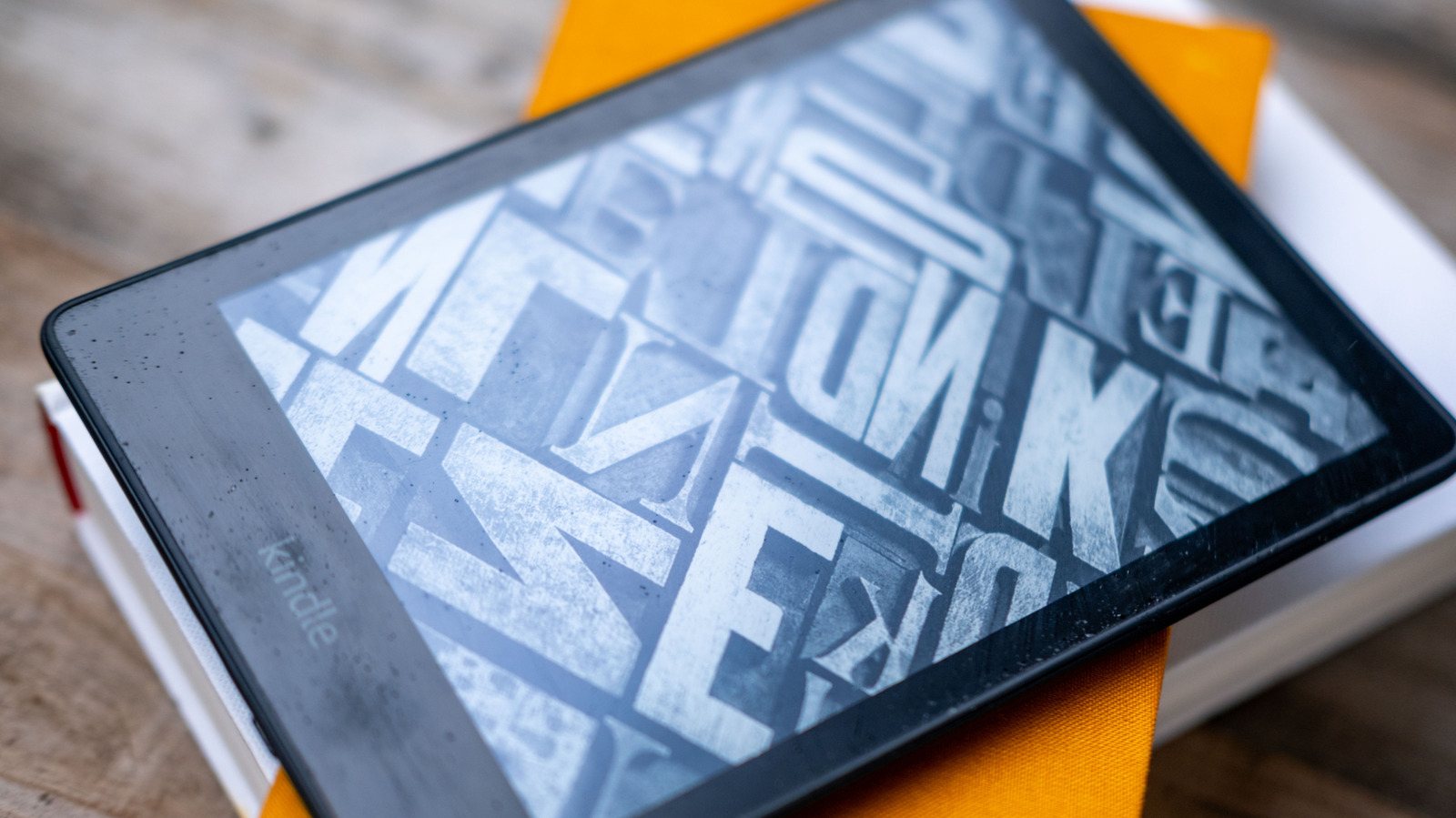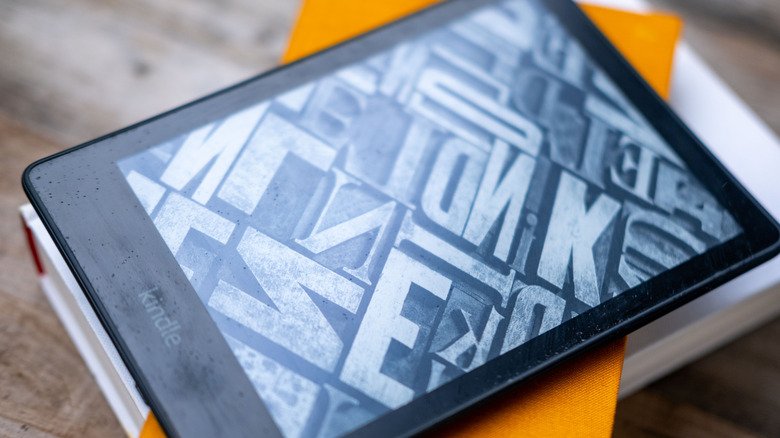
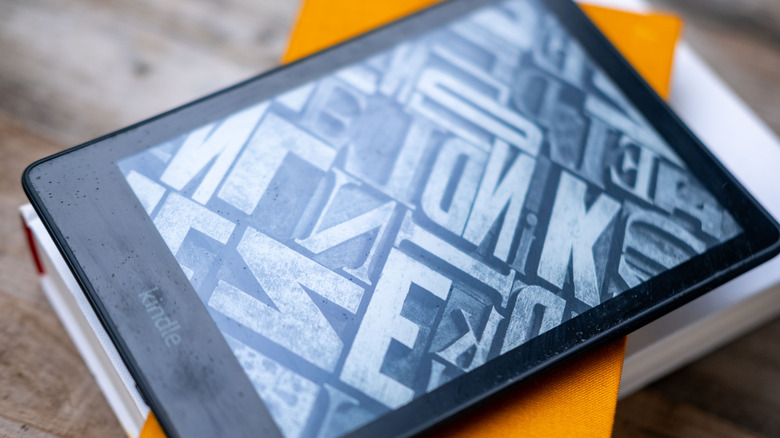
Digital ink in ereaders works through a clever interplay of electromagnetism and microcapsules, allowing an to stay on screen without drawing power. That is why an e-ink tablet can display a page for days or even weeks on a single charge, unlike an LCD or OLED tablet that drains in days. The technology behind this feat is surprisingly simple in principle, though the precise chemistry and electronics are more complex.
How Microcapsules Create an
Each pixel on an e-ink screen is represented by a tiny microcapsule, about the diameter of a human hair. Inside these capsules are charged particles. When the ereader applies a brief positive or negative electrical current, particles are forced to rise to the top or sink to the bottom. The particles that end up at the surface determine what your eye sees. Black-and-white screens typically use two types of particles, while color panels incorporate several different particle types to produce a range of hues.
The crucial difference from conventional displays is what happens after the charge is applied. The particles stay in place, and no further electricity is needed until the changes. LCD and OLED panels, by contrast, constantly consume power to refresh the display. This is why an ereader can last for weeks when you are only turning a page every minute or so.
Why E-Ink Is Easier on the Eyes
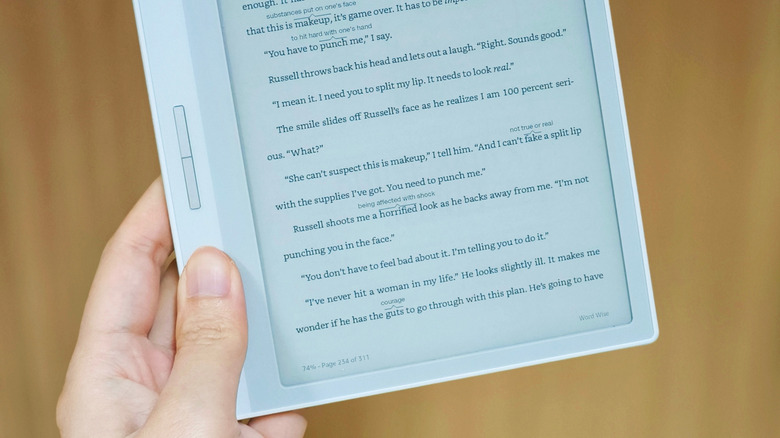
E-ink screens rely on ambient light for visibility, just like paper. Newer models include built-in lamps, but these lamps illuminate the e-ink layer rather than shining directly into your eyes. In a well-lit room, you can turn the lamp off entirely and still read clearly. That paper-like quality is a major reason many people find ereaders more comfortable than backlit tablets.
The Physical Limits of E-Ink

If e-ink is so efficient and comfortable, why isn’t it everywhere? The biggest obstacle is refresh rate. Video content typically runs at 24, 30, or 60 frames per second, which demands equally fast screen updates. Moving physical particles at those speeds is difficult. While some e-ink tablets can technically play YouTube videos, the motion is not smooth on most of them. Only recently have 60Hz e-ink displays become possible.
Color is another limitation. The best e-ink panels from the E Ink company top out at 4,096 colors, whereas even the cheapest LCD manages 16.7 million. HDR-capable LCDs can reach billions. That makes color e-ink fine for comics and graphic novels but unsuitable for photorealism or anything approaching the full spectrum of human vision.
Technology continues to evolve, so it is conceivable that an e-ink tablet could one day replace an iPad for some users. But the laws of physics favor LCD and OLED for fast-moving, color-rich content. And if those display types ever became dramatically more power-efficient, the case for e-ink would shrink further. For now, digital ink in ereaders remains a specialized tool—excellent for reading, limited for everything else.