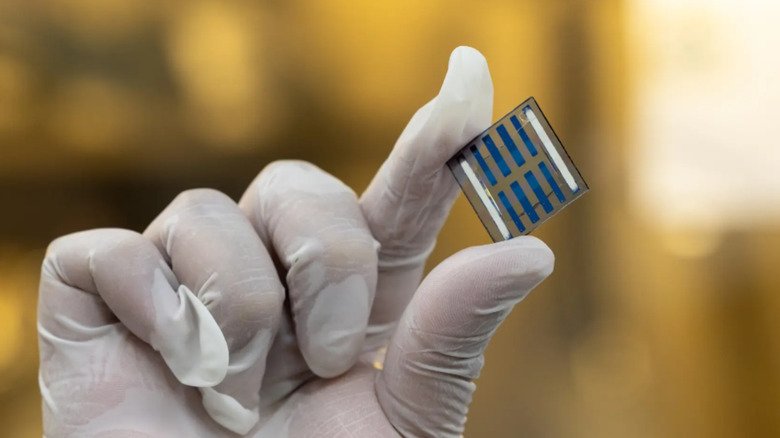
A solar panel efficiency breakthrough at the Institute of Photonic Sciences (ICFO) has shown that one of the oldest ceilings in photovoltaics may be more porous than assumed. The Barcelona researchers report that by stopping solar cells from leaking energy as light, they moved a test device closer to a theoretical efficiency of roughly 43 percent, a level well above the long-standing 33.16 percent Shockley-Queisser limit.
Why Light Leakage Matters
Most efforts to improve solar cells have concentrated on heat. Sunlight that is not converted into electricity often warms the panel instead, and researchers have tried several routes to reduce that thermal toll, including swapping the semiconductor material. The light side of the problem has received less attention.
When a solar cell absorbs sunlight, some of the energy is re-emitted as light. That escape represents a separate loss channel, known as Boltzmann loss. The ICFO team focused on the geometry of that emission: sunlight arrives within a narrow range of angles, but the light a cell gives off can radiate across a much wider cone. The mismatch between the two limits how much of the incoming energy can be captured.
A Silver Electrode and an Optical Cavity
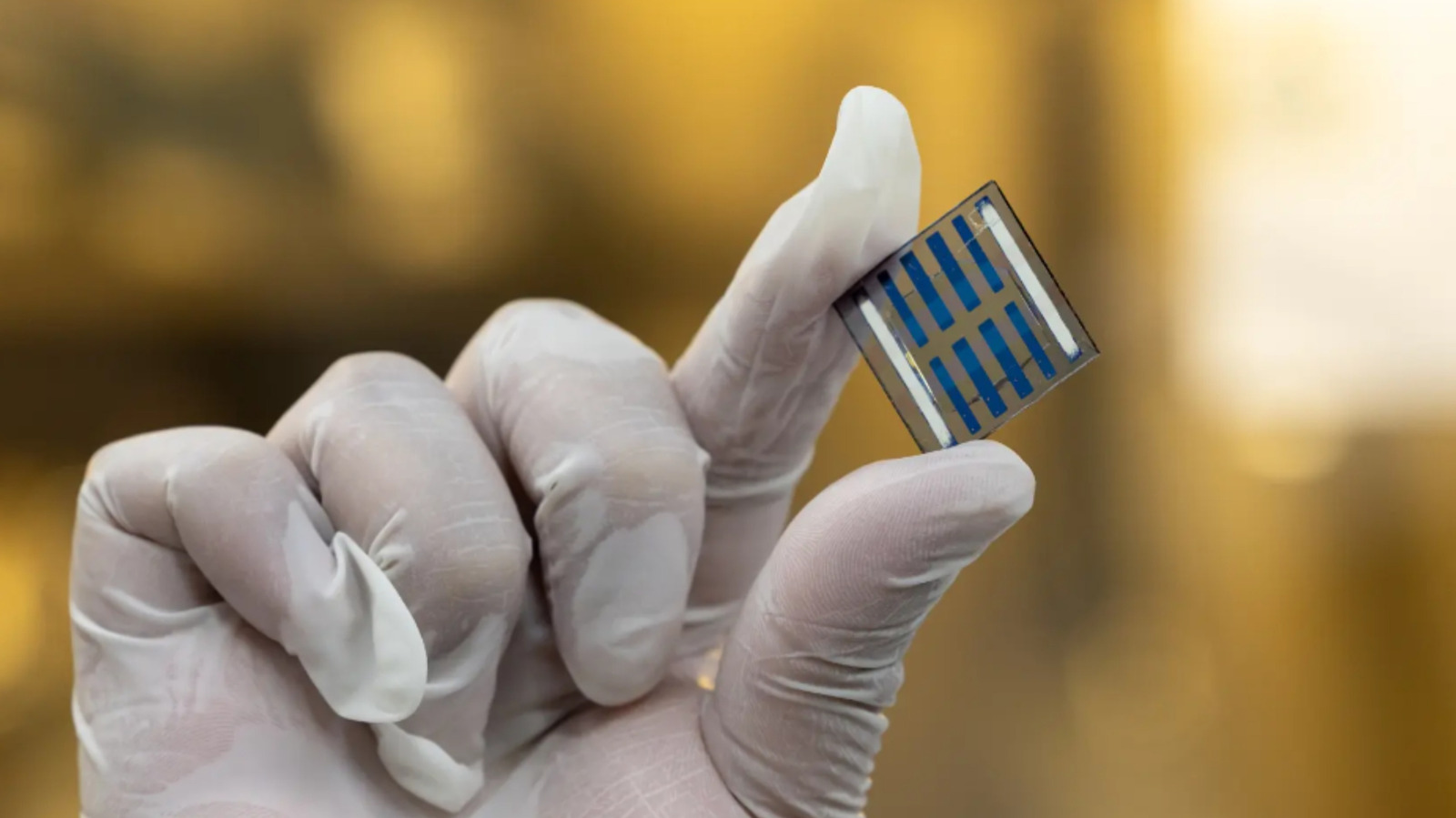
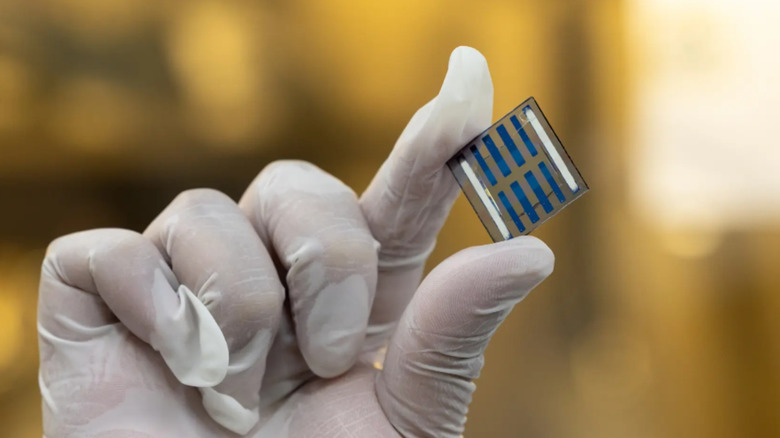
The experiment did not use the crystalline silicon found in most commercial panels. Instead, the researchers built an organic solar cell and replaced its indium tin oxide front electrode with a thin silver layer. They then converted the cell into an optical cavity.
The result was a device that continued to admit sunlight while releasing less light at wide angles. In the paper, published in Energy & Environmental Science, the team reports an efficiency improvement of about 0.85 percent. That figure is small in isolation, but it serves as experimental evidence that the emission cone can be narrowed and that the theoretical ceiling is not fixed.
From a Fraction of a Point to 43 Percent
Francisco Bernal Texca, the study’s first author, explained the underlying logic in a press release. If the emission cone can be tightened so that it better matches the absorption cone of incoming sunlight, he said, solar cells should in principle be able to approach efficiencies near 43 percent. The team’s experiment is a demonstration of that principle rather than a finished product.
Any effect on consumer panels would arrive gradually. Panels installed on homes and balconies typically operate at 20 to 23 percent efficiency, so a jump toward the low 40s would represent a substantial change. But the research is a laboratory result, and the article offers no timeline for commercial application.
Not the Only Recent Advance
The ICFO work is one of several developments in solar technology this year. In July, the Chinese manufacturer LONGi introduced a solar cell with 35.5 percent efficiency and said the photovoltaic cell it uses is theoretically capable of reaching 43 percent as well.
The ICFO team also suggests that its approach is not limited to the organic material used in the experiment. The principle is expected to apply across different kinds of photovoltaic cells, which could matter for efforts to move the technique beyond specialized laboratory materials.
What the Result Means
The Shockley-Queisser limit describes the maximum efficiency of a single-junction solar cell under standard assumptions, and it has long served as a reference point for the field. The ICFO experiment does not demolish that limit so much as show that the loss mechanisms behind it can be managed.
For now, the practical takeaway is measured. A gain of less than one percentage point in a laboratory cell will not change the economics of rooftop solar on its own. But it identifies a loss channel that had been harder to address than heat and offers a physical demonstration that the emission side of the equation can be manipulated. If the principle holds as it moves to other materials and designs, the efficiency gap between today’s panels and the theoretical maximum could narrow.