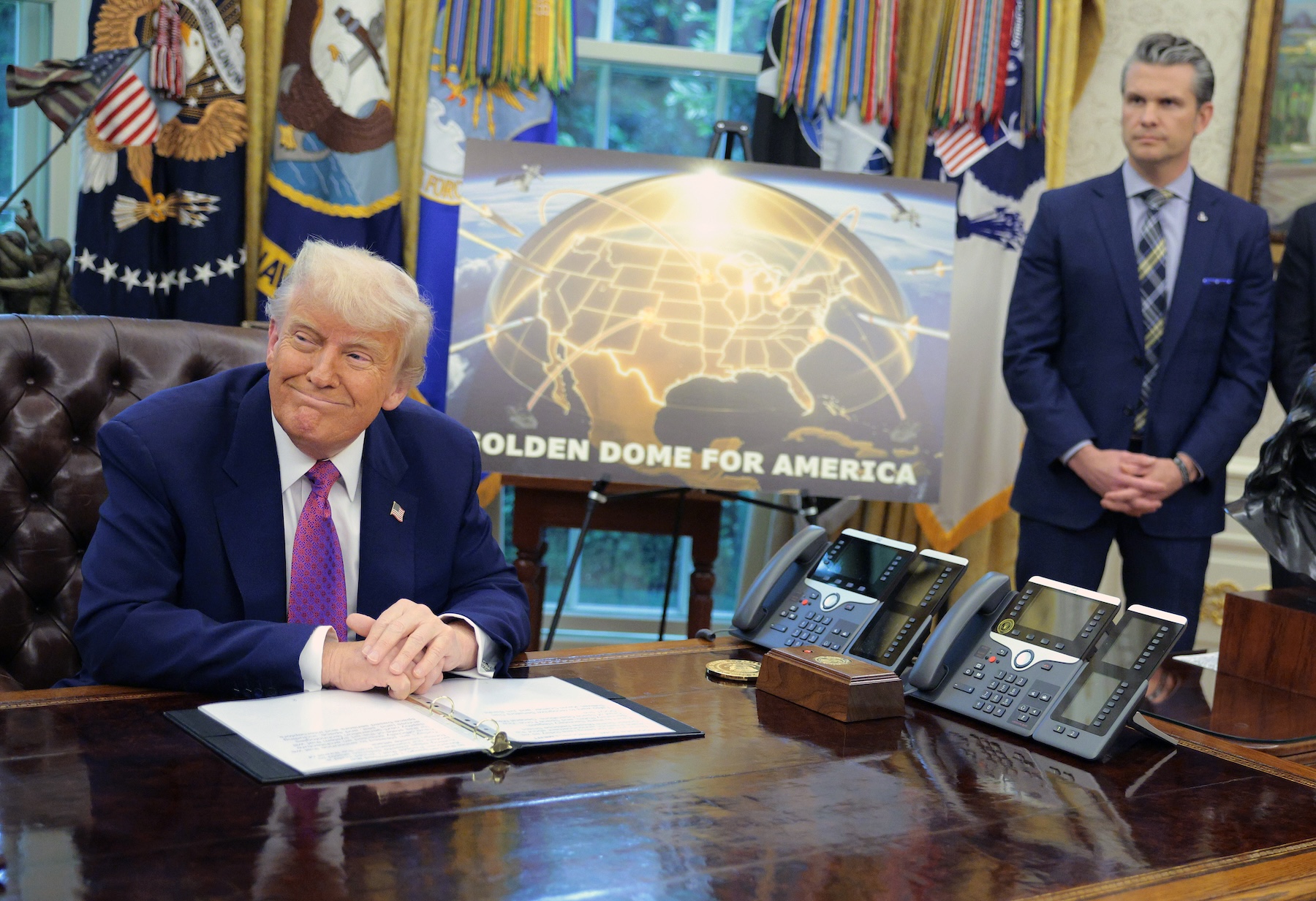
When the new Congress convenes in January with Democratic majorities, President Donald Trump’s Golden Dome missile shield will encounter a very different legislative landscape. The program, announced 22 months ago, has so far avoided serious congressional examination. That will change, according to half a dozen current and former officials in government and industry who spoke about the coming shift.
Republican Exits Weaken Program’s Capitol Hill Support
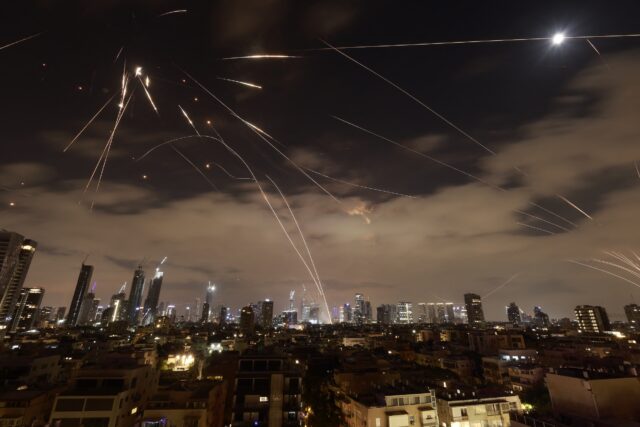
Two of Golden Dome’s most vocal congressional supporters are among the Republicans leaving office. Rep. Jeff Crank of Colorado, co-chair of the all-Republican Golden Dome Caucus, and Rep. Scott DesJarlais of Tennessee, who chairs the House subcommittee overseeing the program, either lost reelection bids or chose not to run in the 2026 midterms. Seven House members of that caucus are departing.
On the Democratic side, Rep. Scott Moulton of Massachusetts, the ranking member on the House Strategic Forces Subcommittee, is retiring. That leaves Rep. John Garamendi of California as the next-senior Democrat, positioning him to become chairman in January. Garamendi has previously described Golden Dome as a massive, extraordinarily expensive, and ultimately inadequate defensive system.
A Program Already in Motion
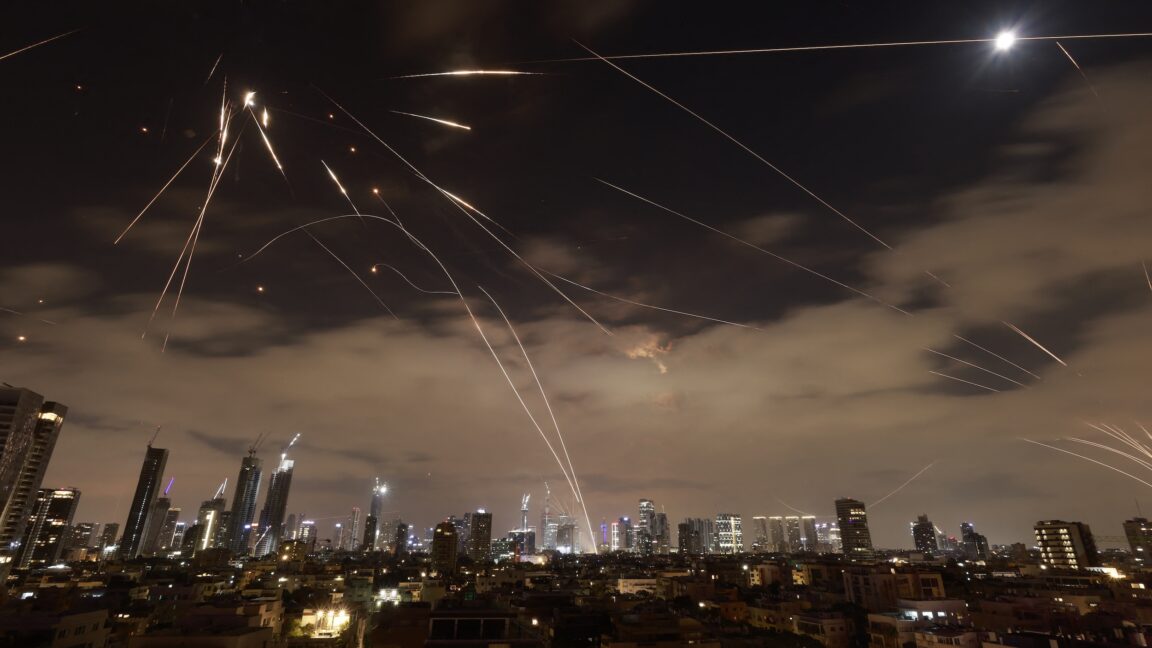
Much of what the administration labels Golden Dome predates Trump’s executive order. Ground-Based Interceptors have been deployed for decades, and the satellites and radars that detect and track missile launches are either operational or were already in development. Under President Biden, the Missile Defense Agency awarded Lockheed Martin a $17 billion contract to build a next-generation interceptor.
Trump’s order consolidated these efforts, accelerated work on new interceptors, and added a new layer of orbiting sensors and Space-Based Interceptors (SBIs) meant to defend the homeland against ballistic missiles, drones, and hypersonic weapons.
The first tranche of funding, about $24 billion, was included in the partisan reconciliation bill known as the One Big Beautiful Bill. That maneuver bypassed the normal bipartisan budgeting process. Sen. Mike Rounds, a South Dakota Republican, said in September that the funding should have been handled on a bipartisan basis.
Cost Estimates Diverge Sharply
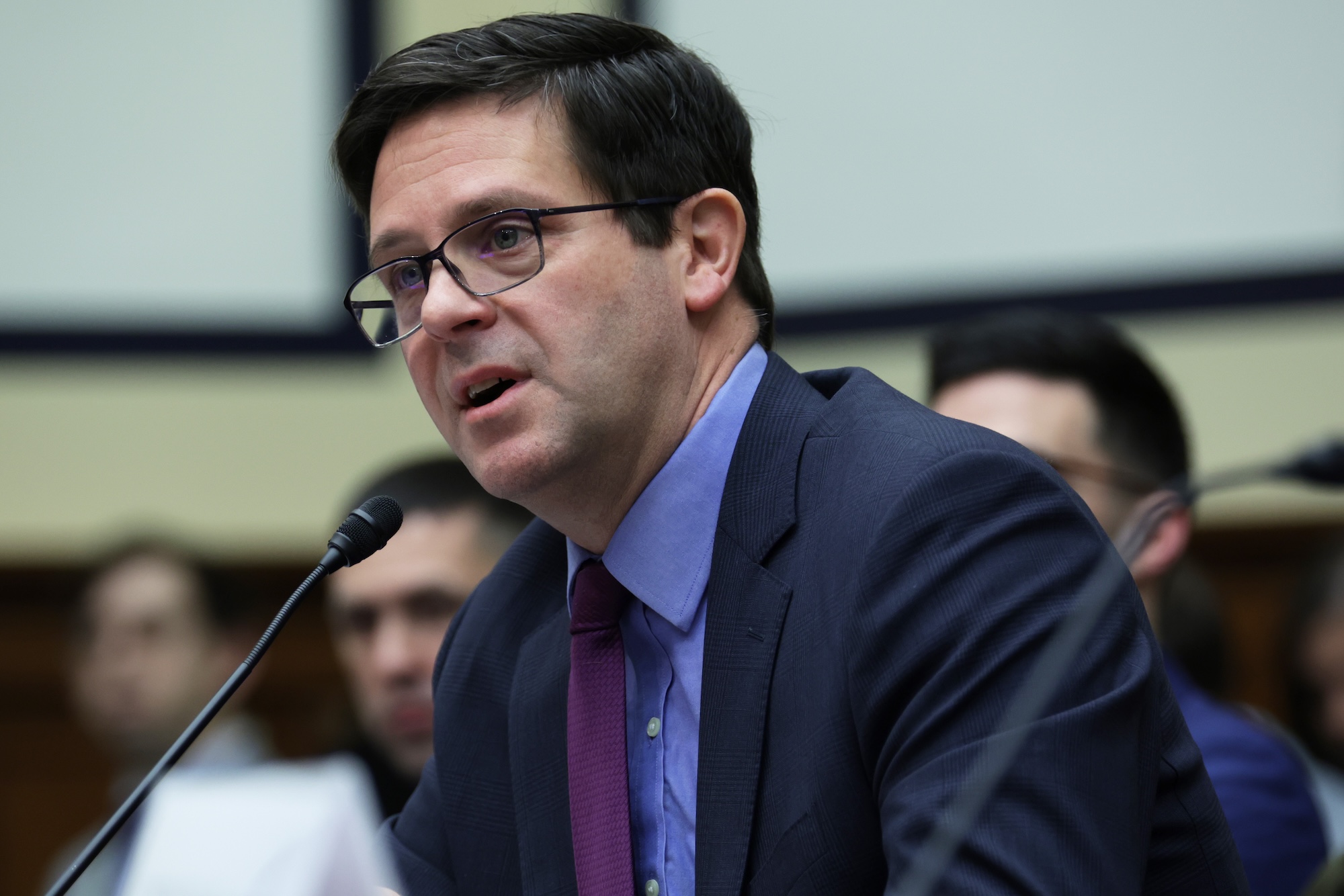
The administration projects Golden Dome will cost $185 billion over ten years. The Congressional Budget Office estimates a system meeting the executive order’s requirements would cost about $1.2 trillion. The American Enterprise Institute has published a range of architectures from roughly a quarter-trillion dollars without SBIs to $3.6 trillion at the high end. Pentagon officials dispute these figures, saying they ignore assumptions about low-cost launches and mass-produced satellite networks.
Funding has already lapsed. The $24 billion was a one-time allocation for fiscal year 2026, which ended October 1. The government is now operating under a continuing resolution that does not include that money. Preliminary fiscal year 2027 bills would provide only a fraction of the more than $17 billion the administration requested for Golden Dome. The administration again placed a significant portion of its $1.5 trillion military budget request into a separate reconciliation package, including $350 billion in supplemental funding that went nowhere in the Republican-controlled Congress and will not advance under Democratic control.
Space-Based Interceptors Face Technical and Political Hurdles
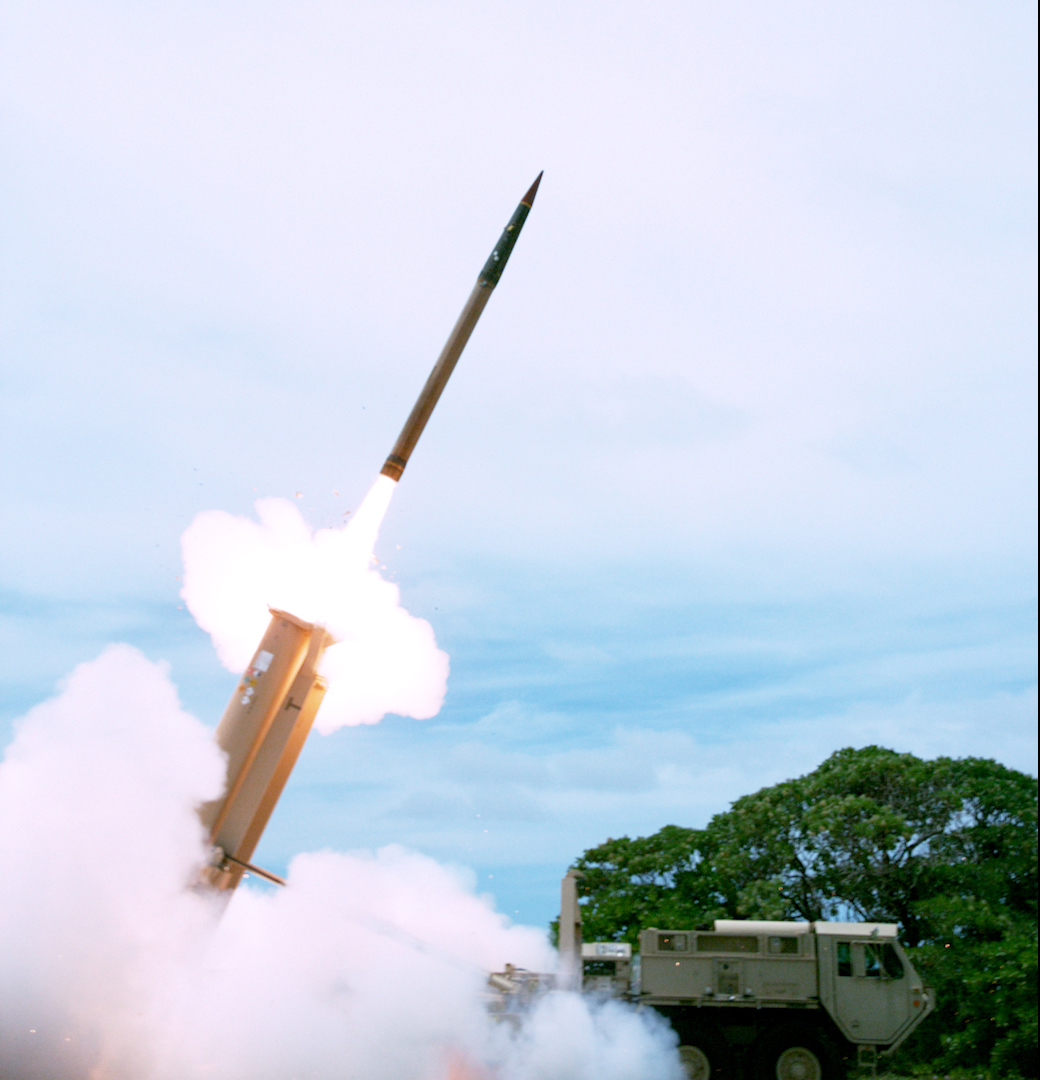
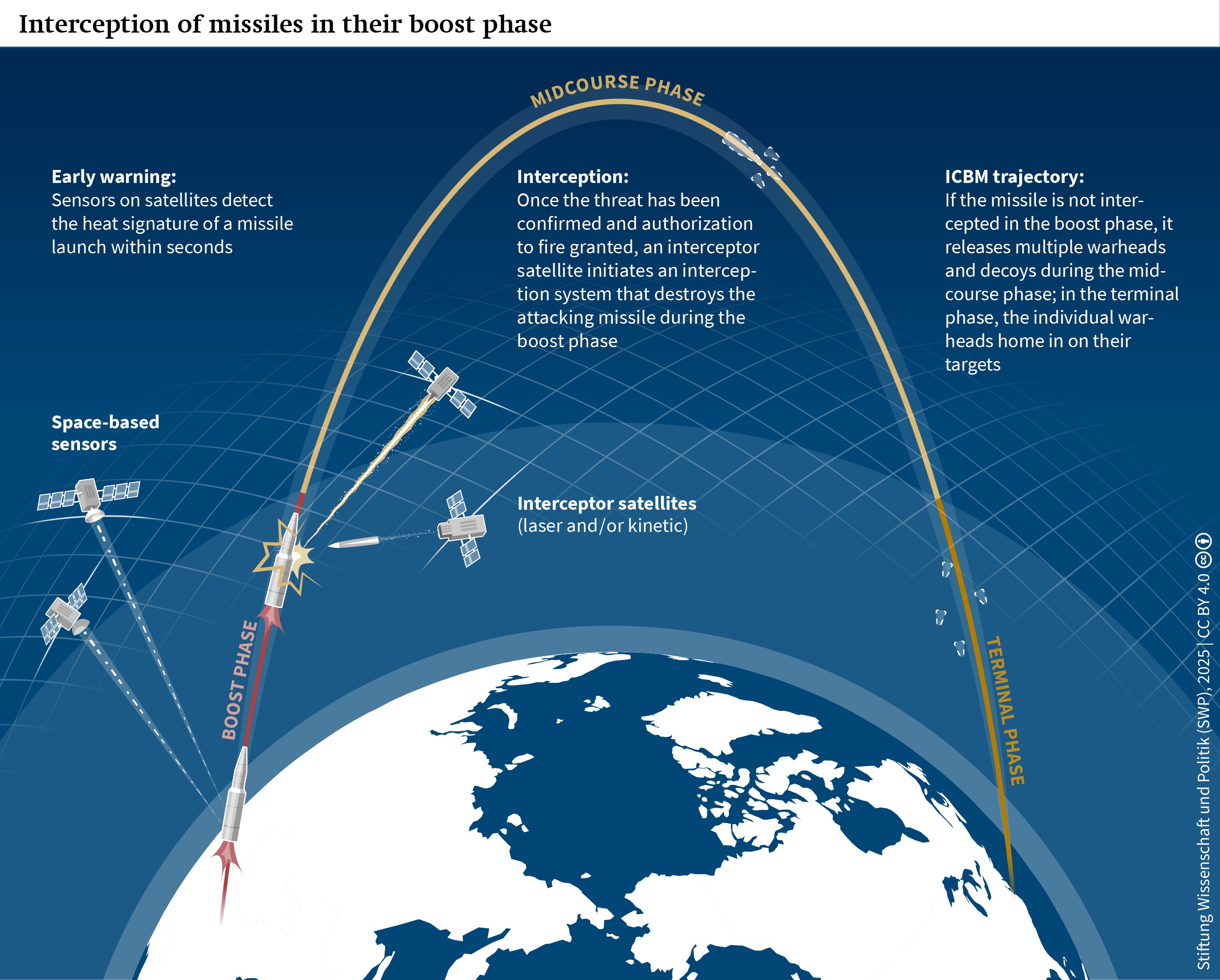
The most ambitious element is the Space-Based Interceptor layer. Hundreds, perhaps thousands, of interceptors would orbit the Earth, waiting to destroy enemy missiles. No SBI has ever been placed in orbit, despite decades of research dating back to the Reagan-era Strategic Defense Initiative.
Sen. Mark Kelly, an Arizona Democrat and former astronaut, has said the cost, physics, and likely reliability do not support a full-scale space-based intercept architecture. He warned that the country could spend more than a trillion dollars on a system that does not work and does not meaningfully improve security.
Boost-phase intercept, which would destroy missiles shortly after launch, presents particular difficulty. An interceptor would have to look down at Earth, distinguishing a target against clouds, cities, land, and water rather than the cold blackness of space. The window for a decision might be less than a minute. A former military space official described the dilemma of automated versus human decision-making, noting that if a human must authorize the shot, that creates a time gap.
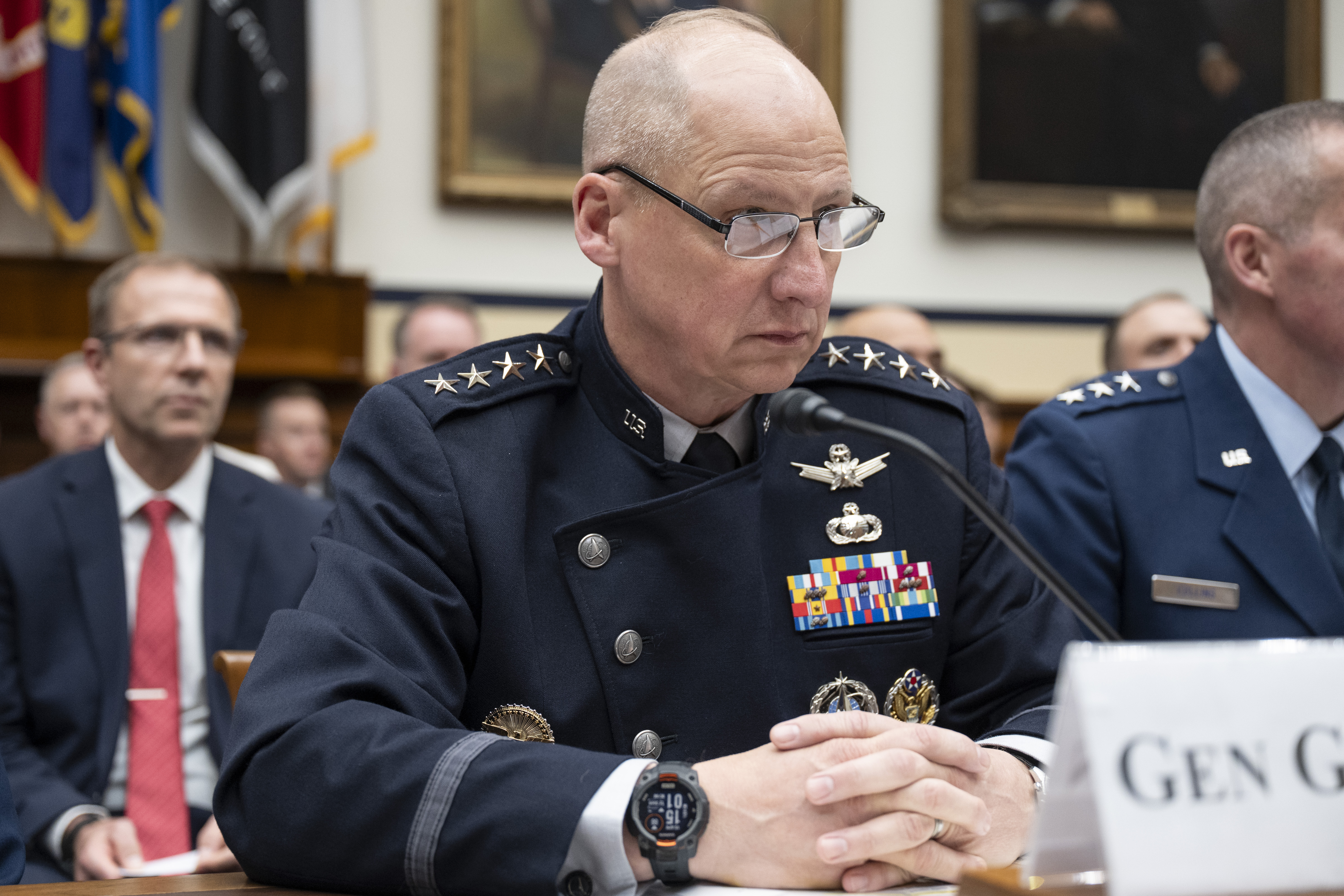
Gen. Michael Guetlein, the Space Force officer leading Golden Dome development, has acknowledged the challenge. He told lawmakers in April that the technology exists but questioned whether it can be done at scale and affordably. He said that if boost-phase intercept from space cannot be made affordable and scalable, it will not go into production because other options exist.
Critics also warn of strategic consequences. Frank Kendall, who served as Air Force secretary under Biden, said such defenses motivate adversaries to build more missiles because buying more is the simplest way to overcome them. Others point to the risks of weaponizing space.
What Survives and What Changes
Military leaders are expected to keep pushing for new missile defense options, citing modern threats from hypersonic weapons, cruise missiles, and drones, as well as the experience of recent conflicts. A former military space official said the effort would benefit from a clearer problem statement about what has changed and why new capabilities are needed.
Industry executives working on Golden Dome expect the program to endure in some form, though likely under a different name. Dylan Taylor, chairman and CEO of Voyager Technologies, which works with Anduril on SBIs, said the name is a brand and that some layers are advanced and functional. He predicted the program would not be discarded wholesale. Tom Karako of the Center for Strategic and International Studies has suggested a name change as one way to depoliticize the effort.
John Plumb, who supervised military space policy under Biden, said any administration would continue to improve missile defenses. He added that it is probably unlikely that SBIs survive the coming cull. A space company executive said Golden Dome is more than SBIs and that bipartisan support exists for the capability, with questions
Peter Beck, founder and CEO of Rocket Lab, said missile defense will remain a priority regardless of who controls Congress or the White House. The question, he said, is what shape and scale the program takes, not whether it survives.