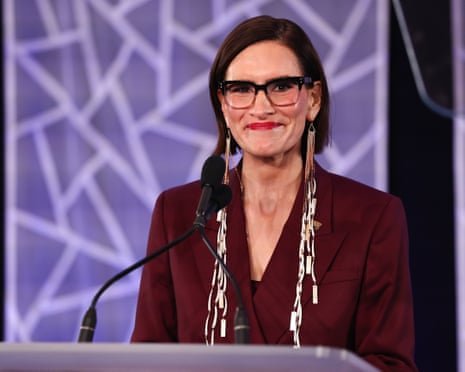
Native American women midterms — The 2026 U.S. midterm elections delivered a wave of milestones for Native American women, with voters sending unprecedented numbers of Indigenous female and non-binary candidates to offices ranging from tribal councils to the U.S. Senate. According to figures from Advance Native Political Leadership and the news outlet ICT, at least 75 Native women, non-binary and Two Spirit candidates won their races nationwide, a result one strategist described as a fundamental shift in community politics.
Historic Firsts at State and National Levels
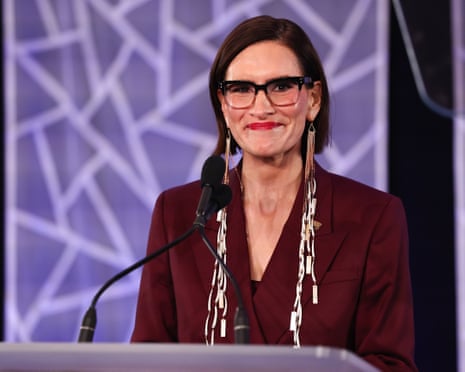
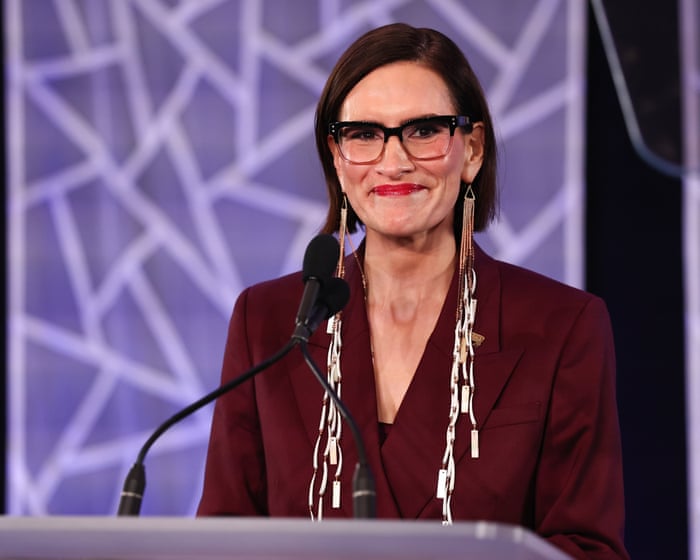
Among the most closely watched outcomes was Peggy Flanagan, a member of the White Earth band of Ojibwe and Minnesota’s lieutenant governor, who won a seat representing her state in the U.S. Senate. Flanagan will become the first Native woman to serve in that chamber when she takes office in January. The Senate has had four Native men represent their states over its 237-year history.
Deb Haaland, a citizen of Laguna Pueblo and former interior secretary under Joe Biden, was elected to lead New Mexico, becoming the first Native American woman governor. In Alaska, Mary Peltola, who is Yup’ik, could join Flanagan as another first Native woman in the Senate, depending on the outcome of her still-undecided race.
At the tribal level, Crystalyne Curley will become the first woman to lead the Navajo Nation, the country’s largest tribal nation by geography, spanning roughly 27,000 square miles across New Mexico, Arizona and Utah. Curley, currently speaker of the Navajo Nation Council and the first woman to hold that position since 2022, said she faced sexist rhetoric during her campaign but called the result a victory for all Navajo women.
In western New York, Tina Abrams was elected to lead the Seneca Nation of Indians, the first woman to do so in the modern history of the state’s largest tribe. In a statement after her win, Abrams said the moment was inspired by generations of strong Seneca women before her and expressed hope that it would inspire those who come after.
A Record Pool of Indigenous Candidates
The election cycle saw a record-setting 363 Indigenous candidates run for local, state and federal offices across the country, with at least 180 of them winning. Among the victors was Claire Valdez, a citizen of Ysleta del Sur Pueblo and a New York Democrat, who will join Sharice Davids in the U.S. House of Representatives. Davids, a member of the Ho-Chunk Nation, was easily re-elected in Kansas to a fifth term.
Jordan James Harvill, a citizen of the Cherokee Nation and strategist with Advance Native Political Leadership, described the outcome as a seismic shift occurring in Native communities.
A Long Road to Political Power
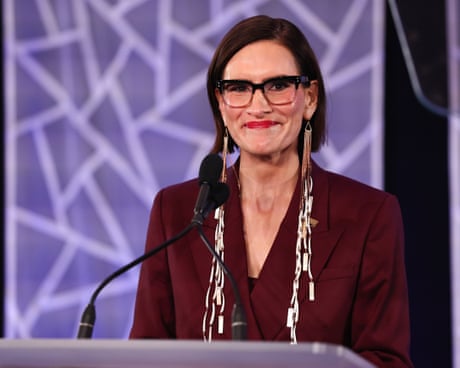
The gains build on decades of slow progress. Native Americans were not permitted to vote across the entire United States until the 1960s. In 1985, Wilma Mankiller became the first woman elected principal chief of the Cherokee Nation. In 2018, Haaland and Davids became the first Native women elected to Congress, part of a wave of progressive freshmen that also included Alexandria Ocasio-Cortez, Ilhan Omar and Rashida Tlaib.
New Mexico state senator Angel Charley, who is Laguna/Zuni/Diné, said seeing Haaland and Davids on the national stage was the first thing that made running for office feel possible for her when she entered state politics in 2024. In 2020, after strong turnout from the Navajo and Hopi reservations helped Biden win Arizona, Haaland was named interior secretary, becoming the first Indigenous cabinet secretary. That same year, Yvette Herrell, who is Cherokee, became the first Republican Native woman elected to Congress and served from 2021 to 2023.
Flanagan, speaking at her victory party in St. Paul, credited Native women for making her Senate run possible. Haaland, in an interview during the final weeks of her campaign, acknowledged the historic nature of her candidacy but said she sometimes forgets the milestone amid the demands of a statewide race. She expressed gratitude for the opportunity and hoped to show that hard work still matters and that anyone can be a leader regardless of background or means.
In 2023, New Mexico became the first and only state to implement an updated Native American Voting Rights Act, giving tribes greater input on polling locations and redistricting.