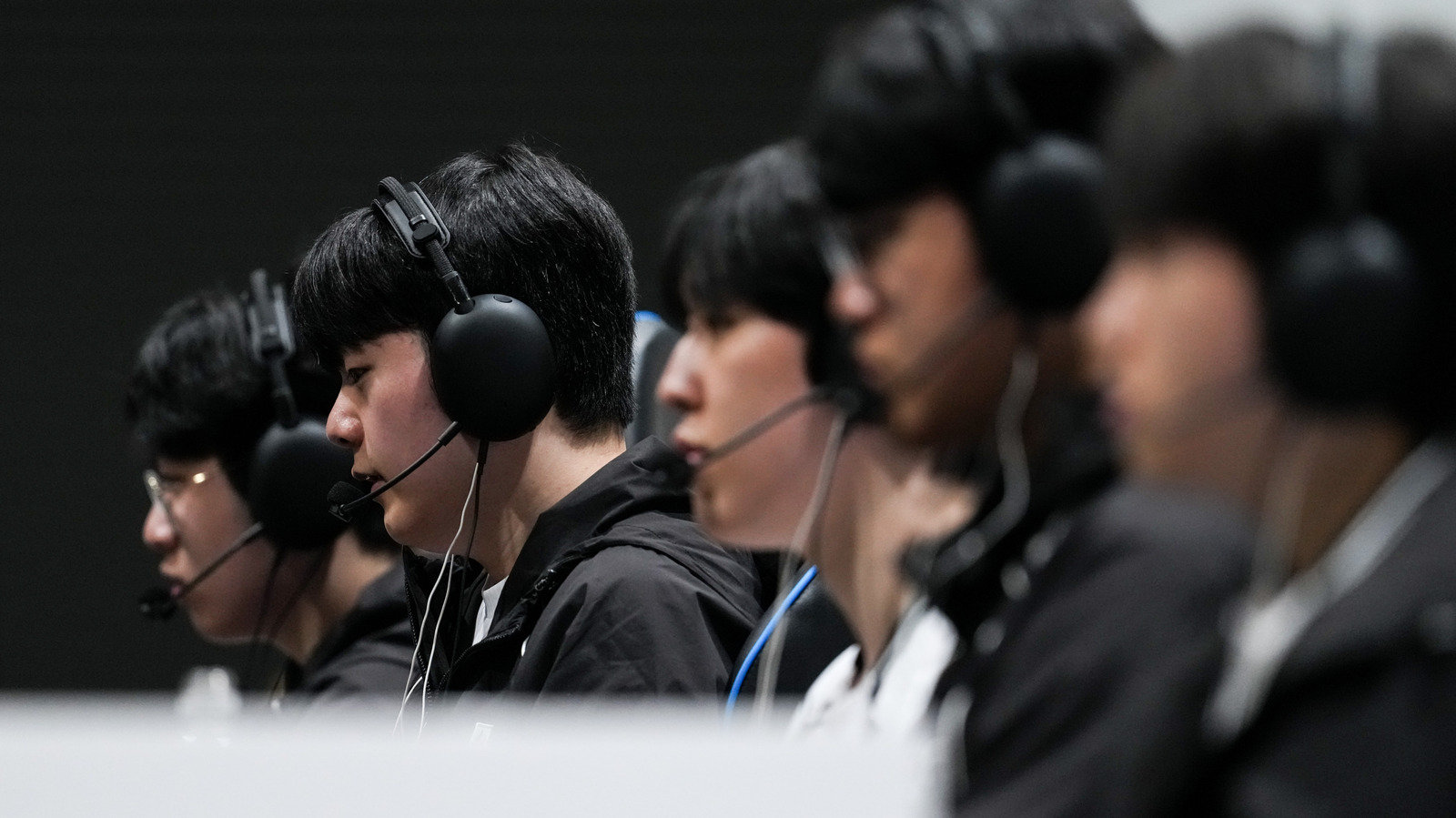
OLED gaming monitors have become the default recommendation for players who care about quality, yet the best competitive players in the world rarely touch them at major events. That gap between enthusiast praise and esports practice is real, but it has little to do with OLED being a poor fit for fast games. The explanation sits in how tournament hardware gets selected, what screen sizes organizers prefer, and which trade-offs matter when a sponsor is supplying the equipment rather than an individual buyer.
Why esports events still lean on LCD
At competitive events, the monitors on stage are generally chosen by sponsors and tournament organizers, not by the players themselves. That arrangement serves two purposes: it supports commercial partnerships, and it guarantees that every competitor plays on identical hardware. Consistency matters when small differences in display behavior could affect fairness.
Because organizers supply the screens, they tend to stick with models that have been standard for years. The prevailing format at the time of writing is a 24-inch panel running at 1080p. That size is considered ideal for competitive play because a compact view makes it easier to scan the in-game surroundings quickly. The practical consequence is simple: there are far more LCD options in that 24-inch bracket than OLED ones. Most OLED gaming monitors in 2026 start at 27 inches and go up from there, and that larger footprint is probably the main reason they remain uncommon on tournament stages.
OLED is not the competitive disadvantage you might assume

The idea that OLED is inherently worse for esports does not hold up. As a display technology, OLED handles motion exceptionally well because its pixel response is nearly instantaneous. On a good OLED panel, ghosting is minimal, which suits fast-paced first-person shooters.
OLED is not entirely absent from the competitive scene. In early 2025, Sony built its 480Hz M10S OLED display specifically for the Apex Legends Global Series Year 4. That is a very high refresh rate for OLED, though many IPS models can exceed 600Hz, which is another reason LCDs often remain the favored choice at competitive events.
Where OLED gaming monitors pull ahead for everyone else
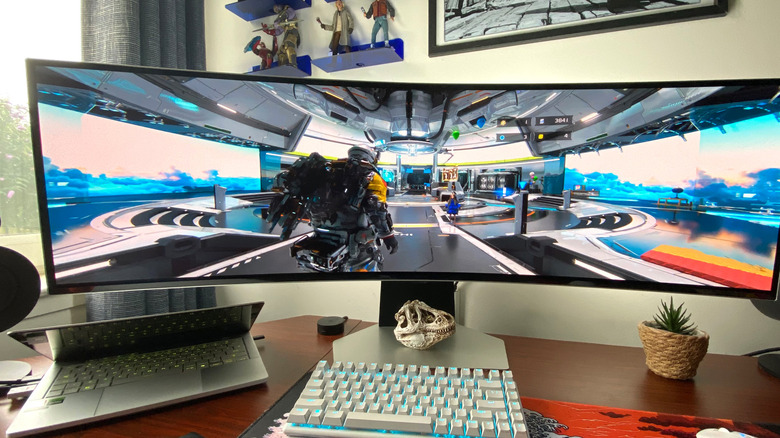
For players who are not competing on a sponsored stage, the calculus changes dramatically. OLED delivers perfect black levels, which produce striking contrast. It also offers excellent HDR handling, wide viewing angles, top-tier color reproduction, and often very slim bezels that help draw players into the game. The near-instant pixel response that helps in shooters also contributes to overall motion clarity.
Price has also shifted in OLED’s favor. These displays still typically cost more than LCD equivalents, but they have become considerably more affordable in recent years, particularly around sales events such as Amazon Prime Day or Black Friday. It is often possible to find 27-inch OLED gaming monitors on Amazon for comfortably under $500.
LCD still has a few legitimate advantages

Choosing between the two technologies comes down to circumstances. In most cases, OLED is the superior display technology, but LCD retains a handful of practical strengths.
- Cost: LCD monitors are usually considerably cheaper than OLED displays.
- Brightness: Many LCD monitors are brighter than their OLED counterparts, which makes them better suited to gaming or working in bright rooms.
- retention: LCD panels are far less prone to retention, while OLED burn-in is still a real phenomenon.
Burn-in is less of a concern in 2026 than it was on earlier generations of OLED displays. Most modern panels include pixel-shifting technology to help combat it, though the risk has not disappeared entirely.
Beyond those points, OLED generally outperforms LCD. Contrast, motion clarity, and uniformity are all stronger on OLED panels. Vertical banding in near-black scenes can still appear faintly during panning shots on some OLED displays, but that issue is generally far less distracting than the dirty screen effect that plagues many LCDs. That defect stems from LCD backlights that cannot evenly illuminate their panels, producing on-screen blotches that become especially obvious during sports content.
The core reason to choose an OLED gaming monitor over an LCD model comes down to one factor: OLED can produce perfect black levels, and LCD cannot. OLED is self-emissive, meaning it generates its own light and color without a backlight, and it can switch off individual pixels when they are not needed. That is what produces the technology’s famously infinite blacks—and for most regular players, that difference is worth the premium.