The GPU memory shortage has turned what began as a routine memory-generation transition into a prolonged squeeze on consumer hardware. Graphics cards, consoles and laptops are all feeling the pressure as AI data centers absorb the high-bandwidth memory that manufacturers are increasingly built to supply. Prices have climbed far beyond ordinary inflation, and the companies that make the memory see little relief ahead.
A price shock that outpaces inflation

The numbers are stark. JP Morgan expects dynamic random access memory prices to finish 2026 roughly 400 percent above their 2024 levels. That surge has spilled directly into retail graphics cards. Nvidia’s flagship consumer GPU, the GeForce RTX 5090, launched in January 2025 with a $1,999 suggested price; according to the Tom’s Hardware chips tracker, it now sells for $4,920 above that figure.
The pain is not confined to the United States. In Japan, some gaming GPUs carry prices about 41 percent higher than their American equivalents. The wider consumer electronics market has followed: JP Morgan data shows the Consumer Price Index for software and accessories up nearly a quarter over two years, while a 2026 Economist report found similar increases for consoles and laptops and an unusual decline in PC shipments. Resellers have moved into the gap, with GameStop marketing Sony’s PlayStation 5 Pro at roughly $500 over its manufacturer’s suggested retail price.
Why memory is the bottleneck
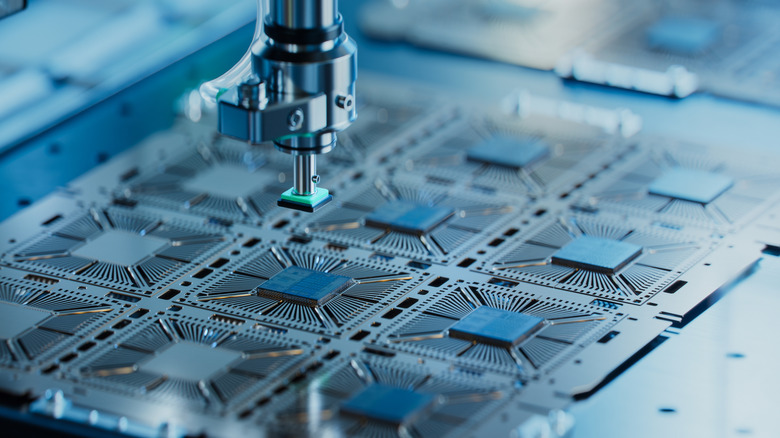
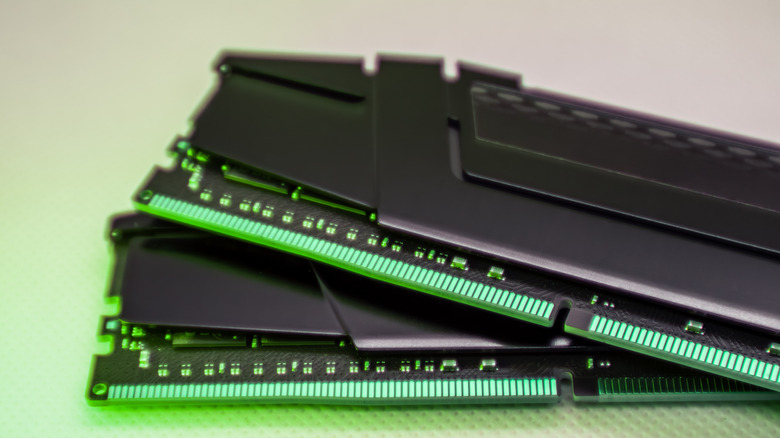
The industry was already navigating a shift from DDR4 to DDR5 memory, which temporarily constrained output as production lines changed over. The data-center buildout then compounded the problem. AI developers need high-bandwidth memory, a specialized DRAM variant with faster connections and greater bandwidth, both to train and to run their models. Demand for HBM has run well ahead of available supply.
HBM competes for the same wafer capacity as conventional DRAM and other memory products, and suppliers have redirected production toward the advanced chips, which sell for roughly 30 percent more than traditional DRAM. The move toward newer HBM4 and HBM4E generations has added further disruption during the transition. A Samsung executive told Reuters in September that HBM could represent nearly 30 percent of total DRAM production in 2027, up from 20 percent the previous year, with some projections approaching 40 percent by 2029. AI data centers are expected to consume about 70 percent of global DRAM supplies this year.
Concentration makes matters worse. Micron, Samsung and SK Hynix together account for roughly 90 percent of global DRAM production, and all three anticipate long-term shortages even as they expand capacity. Each has continued to favor data-center customers over consumer GPU buyers. Micron, for one, ended direct-to-consumer sales last year to concentrate on AI production.
Industry warnings stretch into 2028 and beyond
Executives are not offering reassurance. Micron CEO Sanjay Mehrotra said on a recent earnings call that supply will be considerably tighter in 2027 and 2028 than in 2026. SK Hynix CEO Kwak Noh-jung told Reuters in July that the following year would be the industry’s worst on record from a supply standpoint. SK Hynix chairman Chey Tae-won, speaking at an Nvidia event, said building adequate wafer capacity will take at least four to five years, with production trailing demand by 20 percent until at least 2030.
Much of the coming output is already committed. Micron has reportedly sold 75 percent of its 2027 HBM production, at prices Mehrotra described as much higher than 2026 levels. Samsung has sold nearly 80 percent of its 2027 memory output, according to Korean investment firm KB Securities, with about 70 percent locked into five-year contracts.
Dissenting voices and an uncertain 2029

Not everyone expects the shortage to persist indefinitely. Acer CEO Jason Chen told DigiTimes that prices could plateau next year, pointing to a possible influx of cheaper Chinese alternatives. Others question whether AI growth will justify the scale of the memory buildout. A South Korean publication quoted experts in October 2026 predicting that a wave of new supply in 2029 would turn the memory market into a red ocean, a report that sent memory stocks lower.
Nvidia chief Jensen Huang dismissed the prospect of a surplus, telling CNBC that memory has the advantage of always being usable in greater quantities. For consumers, the practical result is a market where graphics cards remain expensive, consoles carry reseller premiums, and the memory that powers both is being routed toward AI data centers first.