Ramayana: Rise of a Legend, the first instalment of what is being billed as India’s most expensive film production, has arrived in cinemas worldwide. The two-part project carries a reported budget of $500m (£370m) and has drawn a split response from reviewers, even as it lands just days before Diwali, the festival that marks Ram’s homecoming to Ayodhya.
Directed by Nitesh Tiwari, the film assembles a cast of major Indian stars, visual-effects talent with Hollywood credits and two Oscar-winning composers. It retells the foundational Hindu epic of love, duty, exile and war, following Prince Ram of Ayodhya through his 14-year banishment, the abduction of his wife Sita by Ravana, and the conflict that follows.
A production built on scale and star power

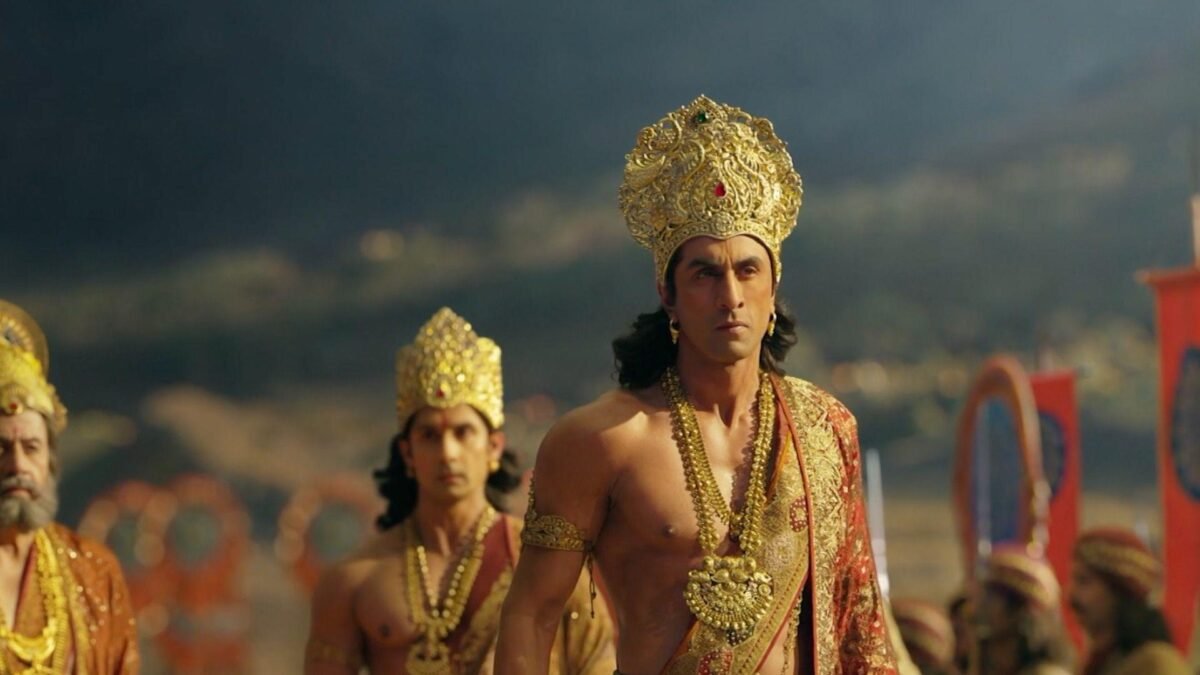
Ranbir Kapoor takes the role of Ram, with Sai Pallavi as Sita and Yash, one of southern India’s most prominent actors, as the ten-headed king of Lanka, Ravana. The producer, Namit Malhotra, leads the visual-effects company DNEG, whose credits include Hollywood titles such as Dune and Interstellar. The score is a collaboration between AR Rahman, the Oscar-winning composer of Slumdog Millionaire, and Hans Zimmer, known for Gladiator, The Dark Knight and Dune.
The film is the first of two planned parts, with the second scheduled for release next year and expected to depict the climactic battle between Ram and Ravana. Its timing places it at the centre of the Diwali season, when the epic’s themes carry particular resonance for many viewers.
Critics see spectacle, but disagree on substance

Reviews have varied sharply. Saibal Chatterjee of NDTV awarded three out of five stars, writing that the visual scale tended to overwhelm the storytelling and that performances were uneven. Rishabh Suri of the Hindustan Times was more positive, giving four stars and arguing that the investment is visible on screen, though he found the first half slow and the music less impressive than expected.
Shubhra Gupta of The Indian Express also gave three stars. She acknowledged initial doubts about the film’s extravagance but said she was gradually persuaded, describing it as a fitting epic with enough adventure and spectacle to carry its sprawling narrative.
International notices were equally divided. In The Guardian, Peter Bradshaw called it an engaging and rousing Indian epic melodrama, drawing parallels with Shakespearean royal intrigue and Homeric quests, and comparing its landscapes and fantasy imagery to The Lord of the Rings and The Lion King. He gave it four stars. By contrast, Siddhant Adlakha of IGN scored it four out of 10, criticising the action as clumsy and the computer-generated imagery as hard on the eye. Giovanni Lago of Next Best , who gave five out of 10, praised Yash’s Ravana and the Rahman-Zimmer score but suggested the vast story might have suited a serialised format better.
The use of artificial intelligence to adjust actors’ lip movements for the English-language version also attracted criticism. Tiwari said the aim was to make the film more accessible to international audiences, but Adlakha compared the effect to exaggerated mouth movements in comedy sketches.
Comparisons with an earlier television phenomenon

In India, the film has inevitably been measured against Ramanand Sagar’s Ramayan, the 1987 television series that became a cultural event. Broadcast on the state-run Doordarshan network, the 78-episode show drew an estimated 80-100 million viewers for its most popular instalments at a time when television ownership was still a luxury. Streets emptied and shops closed during broadcasts, and some viewers prepared for each episode with rituals resembling worship.
That series turned its lead actor, Arun Govil, into a figure of reverence. In a casting choice that carries a strong sense of nostalgia, Govil appears in Tiwari’s film as Dasharatha, Ram’s father. Other adaptations have taken different routes, including the 1992 Indo-Japanese animated feature Ramayana: The Legend of Prince Rama.
The weight of playing revered figures

The new film arrives at a politically charged moment in India, where Ram has become a powerful symbol of Hindu identity and retellings of the epic often attract scrutiny. The 2023 film Adipurush, another big-budget adaptation, faced backlash from Hindu groups and criticism over its depiction of Ravana.
For the actors, the responsibility was palpable. Kapoor said he felt fear at taking on a role worshipped by millions and questioned whether he was too old for it, though he described it as a once-in-a-lifetime opportunity. Sai Pallavi said her approach to Sita was as much spiritual as artistic, shaped by her religious upbringing.
Audience reactions will become clearer as cinemagoers fill theatres in the coming days. Whatever the final verdict, the release represents an attempt to bring a story cherished for generations to global screens on a scale never before attempted in Indian cinema.