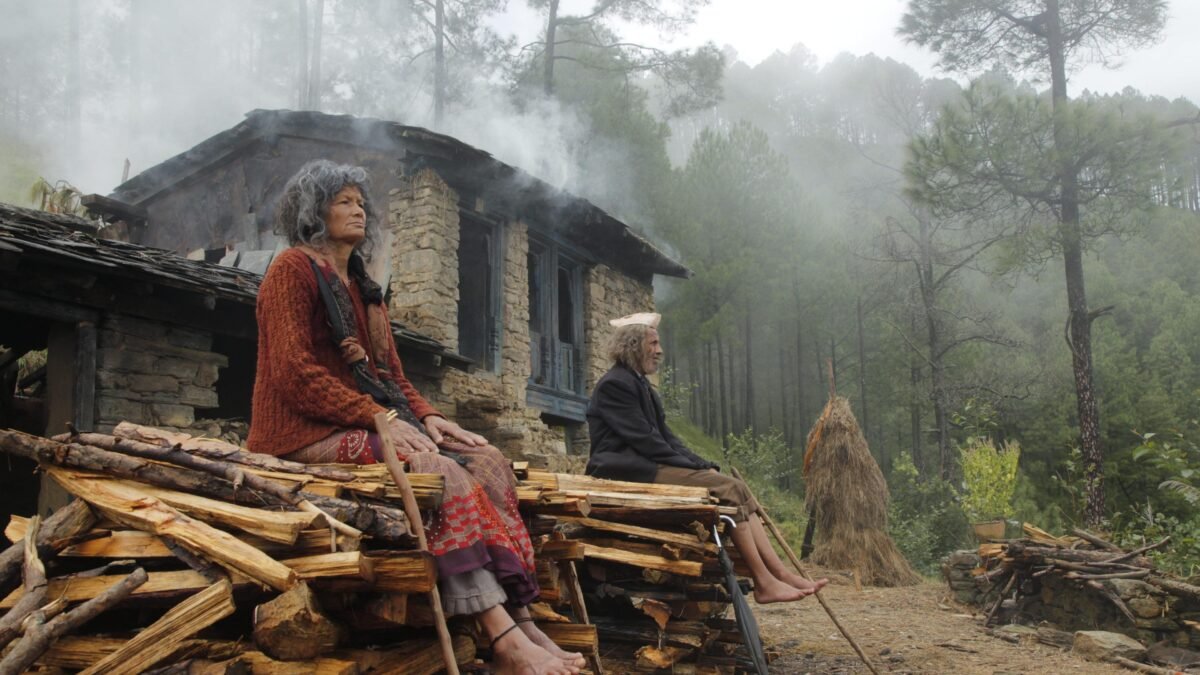
When Pyre, a modest film about an elderly couple in a remote Himalayan village, was completed, it seemed destined for obscurity. No distributor would take it, and streaming platforms passed. Two years later, the same Pyre film has become a word-of-mouth triumph across India, collecting 18 awards and leaving audiences in tears.
A Story of Love and Loneliness

The 111-minute film, directed by former television journalist Vinod Kapri, centres on Padam Singh and his wife Tulsi, known locally as Bubu and Aama. They live in a small home in the mountains of Uttarakhand, a place without roads or electricity. Their lives are defined by waiting: for their son Hariya, who left for Mumbai 28 years ago, and for the occasional help of neighbours summoned by a traditional long-horn instrument. In return for assistance, Padam Singh pays with goats.
Kapri describes the film as a portrait of companionship, loneliness and waiting. The couple have shared 65 years together, and their daily bickering serves as a love language. When a letter from Hariya finally announces a visit, the countdown begins. But as the few remaining villagers depart one by one, the couple face the prospect of dying alone. Padam Singh builds two funeral pyres outside their door, one for each of them, so that neither will have to carry the other down the mountain.
Real Villagers, Real Emotions

The lead roles are played by ordinary villagers who had never faced a camera. Padam Singh is Kapri’s uncle, a retired army soldier. Heera Devi, a widow, raised her children through farming and tending buffalo. Their performances have drawn praise from Bollywood figures including Naseeruddin Shah and Anupam Kher. Shah, who was initially approached for the role, felt he could not do justice to the character. He later told Padam Singh that he could not have performed the role in seven lifetimes.
For the actors, the experience has been overwhelming. Heera Devi says she initially worried about forgetting her lines and about what society would think. Now, at screenings, they meet tearful viewers who touch their feet and say the film reminds them of their own parents and grandparents. Padam Singh says the love and inspiration they have received was beyond imagination.
From Festival Circuit to Theatres

Since 2024, Pyre has screened at major international festivals, winning three best feature awards and 12 audience-choice prizes. Yet it remained without a distributor for two years. A producer friend eventually funded a theatrical release on 30 October across 70 screens. Positive reviews and rising ticket demand led to more screenings.
The film also explores the broader issue of outmigration, which has left many Himalayan hamlets abandoned, and the impact of climate change on the region. Heera Devi says the film resonates because “in reality, our village is just like this.” She describes the loneliness of elderly parents across India, waiting for children who no longer stay at home.
Padam Singh has a message for the younger generation: do not abandon the land where you were born. He also appeals to the government to bring education and employment to rural areas so that parents left behind are cared for.
For Kapri, the journey began in 2018 after meeting an 84-year-old man in Munsiyari. The man’s biggest worry was who would care for his wife if he died first; she worried about who would cook for him. That moment became the seed of a film that has now found its audience against all odds.