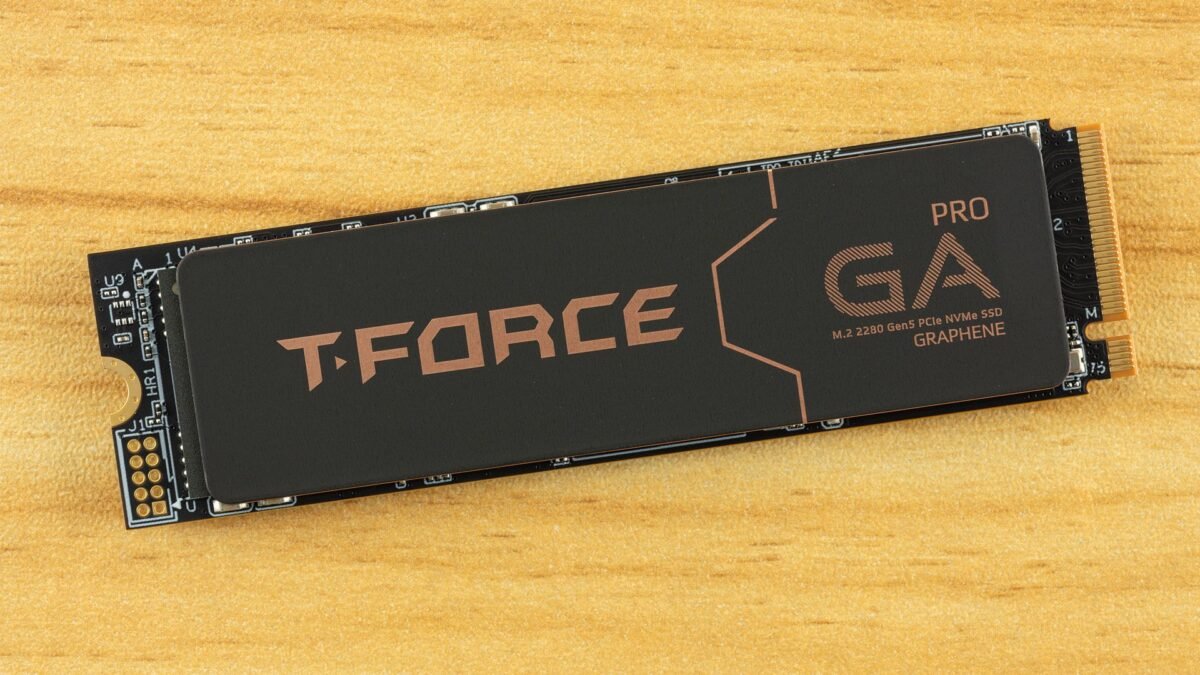
In our TeamGroup GA Pro 2TB review, we found a drive that looks competitive on paper but stumbles badly in real-world use. The GA Pro is a PCIe 5.0 SSD with DRAM and a rated sequential read speed of 10,000 MB/s, yet its firmware behavior and thermal profile make it hard to recommend for most buyers.
Hardware and Specifications
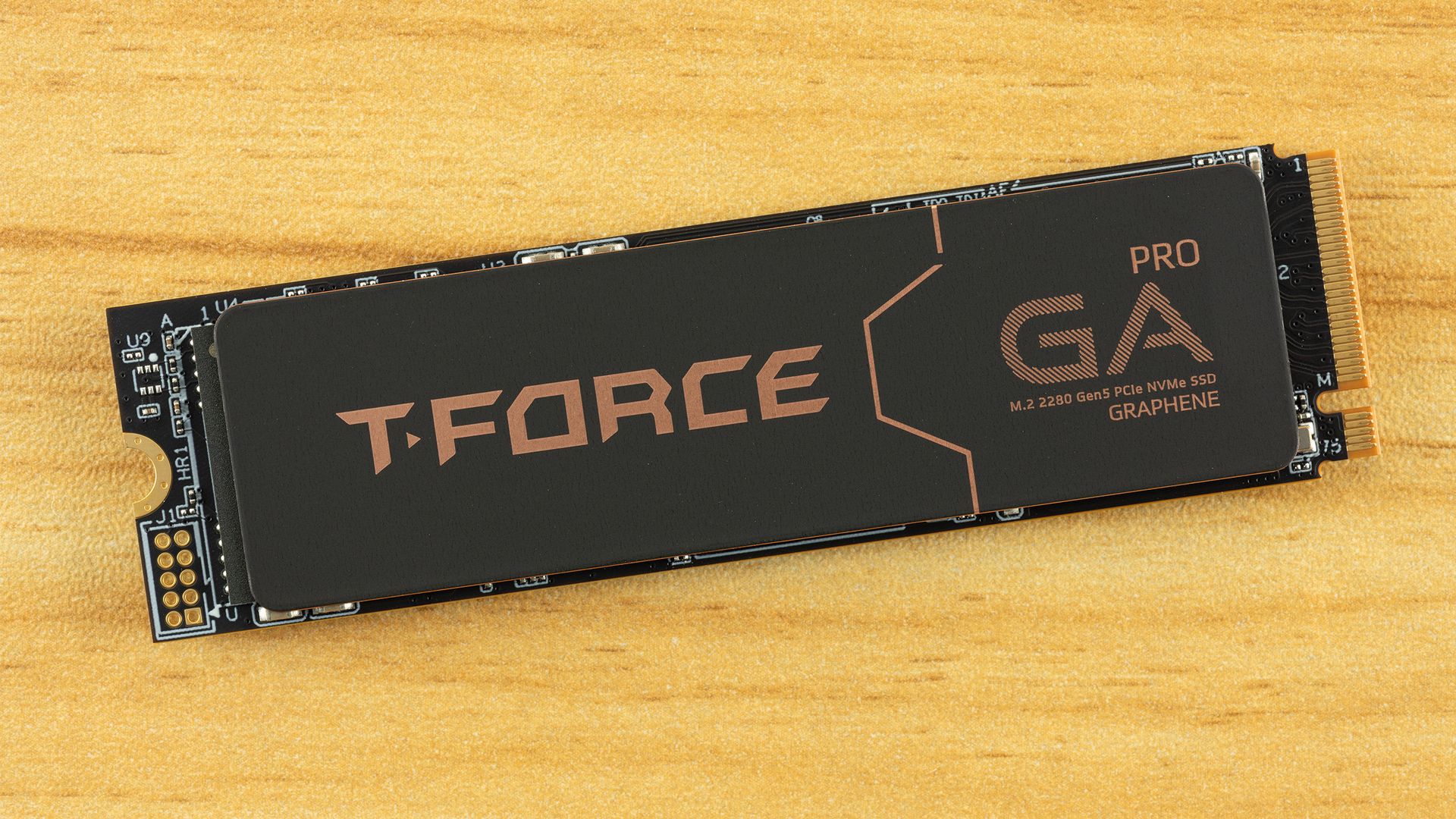
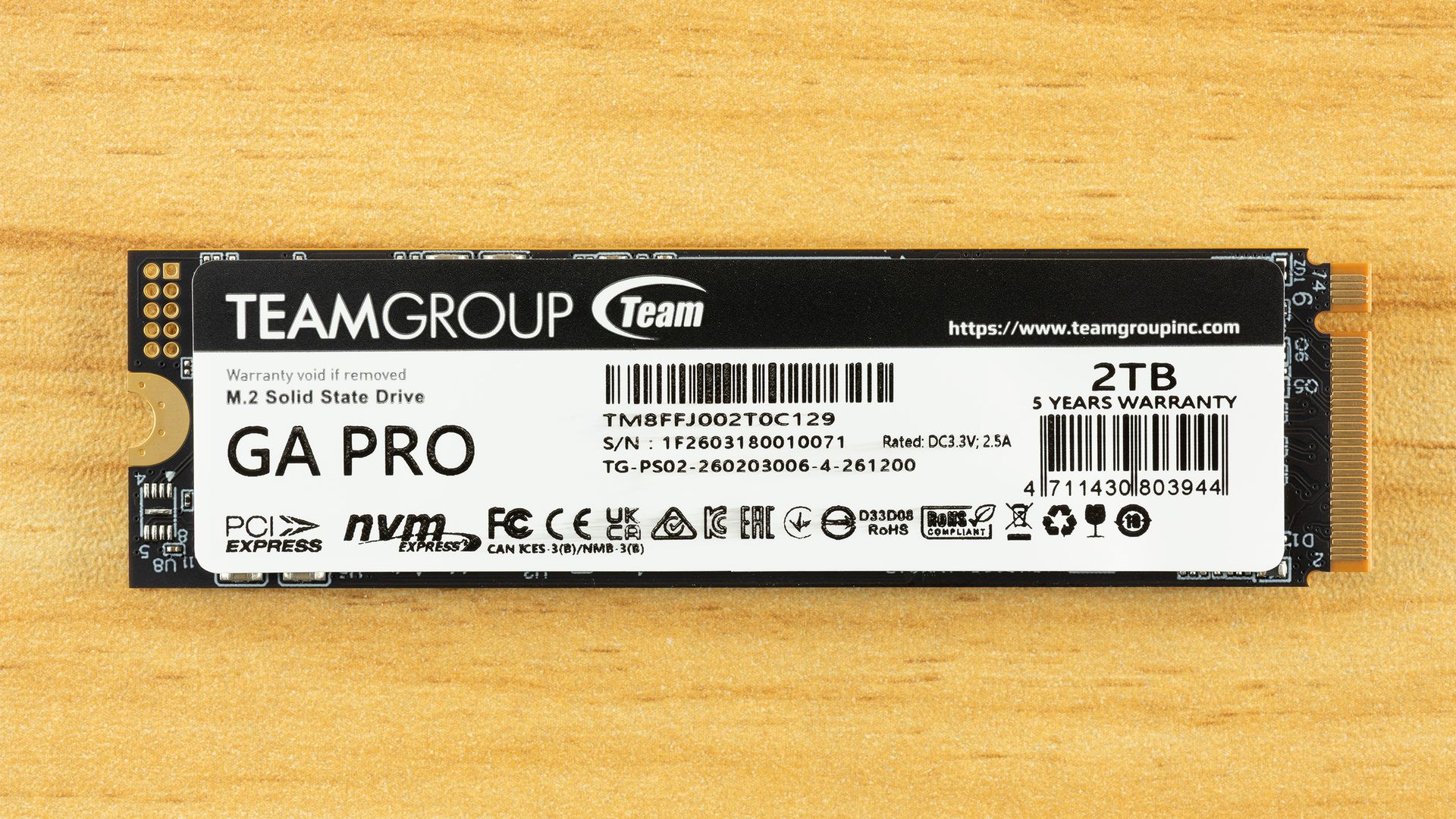
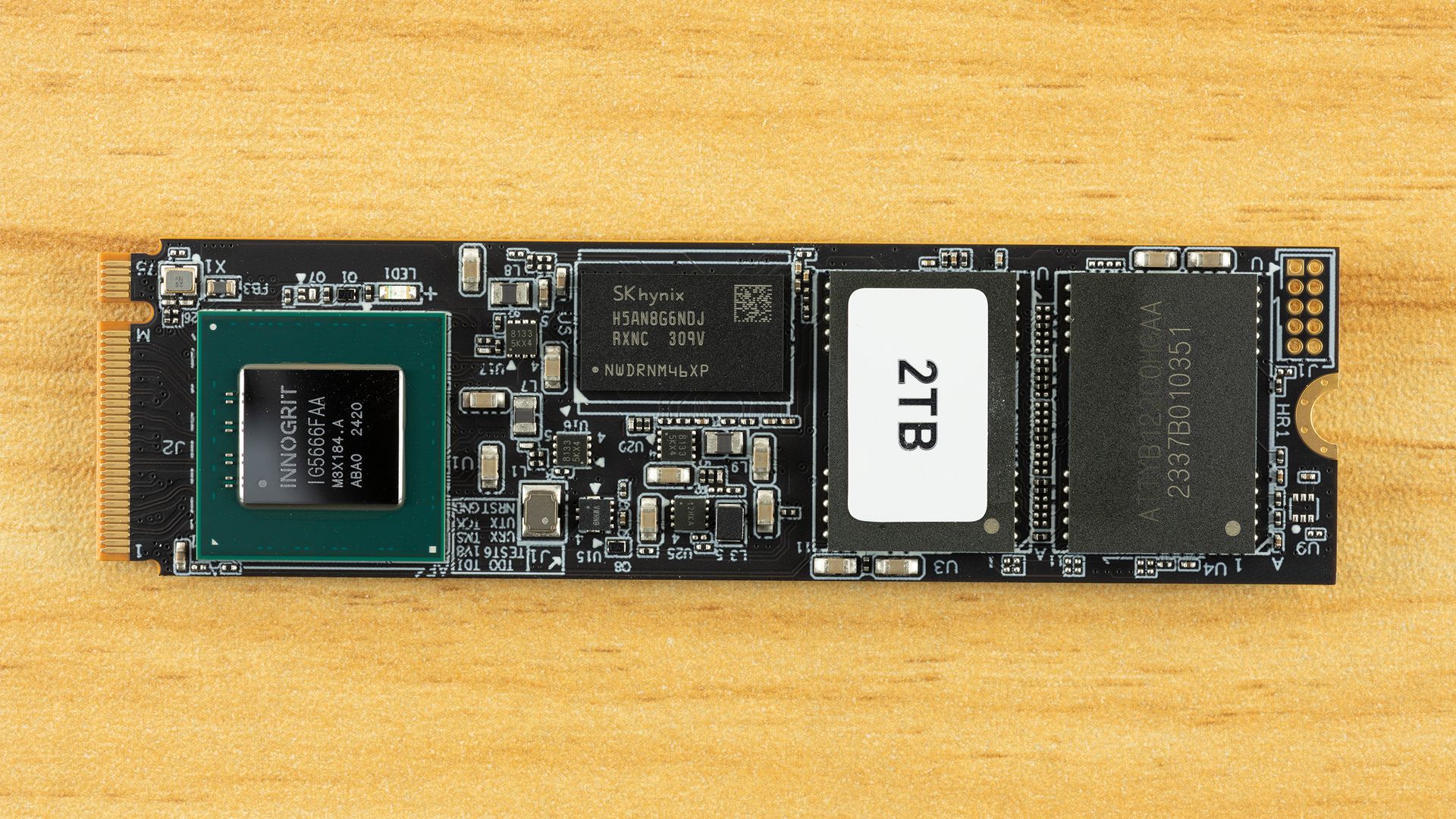
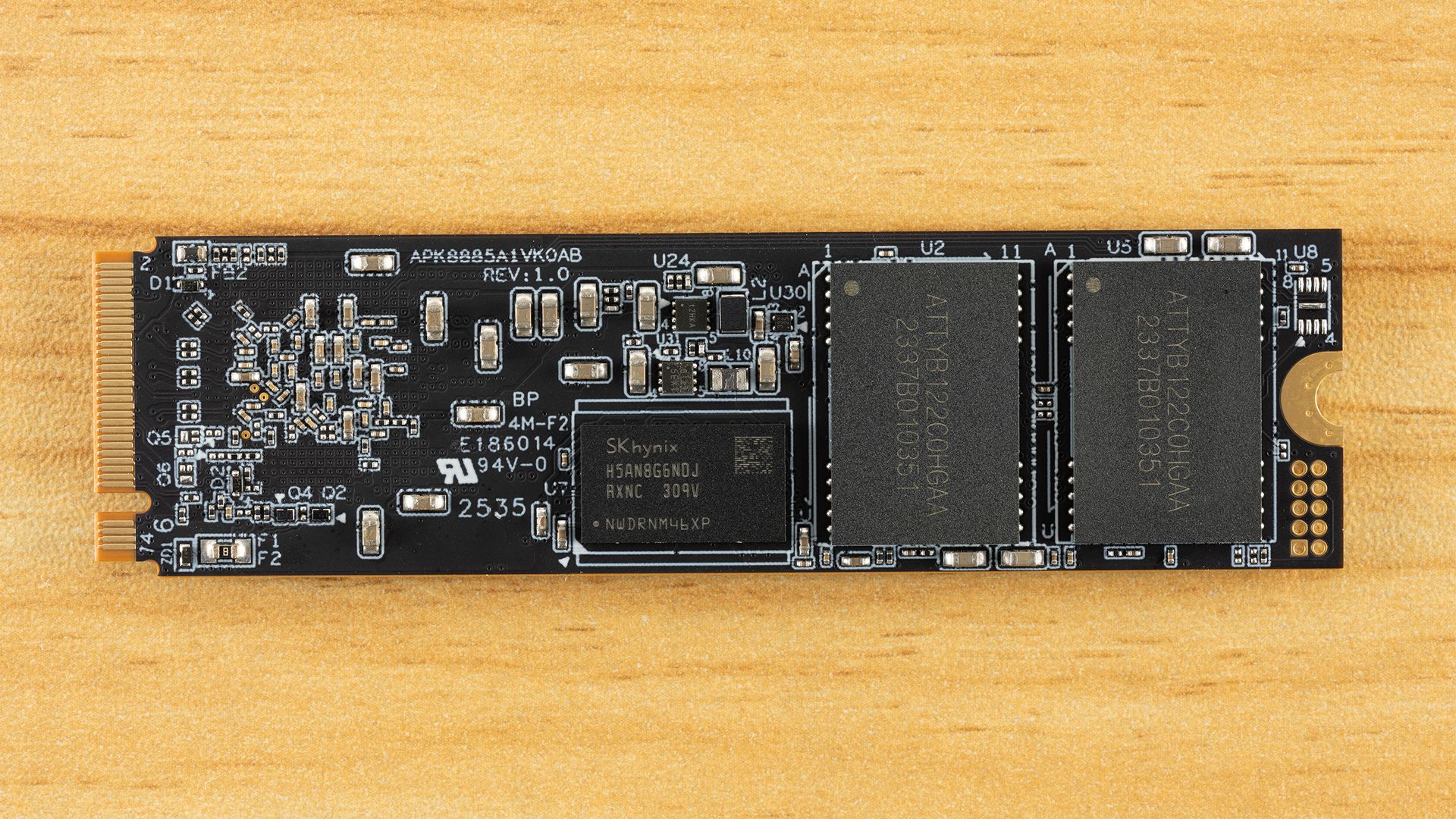
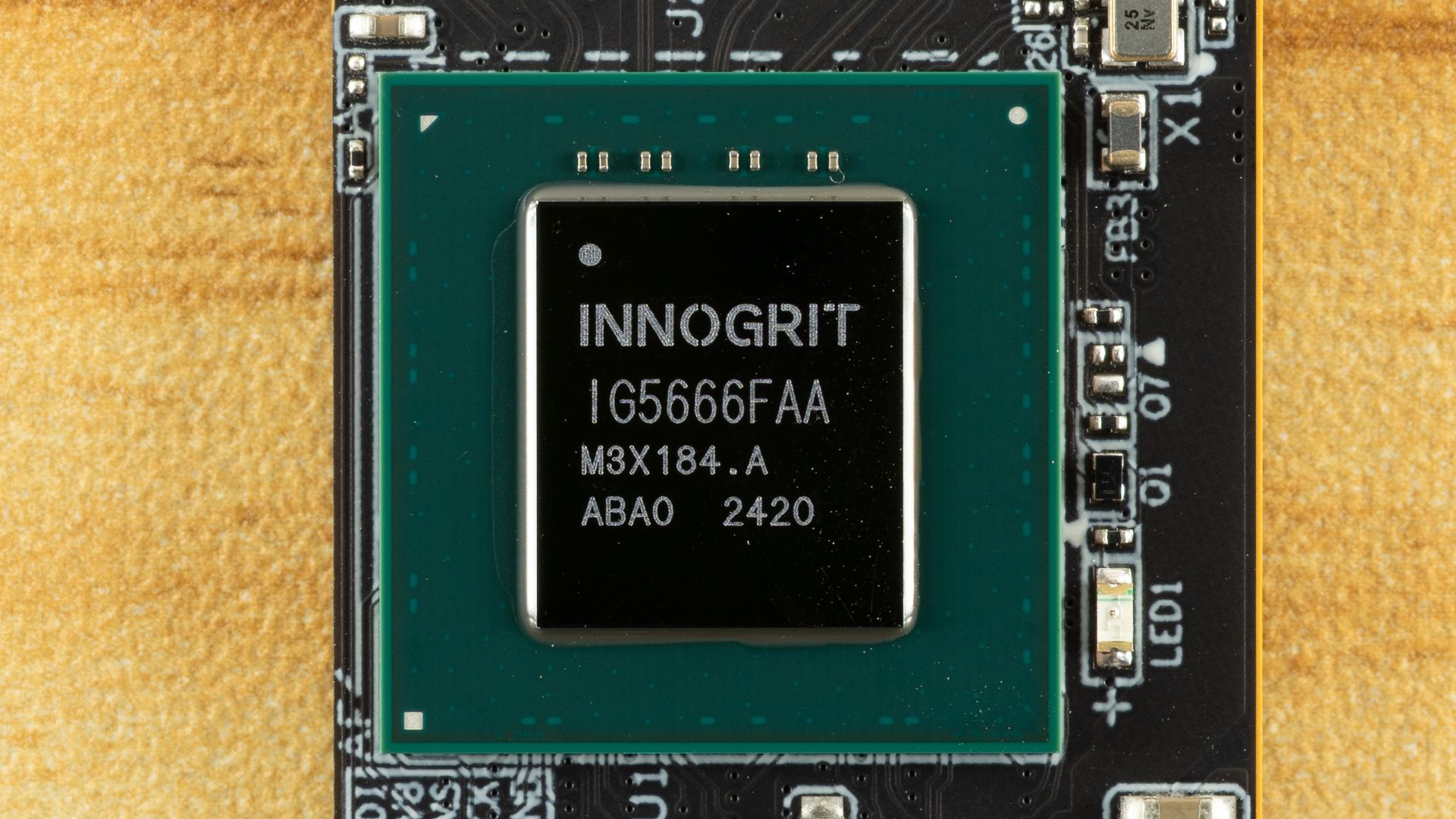
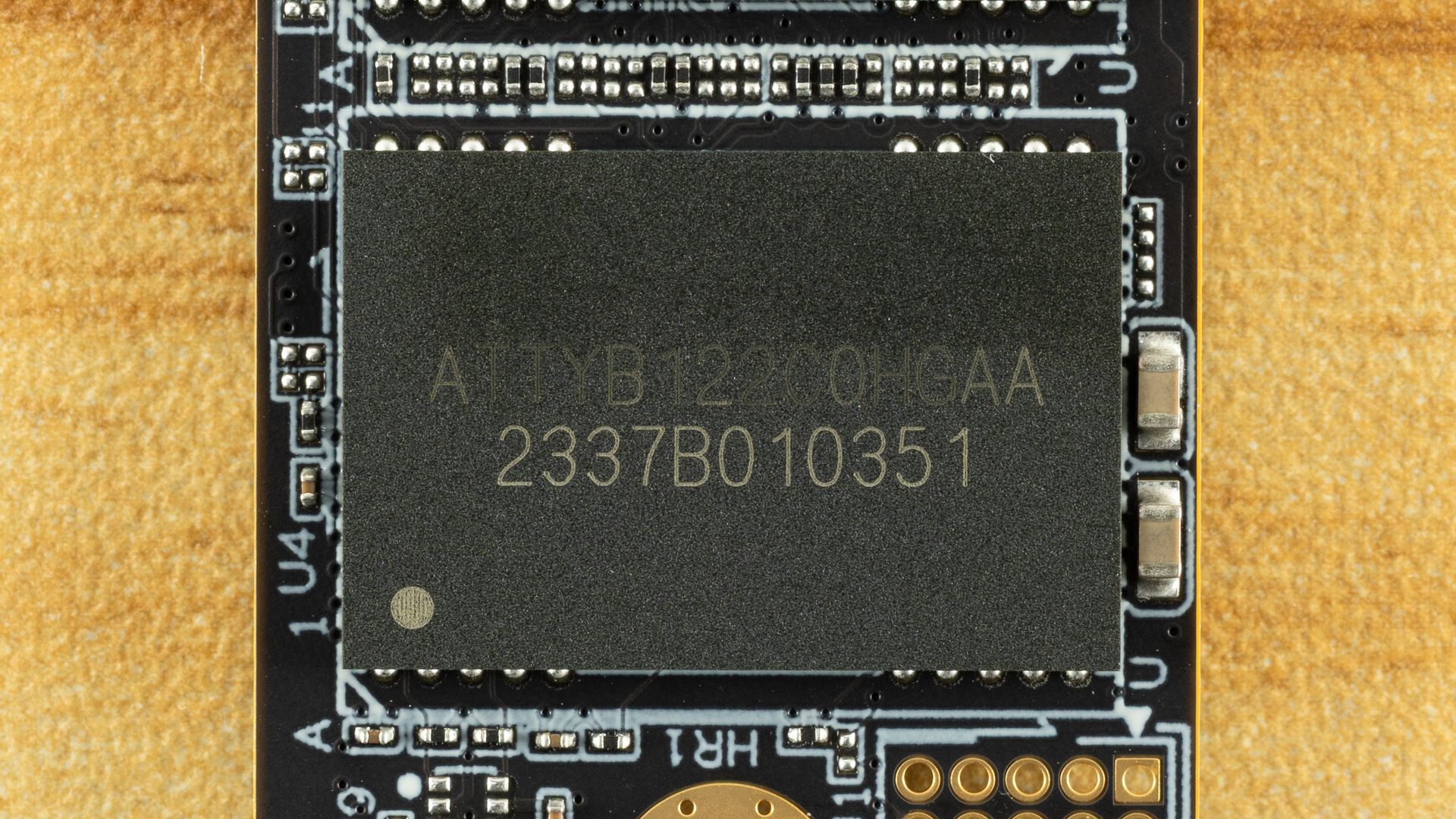
The 2TB model sells for $331.99 and uses InnoGrit’s IG5666 controller, 2GB of DDR4 DRAM, and YMTC 232-layer TLC flash. It is a double-sided M.2 2280 drive with a graphene heat-spreading label rather than a full heatsink. TeamGroup backs it with a five-year warranty and a 1,200 TBW endurance rating for this capacity.
The controller is the weak link. The IG5666 runs hot and has never been a popular choice in the consumer PCIe 5.0 space, and its firmware here appears to be the source of many of the GA Pro’s problems. The flash and DRAM configuration are appropriate for a drive of this class; the issues lie elsewhere.
Performance Problems in Real-World Tests
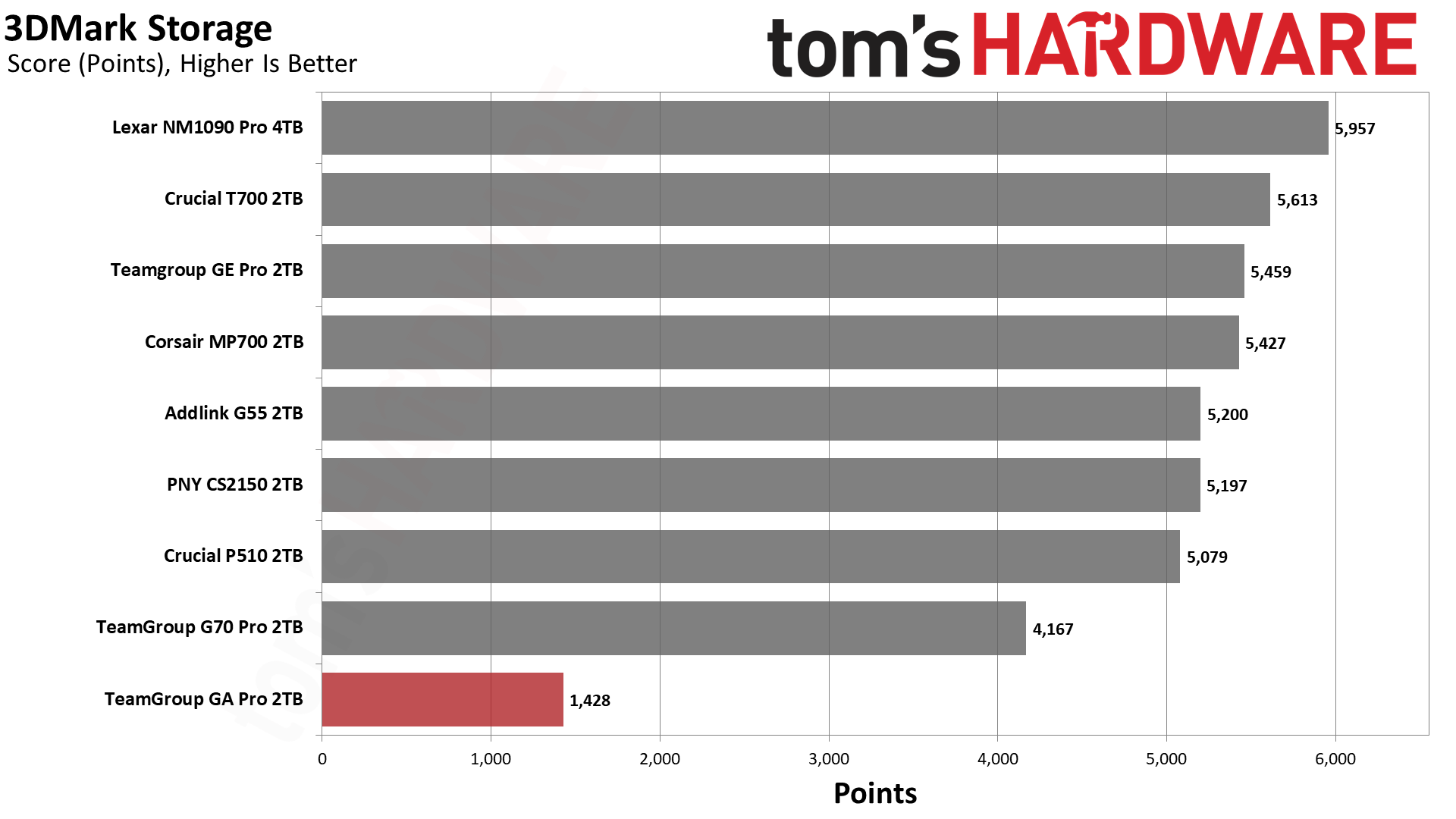
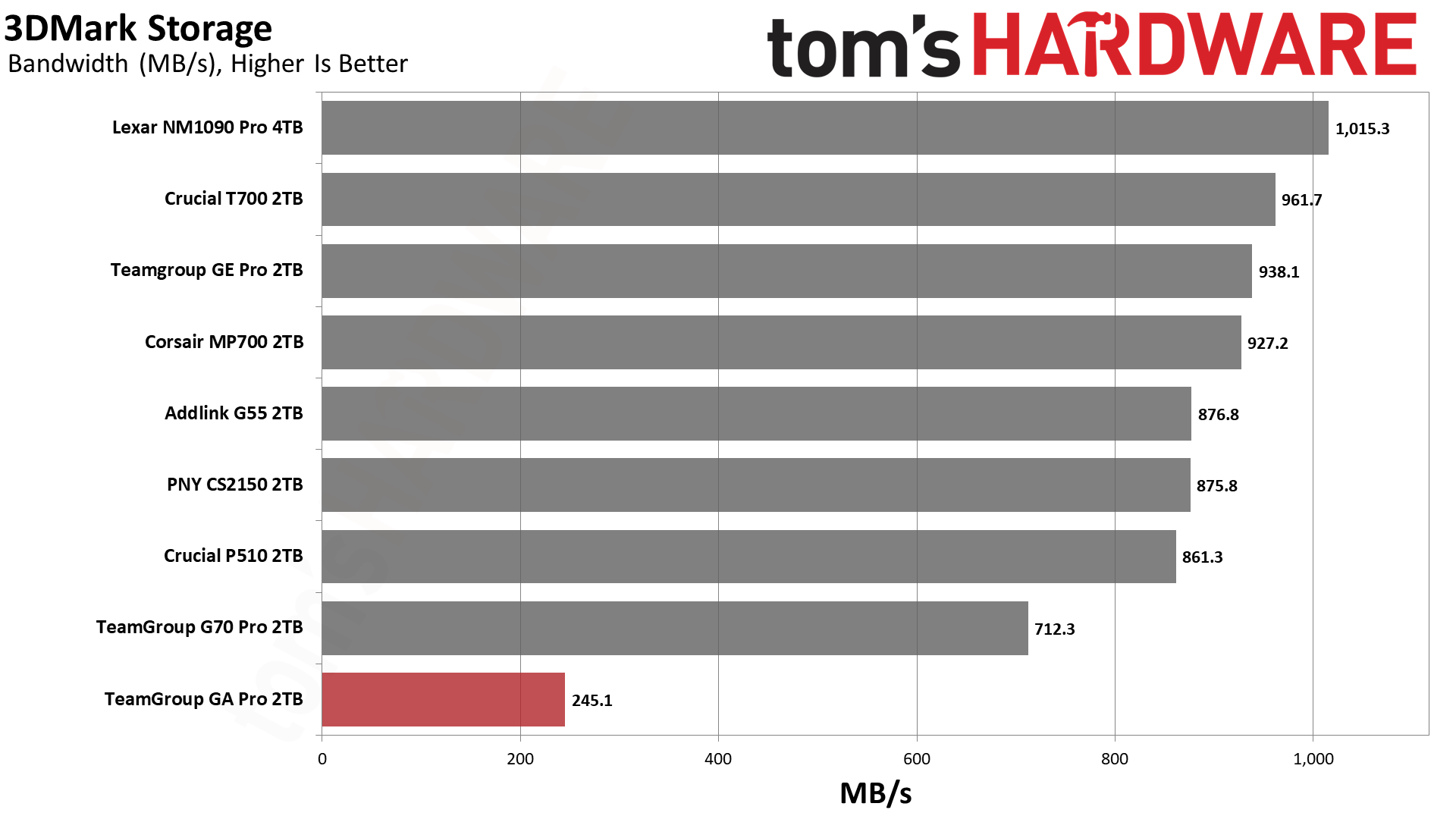
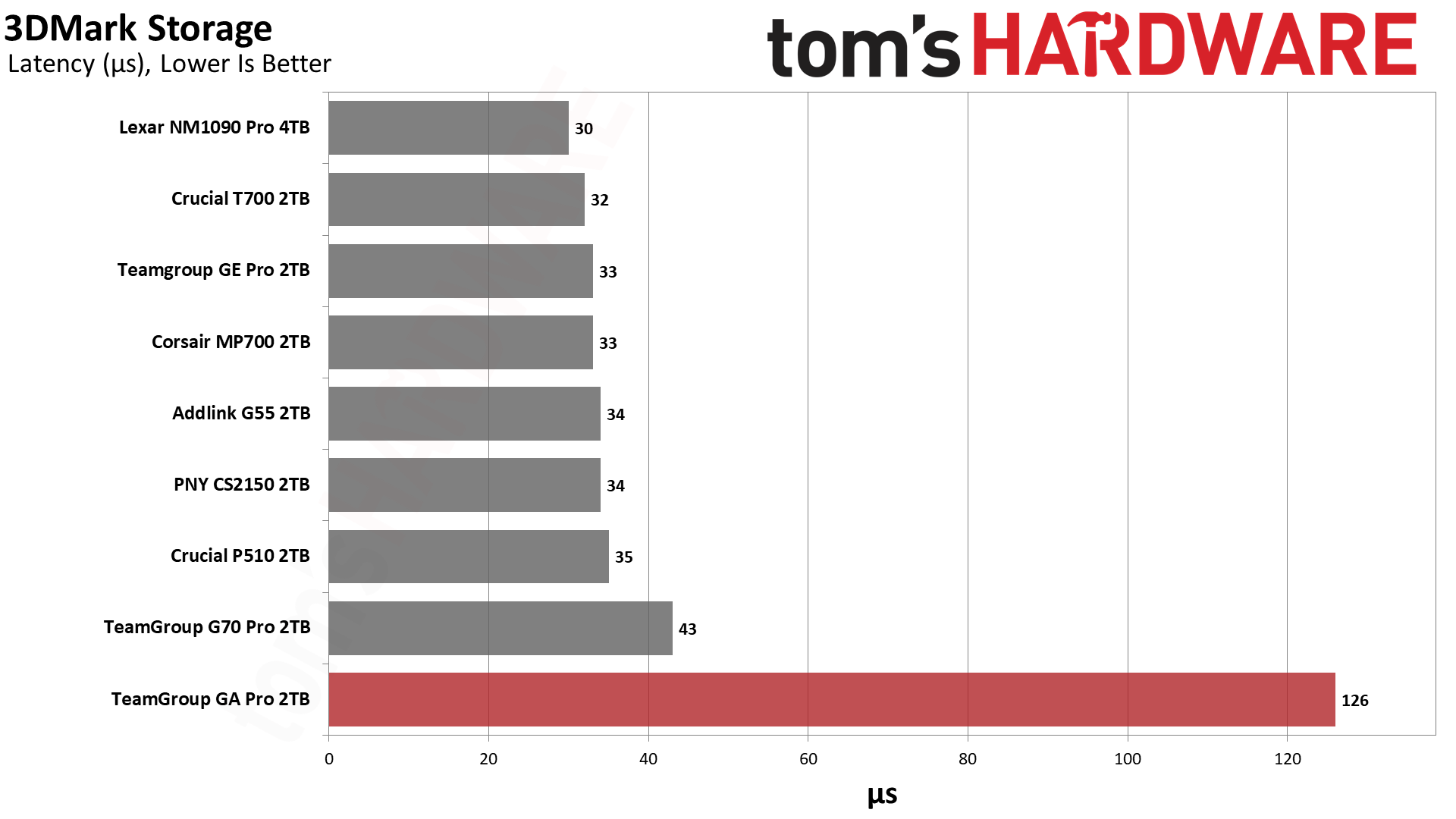
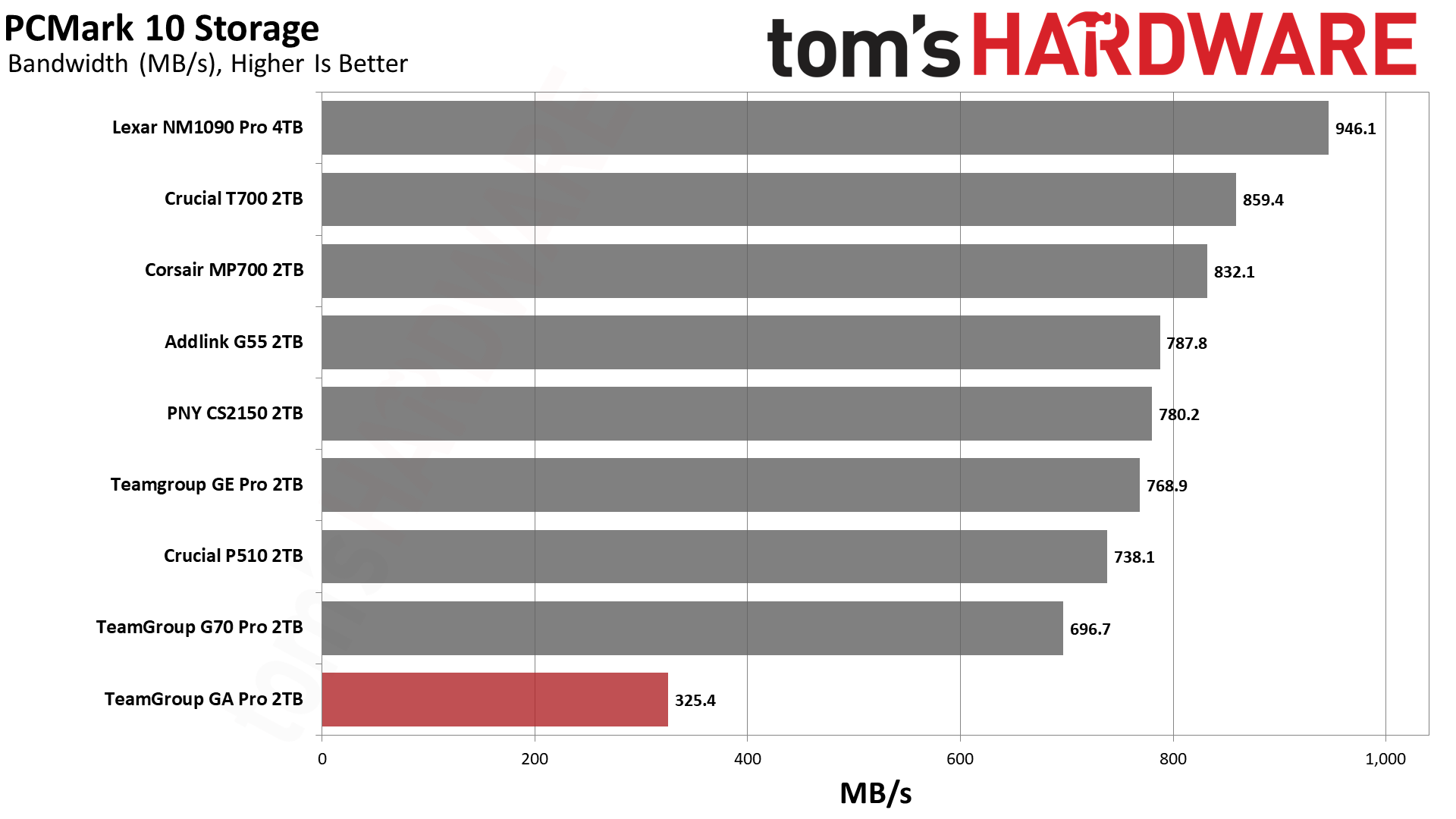
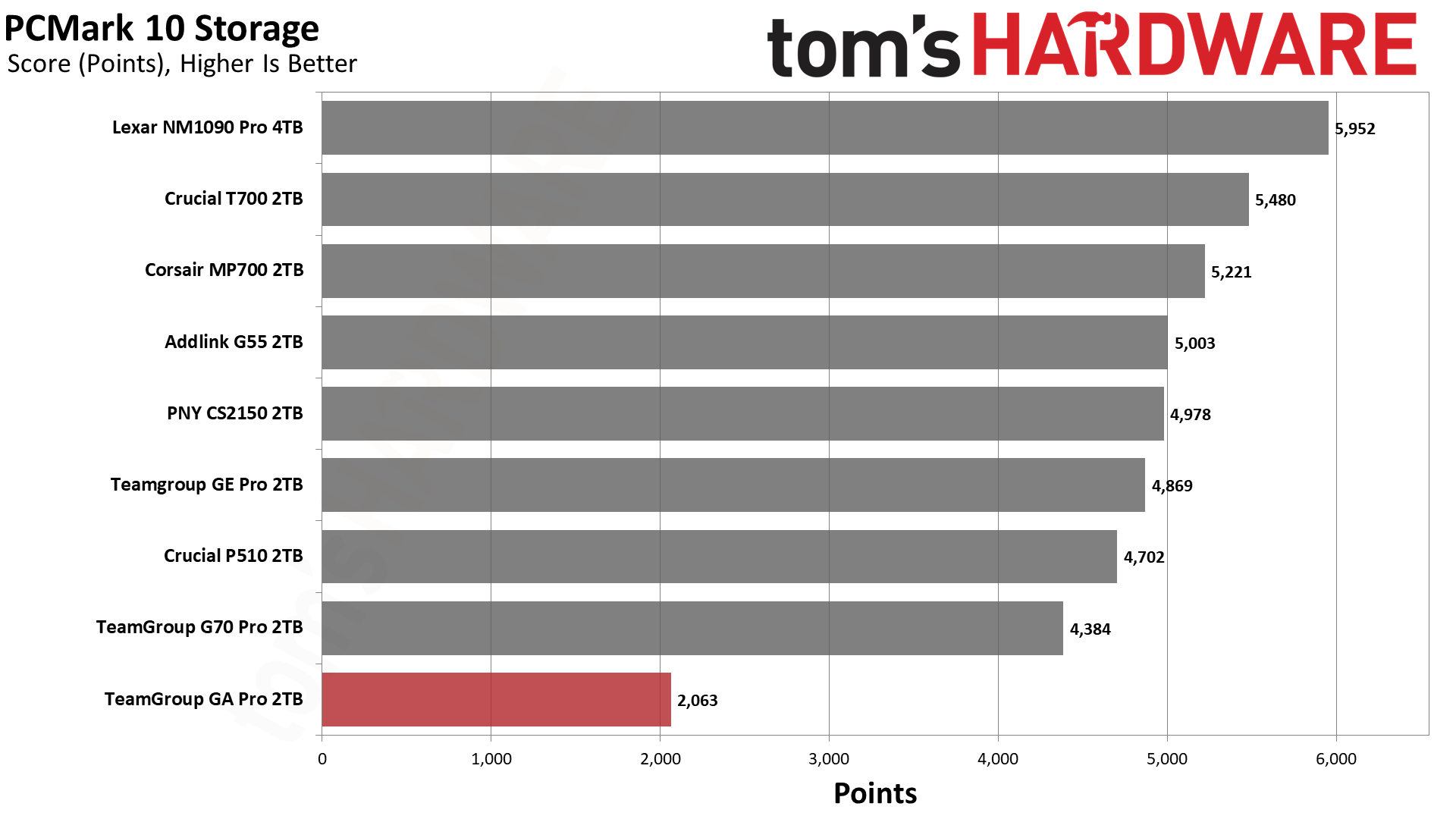
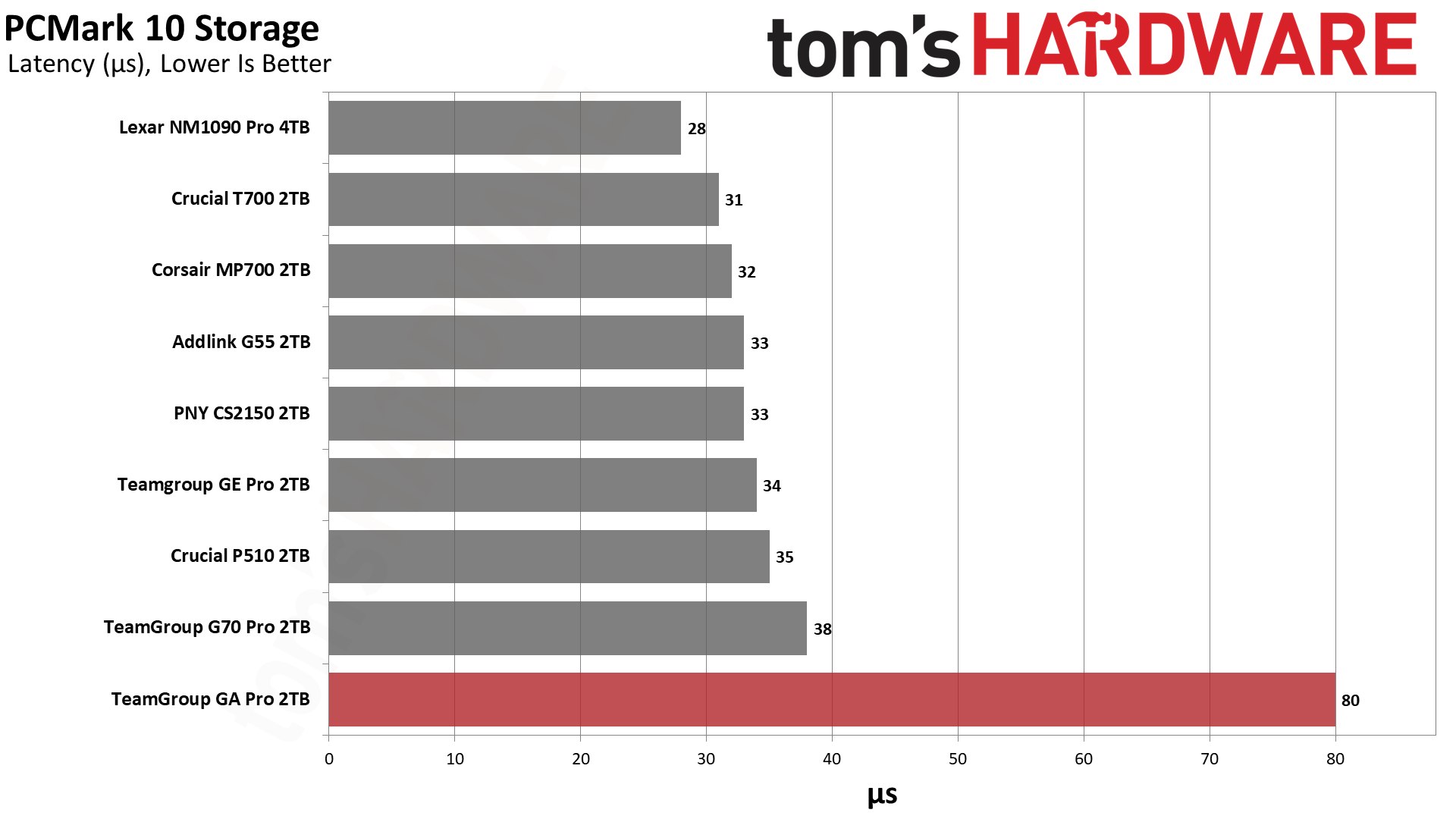
Trace-based benchmarks exposed serious latency issues. In 3DMark’s Storage Benchmark, the GA Pro scored 1,428, which is closer to SATA SSD territory than to other NVMe drives. It placed second to last among 242 NVMe drives in our database. PCMark 10 Storage told a similar story: terrible latency dragged down the overall result.
TeamGroup told us the drive was designed to excel in CrystalDiskMark, ATTO, and sustained writes, and that its firmware drops into a lower power state when the host is idle, adding command latency. That explanation matches the 3DMark latency numbers, but it does not make the behavior acceptable for general use. The likeliest additional reason is heat management, as this controller runs hotter than any other PCIe 5.0 controller we have tested.
The GA Pro also finished last in our DiskBench file transfer test. Its small write cache for a 2TB PCIe 5.0 drive may be partly responsible, and the drive is known to struggle at queue depth 1, which TeamGroup confirmed. In the PlayStation 5 transfer test, the drive worked but performed poorly, likely due to the same latency issue rather than thermal throttling.
Synthetic Benchmarks and Sustained Writes
Synthetic tests were more kind. ATTO curves were reasonable, and CrystalDiskMark showed decent sequential performance, especially at QD8. TeamGroup said this is what the drive was tuned for, and the results line up. However, 4KB latency remained higher than expected, which hurts everyday responsiveness.
Sustained write performance was mixed. The pSLC cache wrote at about 9.2 GB/s but lasted only around seven seconds, indicating a cache of roughly 69 GB. After the cache filled, the drive behaved erratically before settling near 2.5 GB/s. That steady speed is usable but slightly below the 2.75 GB/s managed by the TeamGroup G70 Pro, a PCIe 4.0 drive with the same YMTC flash and a smaller cache.
Power, Efficiency, and Temperature
Power efficiency was the worst in our comparison. The GA Pro averaged 6.32W and peaked at 12.53W, the highest peak in the lineup. Its slow DiskBench copy speed combined with high power draw produced poor efficiency overall. Idle power consumption was notably better than the GE Pro’s, which supports TeamGroup’s claim about idle latency behavior.
Temperatures were concerning. The three sensors reported maximums of 61, 72, and 92 degrees Celsius, with the 92-degree reading most likely coming from the controller. During our sustained write test, the controller stayed at 88 degrees or higher for over 90% of the run. The drive’s 90-degree warning threshold applies to the composite sensor, which peaked at 72 degrees, but the controller’s sustained heat suggests the firmware may be working around thermal limits. A heatsink is strongly advised, and removing the graphene label may improve cooling with an aftermarket heatsink.
Software and Warranty
TeamGroup provides firmware updates and its SSD S.M.A.R.T. TOOL for health monitoring. Our sample shipped with firmware revision 050g05E7. For backup and cloning on Windows, the company offers MultiDrive. The five-year warranty is standard for the segment.
Verdict
The TeamGroup GA Pro 2TB is not the worst SSD we have tested, but it is among the roughest. Its PCIe 5.0 interface and DRAM do not translate into consistent real-world speed, and its firmware appears to prioritize narrow synthetic workloads over everyday tasks. Power efficiency is poor, the controller runs hot, and low-queue-depth reads are a persistent weakness.
There are a few bright spots: sustained write speed eventually stabilizes at a useful level, and some high-queue-depth sequential workloads perform above spec. If the drive received a meaningful firmware update and a steep discount, it could serve as a niche drive for sequential write-heavy tasks. As it stands, we cannot recommend it for a primary system drive or for gamers. Buyers considering this price point have better options, including newer DRAM-less PCIe 5.0 drives that are more efficient and more consistent.