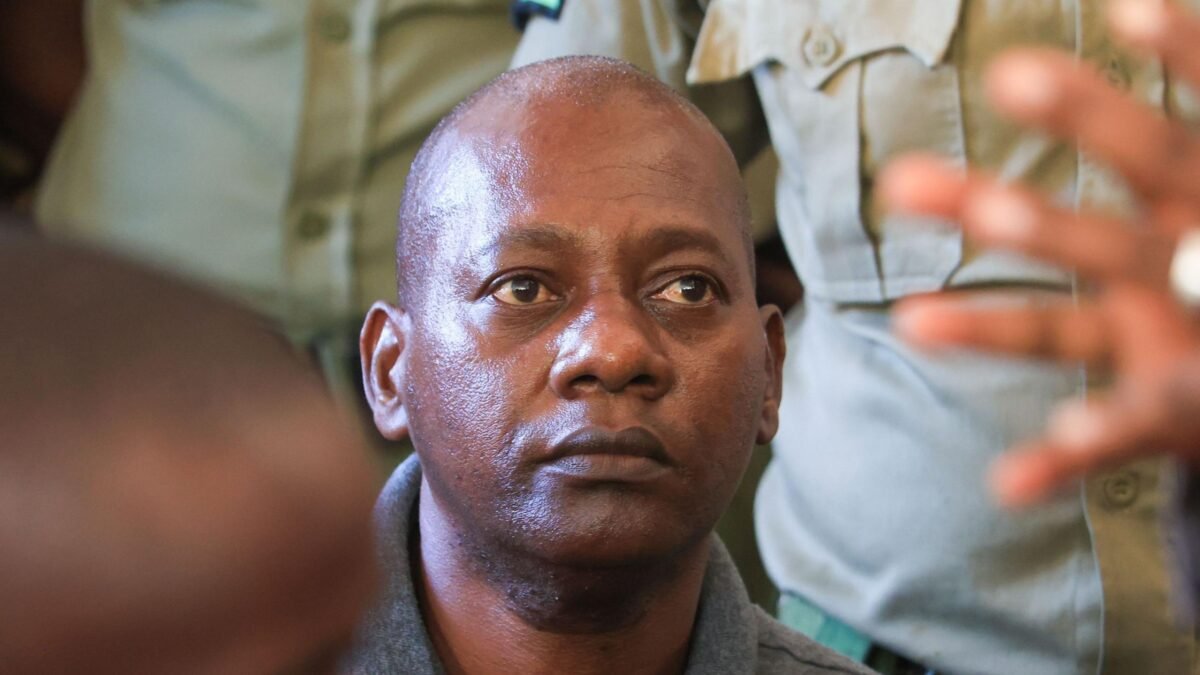
Paul Mackenzie sentenced 200 years — A Kenyan court has handed Paul Mackenzie a 200-year prison term for the murders of 191 people, most of them children, in a case that has become one of the world’s deadliest cult tragedies. The sentence was delivered after Justice Diana Mochache found that Mackenzie, who led the Good News International Ministries, bore the primary criminal culpability for ordering his followers to starve themselves and their children to death. Mackenzie sentenced 200 years in total after being convicted alongside 28 others for instructions that led to the mass starvation in Shakahola forest.
The court's reasoning

Justice Mochache described the sentence as fitting and necessary to signal that such crimes demand the harshest penalties available under Kenyan law. The judge imposed 100 years for homicide and a further 100 years for starvation-related offences. The terms within each category will run concurrently, while the two groups will run consecutively, producing the 200-year total. The court declined prosecutors’ request for the death penalty, even though it acknowledged the case met the threshold for considering capital punishment. Mochache said executing the convicts would remove any chance of rehabilitation or disengagement. Kenya has not carried out a death sentence since 1987.
How the deaths unfolded

Mackenzie was arrested in 2023 after more than 400 bodies were exhumed from shallow graves in Shakahola forest near Kenya’s coast. The discovery triggered a sprawling investigation that shocked the country and drew international attention. His followers regarded him as “Jesus’s mouthpiece,” according to the judge’s findings. Those who resisted his teachings were beaten to death, and one co-accused said Mackenzie told followers that anyone who refused to fast had to be forced into heaven through kicks and blows. The cult referred to burials in the forest as “weddings” and treated the dead as having married Jesus. Post-mortem examinations showed most victims died of starvation, while others succumbed to suffocation, strangulation or head injuries. Some bodies were too decomposed to establish a cause of death, and others died shortly after rescue because they were severely emaciated.
Sentences for the co-accused

The 28 co-defendants, including guards who enforced the fasting orders and gravediggers who concealed bodies in mass graves, received varying prison terms of up to 160 years. Mochache characterised the killings as cold and calculated, noting that the perpetrators showed no remorse and even said they were willing to fast to death themselves. Before Friday’s hearing, Francis Wanje, who lost eight relatives including two grandchildren in Shakahola forest, said he hoped for a sentence that matched Mackenzie’s deeds. Mackenzie and his co-accused had asked the court for leniency, having pleaded not guilty and maintained that no one was forced to die. He still faces separate manslaughter and terrorism charges, which he denies.
A wider reckoning
The Shakahola deaths have exposed gaps in oversight of rogue religious groups and raised questions about how the cult operated for so long. A state-funded investigation by the Kenya National Commission on Human Rights found that local administration and law enforcement officials repeatedly ignored the cult’s activities. President William Ruto set up a commission of inquiry in response to the case, though it was later declared unconstitutional. Wanje said he reported the case to police in March 2023 but that officers did not act quickly enough to rescue other members. A relative in the police force and a former cult participant managed to save his grandson, who told officers what had happened and showed them the grave of his siblings. Wanje said that day was meant to be the boy’s last.
From church to forest
Mackenzie founded Good News International Ministries in 2003, and the church grew in popularity over the next 16 years, drawing thousands of followers to branches across Kenya. It ran a television station, Times TV, which broadcast his sermons from Malindi. His End Days sermons included conspiracy theories that described education as evil, healthcare as against doctrine and digital identity cards as the mark of the devil. The main church shut down in 2019, and Mackenzie moved to Shakahola forest, encouraging his devotees to follow him. While the murder convictions may bring a measure of justice to victims’ families, they account for 191 of the more than 400 bodies exhumed from the forest.