

Mercedes-Benz is prototyping a windshield-based Mercedes holographic display that could one day replace the passenger touchscreen, part of a broader rethink of what luxury means inside a car. The system, shown to journalists at the company’s Sindelfingen research facility in Germany, uses a projector and a transparent film laminated into the glass to create images visible only to the front passenger.
How the holographic display works
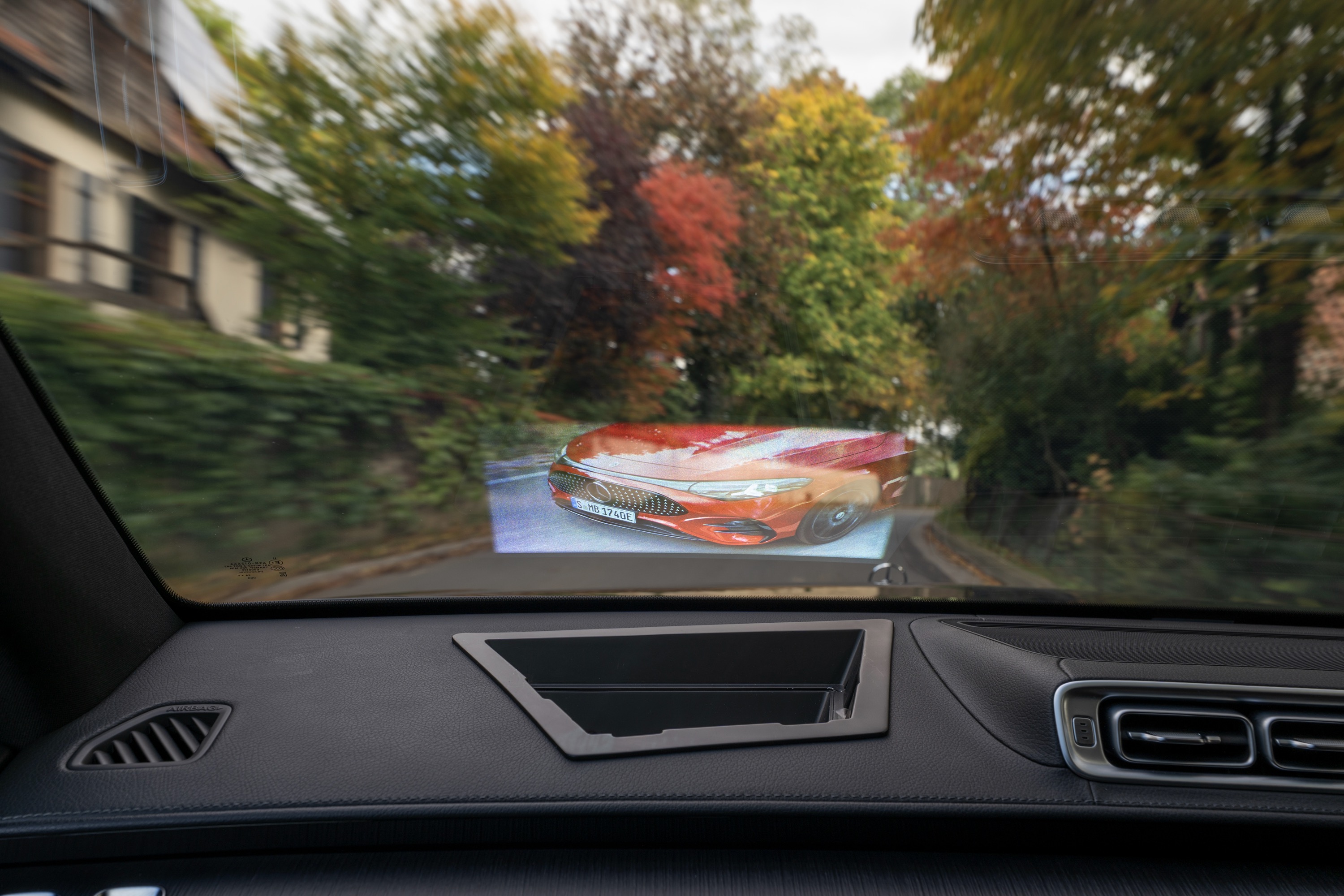
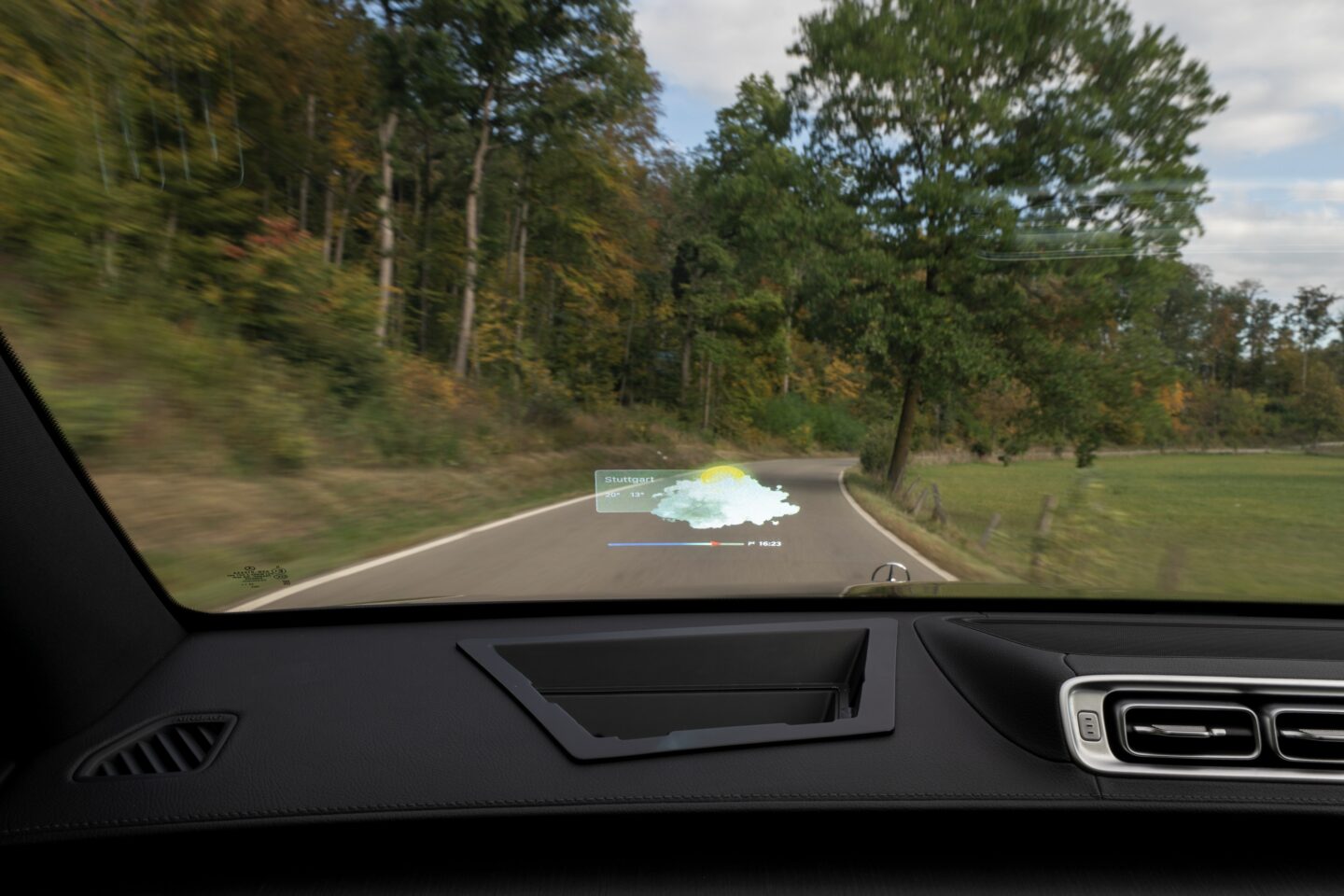
Unlike a conventional heads-up display that bounces light off the windshield, the Mercedes system relies on a special film embedded in the glass. That film contains holographic optical elements—described by development engineer Lena Hees as tiny mirrors—that selectively reflect the projector’s light. The result is an that remains visible even in direct sunlight while staying hidden from the driver’s line of sight.
Current passenger screens in Mercedes and rival luxury vehicles use driver-monitoring cameras or polarization to keep the driver from viewing content. The holographic film achieves the same separation optically, without a physical screen.
Why Mercedes is exploring an alternative
Screens have become a common marker of interior luxury, but not everyone is convinced. A recent JD Power study found that car owners consider passenger screens unnecessary and generally hold negative views of them. Mercedes development engineer Maximilian Hilger said some customers appreciate the pillar-to-pillar Hyperscreen, while others prefer traditional luxury materials.
New chief design officer Bastian Baudy has said that real materials such as metal and wood must remain central to Mercedes interiors, with switches and buttons providing intuitive control. CEO Ola Källenius has grouped interior quality among the brand’s enduring values, while acknowledging that technology must be packaged in an aesthetically pleasing way.
Prototype limitations
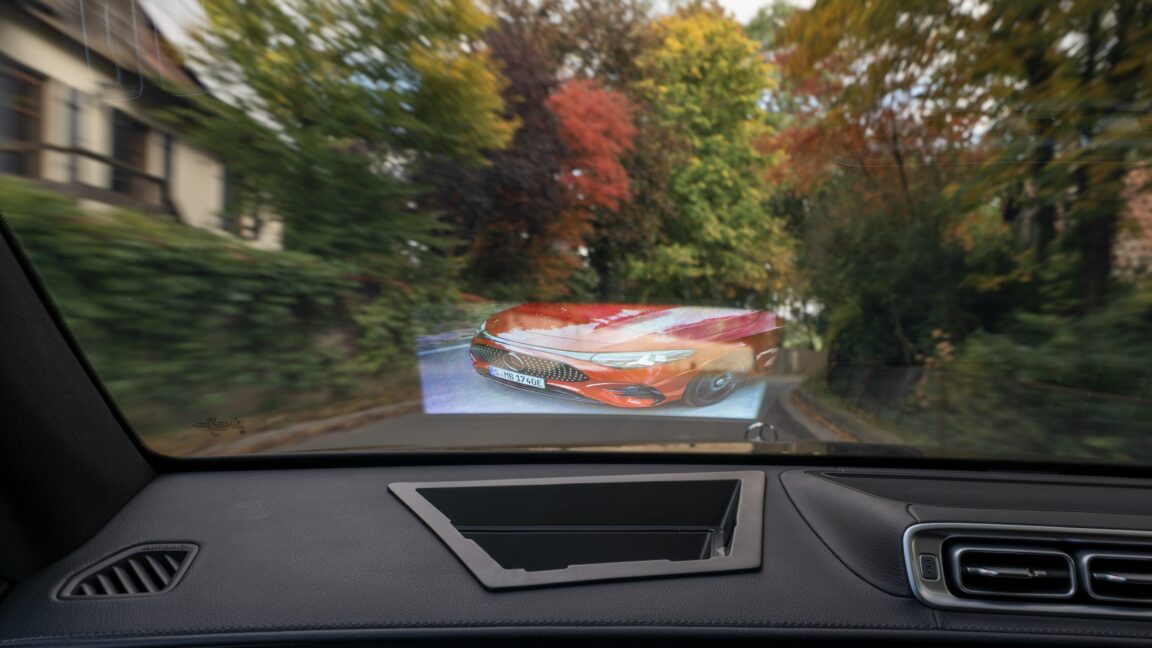
The demonstration vehicle was a right-hand-drive pre-2027 S-Class with a prototype projector mounted in a rough trapezoidal cutout in the dashboard. A cooling fan ran loudly, and the quality, while better than any current head-up display, remained far below that of a passenger touchscreen. Contrast was too high, and the windshield angle compressed the into a narrow band.
Mercedes research manager Manual Holstein said the production projector would be much smaller—potentially hidden behind wood or metal trim—and silent. Resolution would improve, and the holographic film’s eyebox could be enlarged and raised higher than the prototype’s HUD-like placement. He attributed the distortion to the prototype rather than the underlying technology.
During the demonstration, full-color video of the C-Class Electric played at just 20 percent of maximum brightness, yet remained sufficiently bright. Holstein said the film could eventually cover nearly half the windshield, turning it into a virtual screen visible only to the passenger.
Potential uses beyond entertainment
Mercedes envisions the holographic display highlighting points of interest in the passing landscape, showing situational information on the driver’s side, enabling video calls, or providing entertainment while parked. In the future, it could let drivers watch content when the company’s Level 3 autonomous driving system permits them to take their eyes off the road. At minimum, the technology could replace today’s head-up displays and their bulky projector boxes.
Having ridden in the prototype while moving, this reporter believes the higher viewing angle and the ability to see more of the outside world could reduce the motion sickness sometimes triggered by passenger screens.
An open question for luxury
Whether customers will embrace holographic video displays remains uncertain, especially if they are lukewarm on passenger touchscreens. Former design chief Gordon Wagener, predecessor to Baudy, put the challenge bluntly: screens are not luxury, he said, because every car has one and people have larger televisions at home. Luxury, in his view, must come from craftsmanship and sophistication.
If the Mercedes holographic display allows the brand to emphasize traditional materials while still offering distinctive technology, it could point a way forward for interiors that need to look and feel expensive without simply adding more glass.


