Argo Space is developing a water propulsion spacecraft as the foundation of a transportation network intended to move payloads between low-Earth orbit, geostationary orbit, and the Moon. The El Segundo, California-based company, founded in late 2022 by three brothers who previously worked on SpaceX’s Falcon 9 program, aims to eliminate the need to launch propellant from Earth for in-space maneuvering.
From Launching Rockets to Refueling Spacecraft
Robert, Ryan, and Kirby Carlisle each spent years at SpaceX during the Falcon 9 era, gaining firsthand experience in launching, refurbishing, and selling rockets. When they left to start their own venture, they deliberately avoided building launch vehicles. Instead, they chose spacecraft and a propellant that is available throughout the solar system: water.
Robert Carlisle said the company was built around water from the beginning. In Argo’s architecture, water serves not only as propellant but also as a coolant and radiation shield. Much of the spacecraft, from its thrusters to its avionics, is cooled by water. That design choice increases the propellant mass fraction, allowing the vehicle to devote more mass to propellant and thereby extend its range and capabilities.
The long-term goal is to create a commercial incentive to harvest water from the Moon’s shallower gravity well. According to Robert Carlisle, a water-based transportation network would provide the profit motive needed to go after lunar water resources.
First Demonstration Mission Falls Short on Propulsion
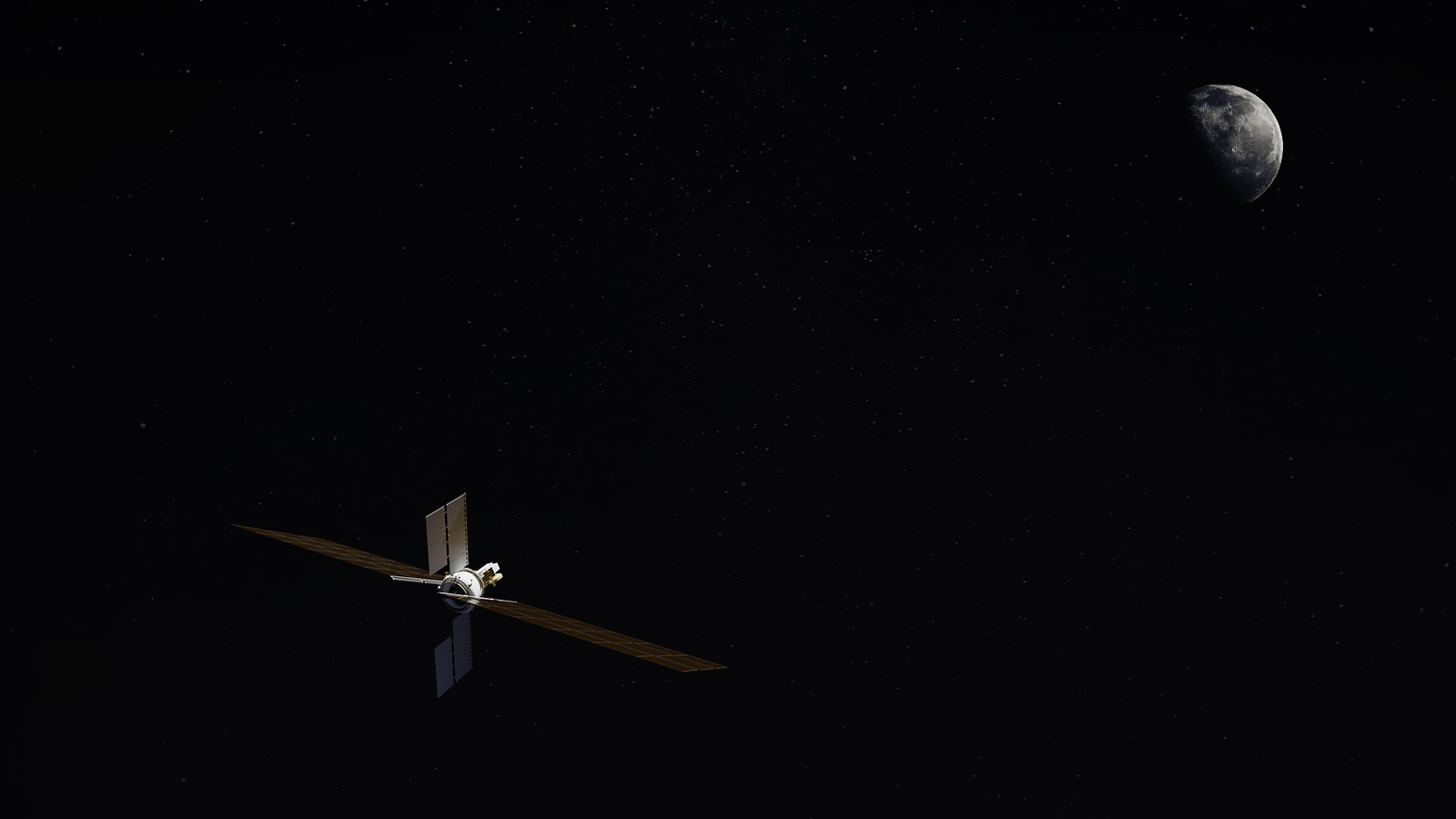
Argo Space launched its first demonstration mission, called Navigator, in July on a Falcon 9 rideshare. The company established contact with the spacecraft, but one of its two rollout solar arrays failed to deploy. Controllers spent roughly half a day troubleshooting and collecting health data, yet the spacecraft remained power-negative and continued draining its battery. Without enough energy, the team could not test the propulsion system.
Robert Carlisle said the mission did validate the flight software, ground software, core avionics, structures, and other systems up to flight qualification, but not propulsion. Demonstrating propulsion is now a key objective for the company’s next two missions.
Chiron to Test Water-Based Propulsion in 2027
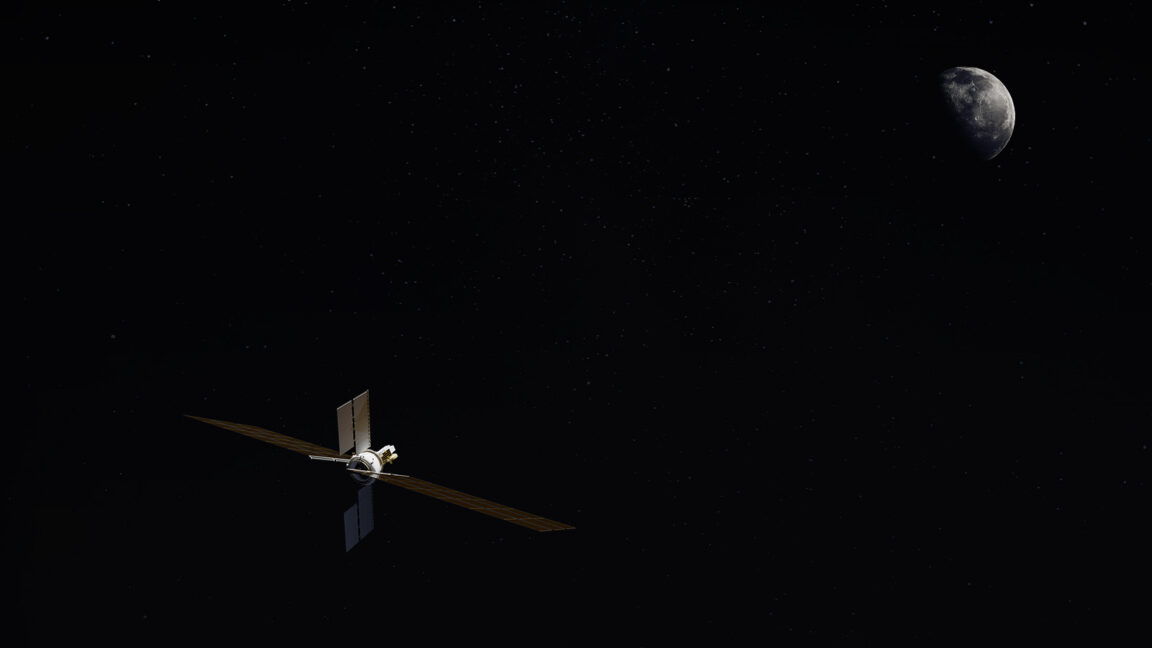
The next-generation Chiron spacecraft is designed to pack high performance into a roughly 200-kilogram package. Argo plans two Chiron missions in 2027, both carrying payloads for an undisclosed national security customer. The first is bound for low-Earth orbit, and the second for geostationary transfer orbit. Across the two flights, the company intends to demonstrate Chiron’s propulsion system and its ability to maneuver between different orbital environments.
Neither of those missions will fly on a SpaceX vehicle. Argo’s first Chiron flight is booked on an undisclosed new commercial rocket, while the second will use an unspecified government-furnished launch vehicle. Robert Carlisle said the company did not want to wait a year and a half or more for a Falcon 9 rideshare slot, noting that launch availability currently requires getting on a wait list with far-out dates.
Chiron’s propulsion system works by storing liquid water, then using solar power in space to split it into hydrogen and oxygen gases. Those gases are burned in a small rocket engine to generate thrust. The approach stores the gases at lower density than cryogenic liquids but avoids the complexity of cryogenic storage. Water itself can be kept as a relatively dense liquid at modest pressures until needed.
Argo says Chiron can achieve more than 2 kilometers per second of delta-v. That is enough to raise a circular orbit at about 400 kilometers above Earth to more than 5,000 kilometers, or to support several decades of station-keeping in geostationary orbit. The company notes that using electricity to split water and then burning the products in a conventional rocket engine provides more thrust than an electric thruster with similar power.
Argonaut and a Lunar Delivery Deal
After Chiron, Argo is developing a larger vehicle called Argonaut, with a maximum payload capacity of 1,400 kilograms and a maximum delta-v of 17 kilometers per second per tank. In September, the company signed an agreement with ispace to deliver ispace’s Lunar Connect communication relay satellite to lunar orbit later this decade.
Water-based propulsion is not entirely new. NASA demonstrated a compact water-based propulsion system on two small satellites in late 2017, and the commercial company Momentus has also used water propellant for in-space maneuvering. Argo’s ambition is to apply the approach at a larger scale.
The company has raised $20 million to date and employs fewer than 30 people. Kirby Carlisle said spacecraft are less capital-intensive to develop than rockets, partly because Argo can test most of its spacecraft systems at its own facilities in El Segundo. He noted that rockets require enormous ground infrastructure, whereas Argo does not need a site comparable to SpaceX’s McGregor, Texas, test facility.