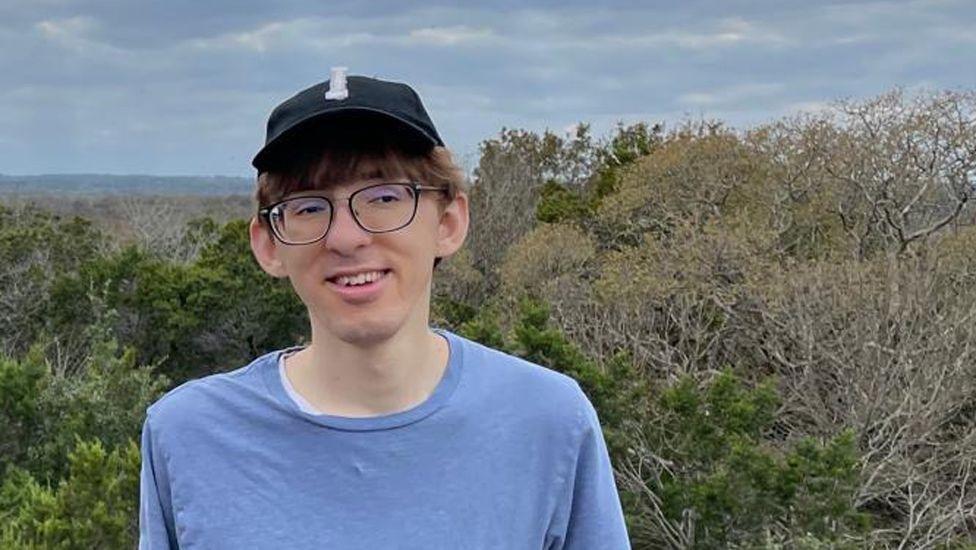
The Jehovah’s Witness blood transfusion policy has shaped life-and-death decisions for generations of members. In one Texas family, it became the reason a 26-year-old man was allowed to die — and then, less than a month later, the faith’s leadership altered the rule that had guided him.
An ordinary afternoon, a catastrophic injury

Isaac Valdez was browsing in his local library in August when an epileptic seizure caused him to convulse and strike his head on the ground. The impact was severe enough to cause a brain haemorrhage, and he lost consciousness.
At the hospital, treatment ran into a complication rooted in Isaac’s faith. As one of Jehovah’s Witnesses, he carried a “No Blood” card stating that he would not accept any procedure involving a blood transfusion. Because of that, a planned operation to drain fluid from his brain did not go ahead.
His family, from Waxahachie, Texas, initially found reason for hope. Isaac woke up and spoke again, confirming that he still held to his beliefs. That relief did not last. He fell into a coma and deteriorated quickly. A neurosurgeon told the family that only an emergency operation could save his life, and that the surgery would require a transfusion.
Isaac’s relatives chose to honour the conviction he had held throughout his life as a Witness. He died on 26 August 2026, when doctors withdrew life support. His twin brother, Jacob Valdez, remembers him as intelligent and devoted to volunteering and helping older people.
A change that arrived 23 days too late

On 18 September, just 23 days after Isaac’s death, the Jehovah’s Witnesses’ Governing Body announced a major revision of its teaching. Under the new position, most medical procedures using donated blood are no longer forbidden, and individual members are left to decide whether to accept them.
Jacob, who had already left the faith in which he was raised, was angry that the leadership had not reached that conclusion earlier. He believes Isaac might still be alive had the change come sooner.
The original prohibition dated to 1945, when transfusion medicine was expanding rapidly near the end of the Second World War. Leaders based the ban on their reading of biblical passages in the Old and New Testaments that forbid consuming blood, including a verse in the Book of Acts instructing believers to abstain from blood, from food offered to idols and from strangled animals.
Asked why the Governing Body, headquartered in New York state, acted now after 81 years, its international spokesperson, Paul Gillies, framed the decision as a matter of applying biblical principles to modern medicine. He said it reflected a fresh examination of both scripture and medical progress.
Gillies stressed that the core teaching remains: transfusions of whole blood are still prohibited. But for decades, most transfusions have used separated components such as plasma, red blood cells and platelets rather than whole blood. The new guidance permits those components in many procedures that were previously off limits.
According to Gillies, the Bible speaks of abstaining from blood but not from components that can be extracted from it, and the Governing Body wished to avoid overreaching beyond what scripture specifically states.
That reasoning has prompted critics to ask whether the original 1945 ban was itself an overreach, since transfusions are not named in the Bible. Others question why the shift took so long, given that component-based transfusions have long been standard practice.
Questions the family wanted answered

Jacob raised those questions almost immediately after the restriction was lifted, only days after a memorial service for his brother. He sent messages to prominent figures in Isaac’s congregation in Texas, asking them to consider the role they had played in encouraging people to sacrifice their lives for something he does not believe was God’s will.
Most did not respond. One elder replied that he could not understand why Jacob was so angry and focused on the policy change, which only deepened Jacob’s frustration. He wants the faith’s decision-makers to take responsibility for lives lost and to offer a direct apology rather than a deflected answer.
Gillies said the organisation is sympathetic to families who have lost relatives and that their questions deserve a compassionate hearing. But he offered little explanation for the timing. He said such changes take time and do not necessarily reflect a dramatic turning point.
When pressed on calls for an apology, Gillies pointed instead to lives he said had been saved because faithful Witnesses were not exposed to blood contamination scandals. He also noted that even under the new rules, some members may still choose to refuse transfusions, and that might have been true in the past as well.
Members who chose differently

Alex Ball, 58, a Jehovah’s Witness from West Sussex, said a doctor told him in 2012 that he would not survive the chemotherapy he needed for blood cancer unless he also received a transfusion. Wanting to follow scripture as closely as possible, he sought help from a Jehovah’s Witness Hospital Liaison Committee, which connected him with an American consultant who could boost his blood cells without using another person’s blood products. His UK consultant agreed to the approach, and it worked.
More than a decade later, Alex said he would make the same choice again, even though the revised policy would now permit the transfusion he was once told he needed.
The rules have also affected Witnesses who wanted to give blood, not receive it. Elisha Cummings, 50, from Trinidad and Tobago, was unable to donate blood to her aunt Eva, who died. An elder advised her against it.
The policy also cost her a marriage. Her husband of 10 years left the faith and divorced her after it emerged that he had received a blood transfusion as a child, something frowned upon in their
Since the change, Elisha said she has not felt like herself and has been depressed. She recalled the many homes she visited to persuade people of the blood doctrine and struggled with the reversal. Her beliefs have been shaken, yet she is reluctant to leave, partly because the faith provides her community and she fears isolation.
In the past, those who disagreed with the blood doctrine were shunned or felt compelled to leave. Asked whether they could return, Gillies said anyone who wishes to come back is warmly welcomed and can speak with elders.
For Jacob, the welcome does not answer the question that lingers: why the change could not have come while his twin was still alive.