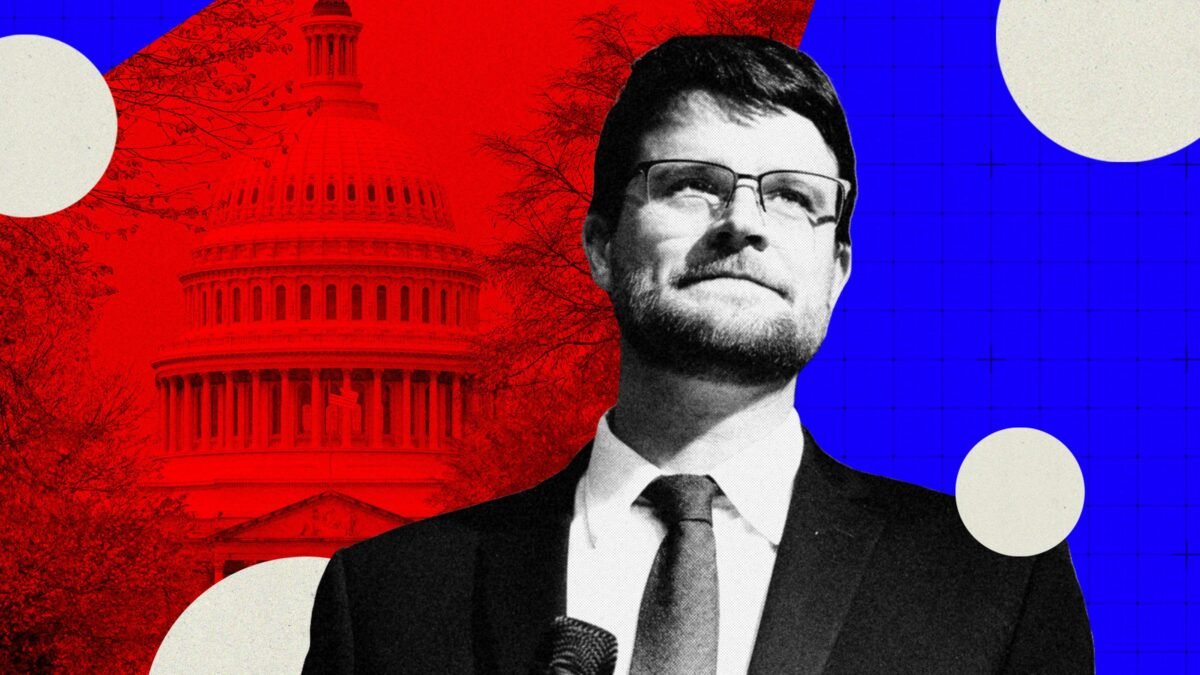
Will Lawrence, the newly elected Democrat in Michigan’s 7th Congressional District, says he will arrive in Washington with an explicit goal: a federal data center moratorium, paired with a pause on advanced AI development. The promise places the issue that defined his upset campaign at the center of his early legislative agenda.
Lawrence defeated incumbent Republican Tom Barrett in one of the country’s most expensive House races. His path to the general election ran through a contested primary against opponents who had far more money. During the campaign, his opposition to data centers came well before many other candidates adopted the issue, and it drew support from voters angry about the industry’s local footprint.
An argument about costs and influence

In Lawrence’s telling, the data center debate is not a niche planning dispute. He frames it as a question of who bears the costs and who holds the power. Data centers, he argues, absorb tax breaks, consume large volumes of water and threaten home values. In Michigan, he says, proposed projects would require double or triple the state’s total grid capacity.
He also points to the legal fights that have followed local attempts to regulate the industry. Communities that tried to exercise oversight, he says, found themselves challenged in court by Silicon Valley companies. That dynamic, he argues, tilts the playing field away from residents and toward large corporations.
The result, in his view, is a political and economic system that favors a wealthy few. He describes the need to fight individual projects one by one as a symptom of decisions made far from the communities affected.
Corporate pledges meet skepticism
Recent promises from major technology companies to be more transparent, reduce water use and abandon nondisclosure agreements have not convinced Lawrence. He said he had not reviewed the specific proposals, but that companies feeling public pressure is a positive development. What they have offered so far, he added, is far from sufficient to rebuild trust.
He cited a proposed hyperscale data center announced in the final week of the campaign near Delhi Township, south of Lansing. A local economic development agency and a prospective developer presented the project as different, promising a six-month community engagement process before any decision and outlining protections if construction went forward.
The township board called an emergency meeting. According to Lawrence, roughly 250 people attended—possibly more—and the room overflowed. The message from residents, he said, was still no. He argued that companies now face a high bar to show that anything has genuinely changed.
No conversations with the industry
Lawrence said no technology companies have reached out to him. Asked about the incoming Congress, he described a two-part approach: a federal data center moratorium and a pause on advanced AI development. He said the risks do not currently match the benefits and that a broad conversation among stakeholders is needed to define an appropriate regulatory agenda.
He compared his proposed pause to the one Senator Bernie Sanders has advanced, which is contingent on AI safety regulations. For Lawrence, safety includes not sacrificing people and the planet to build data centers. Both the technology and its physical infrastructure, he said, require proper regulation.
He also sees a role for congressional oversight and investigation. Drawing on Michigan’s auto industry, he argued that a carmaker would never survive putting a vehicle on the market with even a 1 percent chance of a fatal highway explosion. Silicon Valley companies, by contrast, are developing products he says carry a 10 percent chance of killing everyone on Earth. By any existing consumer protection standard, he contends, that amounts to reckless endangerment and should prompt investigations and lawsuits.
Whether a moratorium can advance in a divided Congress is untested. What is clear is that Lawrence intends to make data centers a federal fight, not just a local zoning battle.