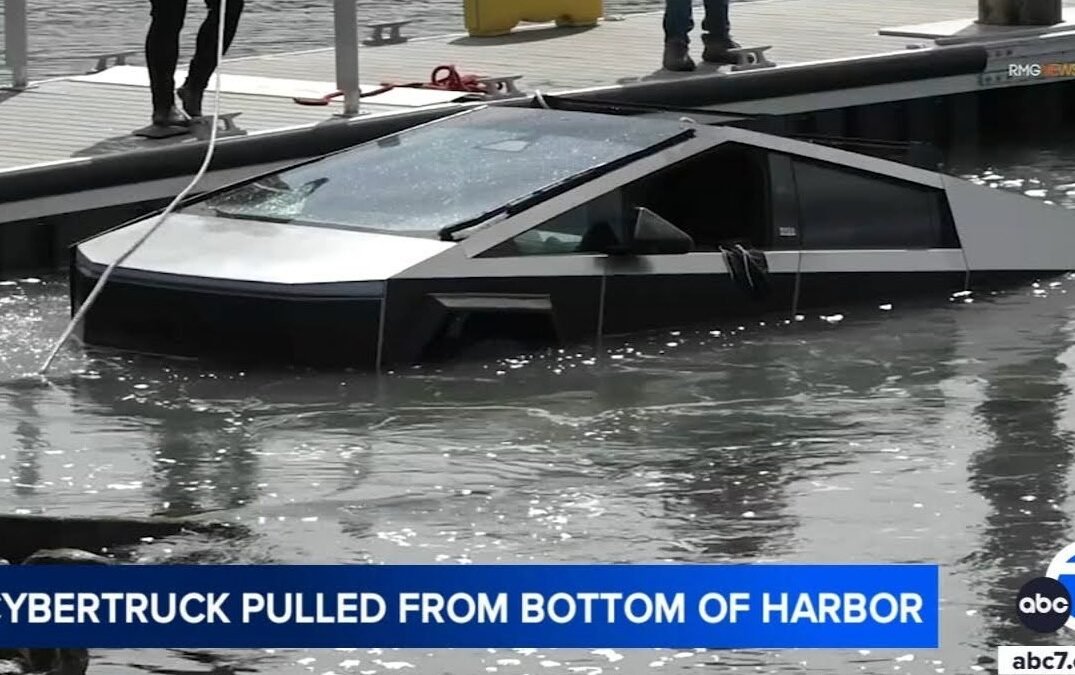
The Cybertruck production wind-down is no longer speculation. On Friday, Elon Musk announced on X that Tesla will “wind down” production of the stainless-steel pickup next year to clear space for the Cybercab. The timing of the disclosure—just after 1:30 AM on November 6—was as unceremonious as the vehicle itself was loud. For a product once pitched as Tesla’s crowning engineering achievement, the end came with a whimper, not a bang.
From Hype to Humiliation

When the Cybertruck debuted, Musk called it “our best product ever” on a 2019 earnings call—though he hedged even then, admitting he could be “totally out to lunch.” In the years that followed, Tesla targeted production and demand of 250,000 units annually. The final tally tells a different story: roughly 70,000 Cybertrucks sold in total. That gap between ambition and reality is the defining metric of the vehicle’s commercial life.
To absorb unsold inventory, SpaceX—Musk’s other company—became one of the largest single purchasers of the truck. In effect, the billionaire had to buy his own product to make the numbers look less grim on paper. It was a telling workaround for a vehicle that never found the mass audience Tesla had promised.
A Cascade of Failures

The reasons for the Cybertruck’s collapse are numerous and well-documented. It arrived too expensive, delivered less range and towing capacity than advertised, and was subject to repeated recalls. Its polarizing angular design—a love-it-or-hate-it proposition from the start—did it no favors with traditional truck buyers or environmentalists alike. Even its comically oversized windshield wiper became a recurring punchline.
But the deeper problem was always Musk himself. More than any vehicle in recent memory, the Cybertruck was inseparable from its creator. When Musk aligned himself with Donald Trump’s MAGA movement, the truck became a physical avatar of that brand of politics. Owners of Model 3 or Model Y could plausibly claim they bought their cars before Musk’s political turn; Cybertruck owners had no such cover. The vehicle was a rolling liability, a statement of allegiance whether the driver intended it or not.
For a subset of buyers, that was precisely the point. Owning a Cybertruck became a way to provoke liberals, car purists, and environmentalists who mocked its sharp edges and build quality. Trump wraps, flags flown from truck beds, and appearances at conservative rallies turned the pickup into a prop for grievance politics. But vibes are fickle. What once felt like rebellion began to look like a poor way to run a country—or a car company.
The Election That Sealed It

Musk’s tweet came just three days after a devastating electoral defeat for his political investments. He had poured more than $445 million into Republican races, with over $200 million directed at Texas alone. The returns were nonexistent. Democrat James Talarico defeated Ken Paxton by 12 points, breaking a 38-year Democratic Senate drought in the state, while Gina Hinojosa unseated Governor Greg Abbott. Texas turned blue despite—or perhaps because of—the world’s richest man’s efforts.
The Cybertruck’s fate was sealed by that same political shift. The election stripped away the aura of inevitability that had insulated both Musk and his pet project. Voters signaled they were tired of division and spectacle, and the truck that had become a symbol of both suddenly looked like a relic of a passing moment.
A Vehicle Out of Time
There is a peculiar irony in the Cybertruck’s arc. It was designed to look like the future—a Blade Runner-inspired fantasy of angular steel and low-poly ambition. Instead, it became an instant symbol of the past, a monument to hubris and the limits of personality-driven product design. The Cybertruck made a mark, but it missed its moment. Now, with production winding down, it will be remembered less for what it promised than for what it revealed about the man who willed it into existence.