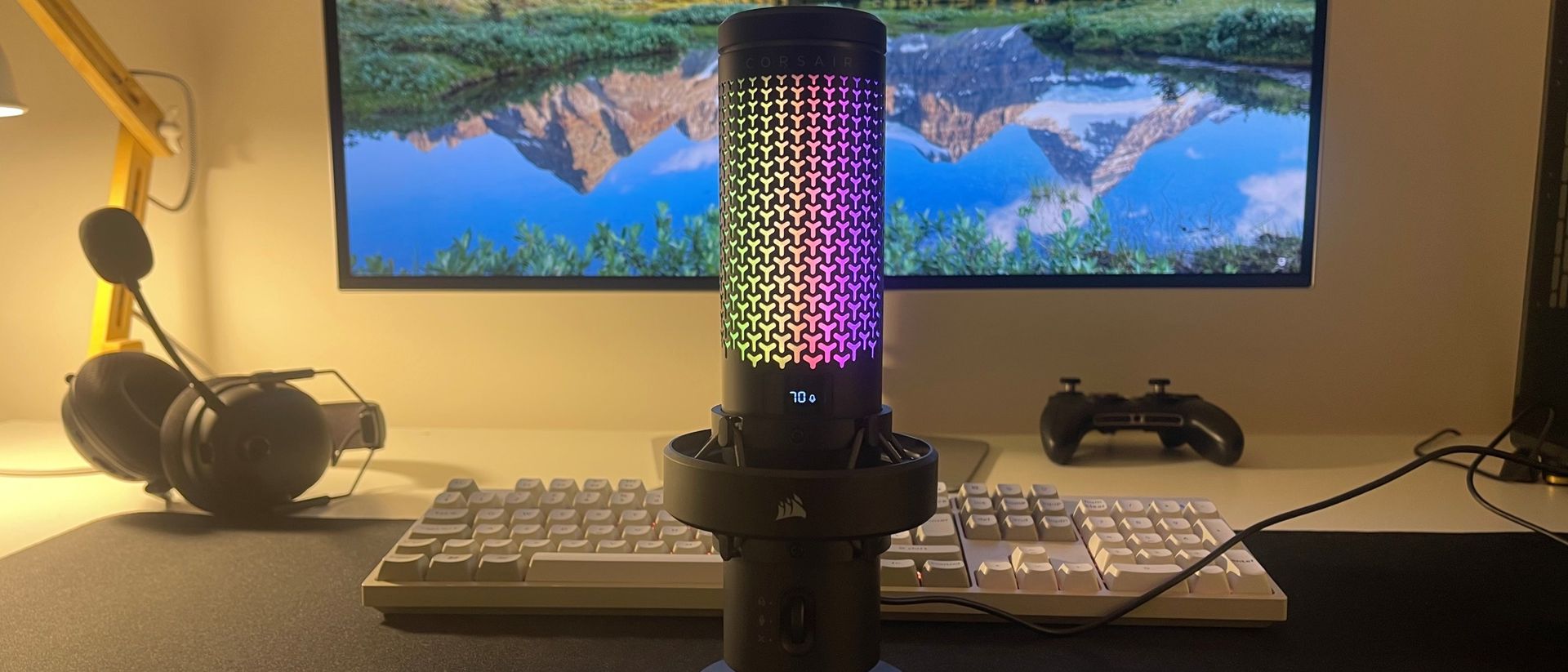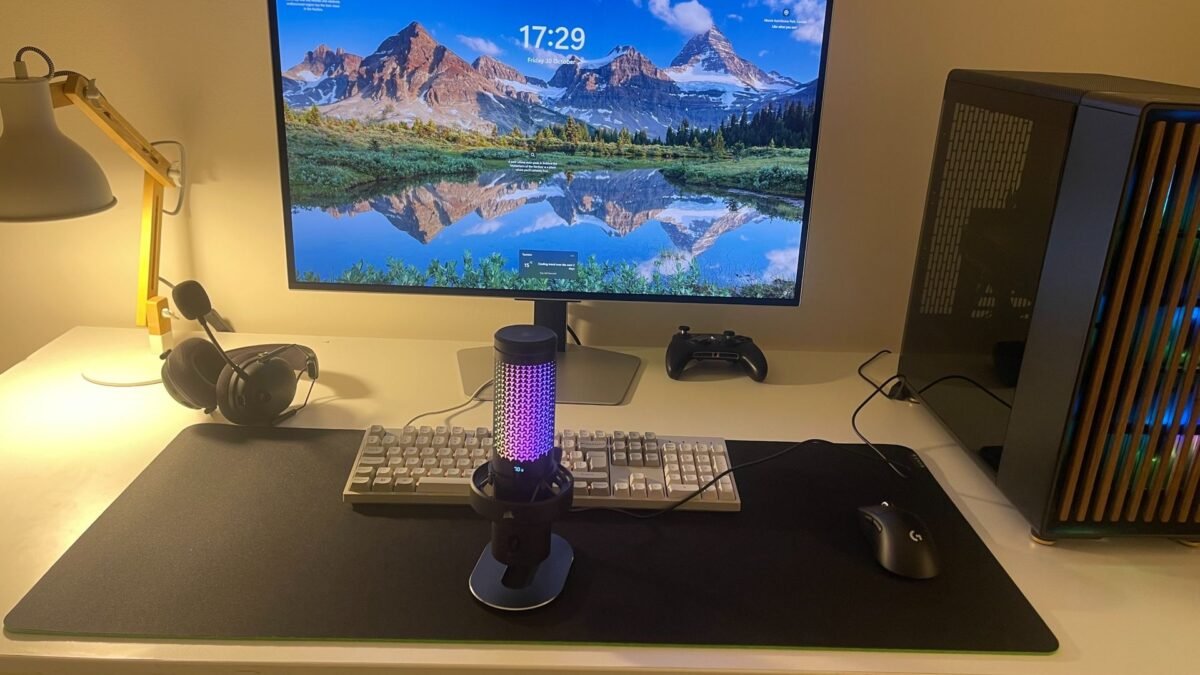
In this Corsair Voxara review, the headline is simple: Corsair has built a genuinely capable USB-C microphone for gamers and streamers, but it has not built the studio-grade device its marketing implies. Priced at $199.99 / £159.99 / AU$329 and available now, the Voxara gets a lot right — construction, out-of-the-box vocal sound, and an intuitive control layout — while one missing feature undercuts its loftier claims.
What the Voxara Gets Right
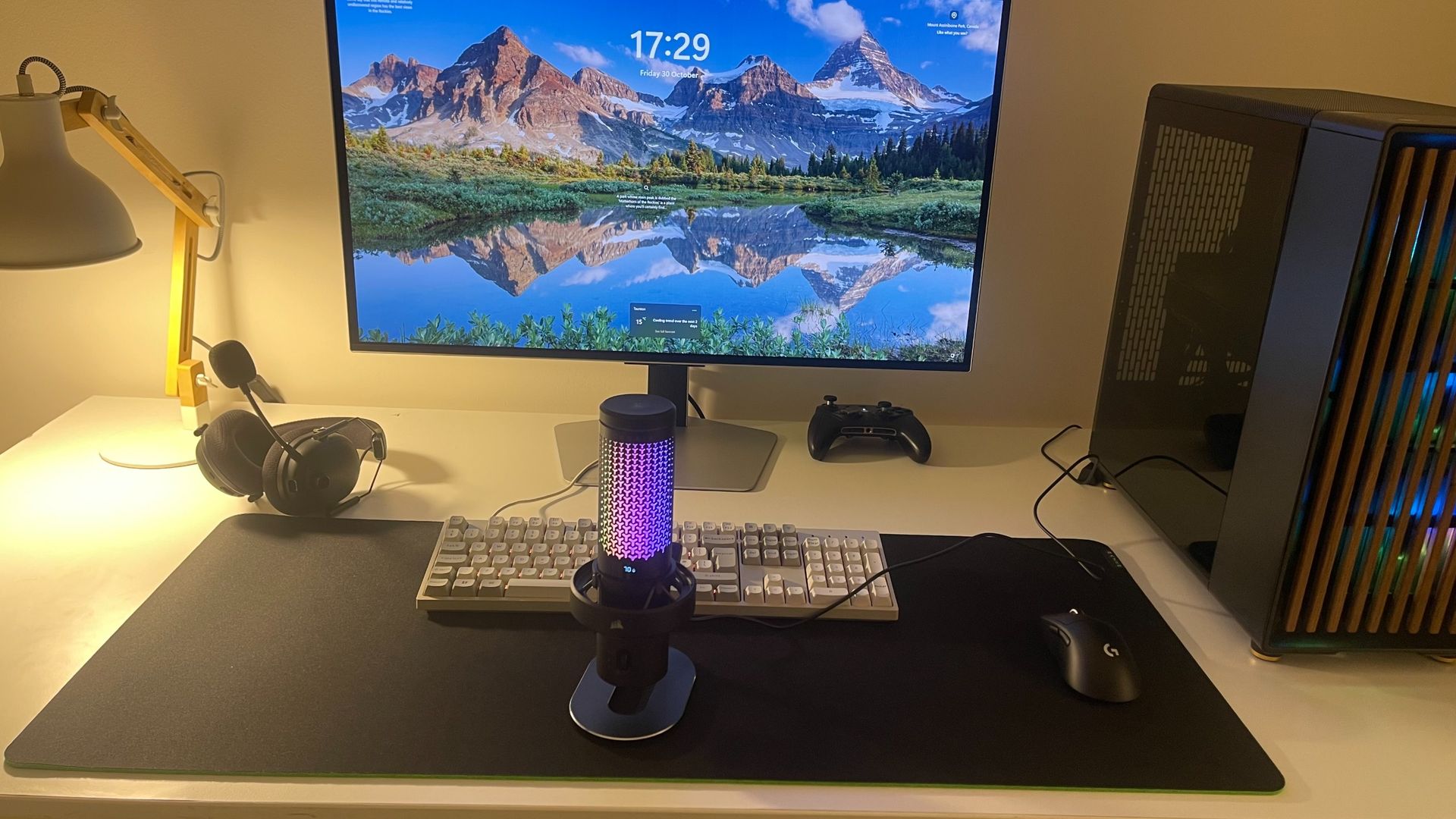
The microphone is built around a 25mm capsule, and that hardware choice pays off immediately. Recordings of speech carry enough detail to sound rich and well-rounded for podcasting and Twitch, and the tuning suppresses harsh esses and popping P sounds without an add-on pop shield. For in-game callouts, the fidelity is arguably more than most players need.
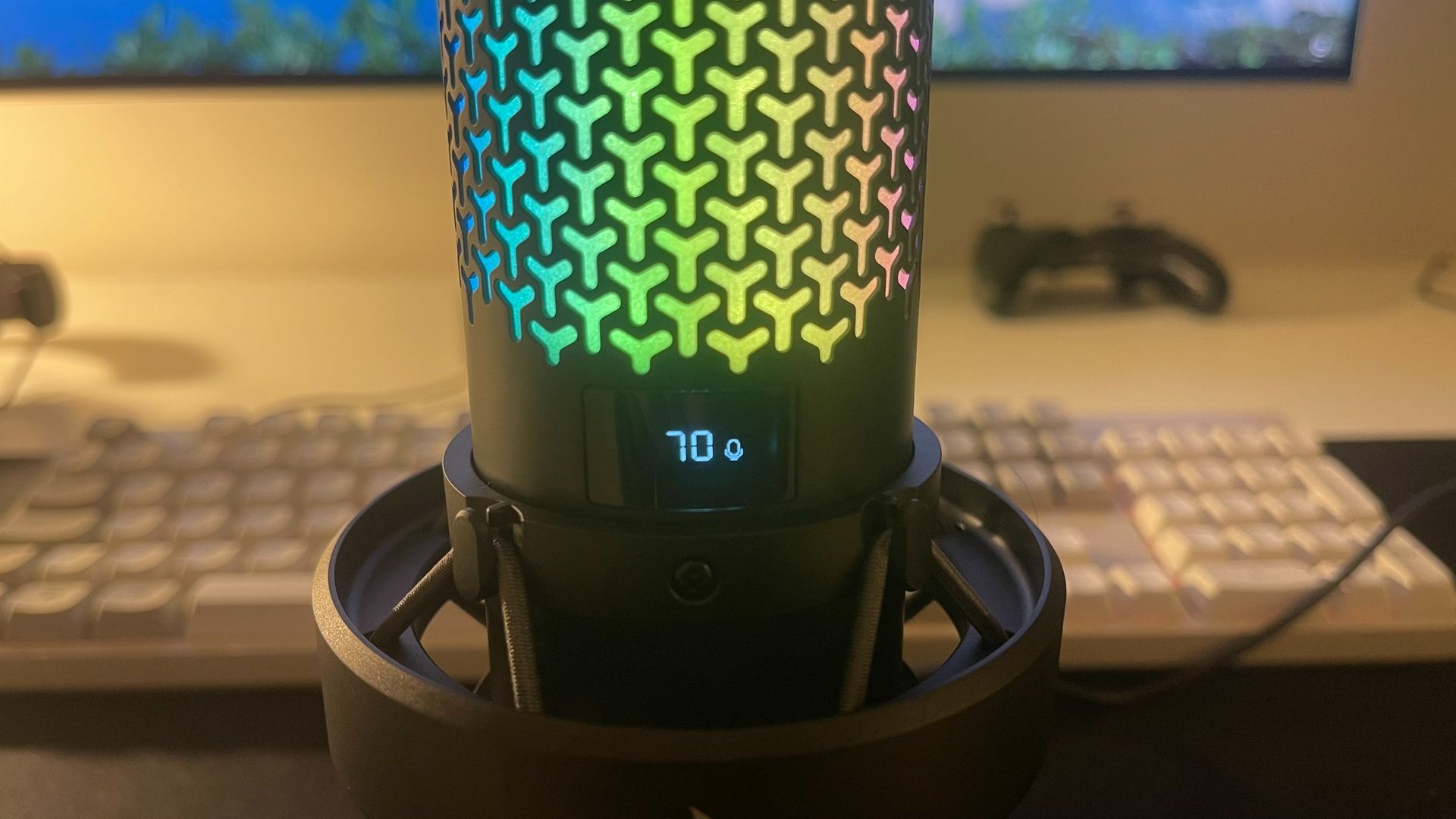
Corsair has also put care into the housing and circuitry. The tap-to-mute control at the top of the mic introduces almost no unwanted noise, and the 3.5mm monitoring input runs at a sensible output level without crackle or distortion. A digital display on the front shows settings and automatically flips depending on whether the mic is pointed up or down — a small touch that makes the supplied desk stand or a boom arm easier to live with.
Controls are sensibly placed. A scroll wheel on the lower third adjusts mic, monitoring, and audio mix levels, toggled by clicking the wheel. A knob at the rear cycles the RGB lighting, which offers three modes: solid color, multicolor effects, and a level meter that reacts to audio. The ring around the tap-to-mute surface changes color to show mute status, which is genuinely useful. The other lighting modes are more distracting than helpful during recording or on-camera work.
Where the Corsair Voxara Falls Short
The biggest issue is connectivity. The Voxara is USB-C only. Without an analog XLR output, it cannot offer the latency control, preamp settings, gain amplification, and analog-to-digital conversion that broadcast-quality studio work demands. Those components are built into the mic’s internal circuitry, which makes setup simple but imposes a fidelity trade-off. A maximum 32-bit/192kHz sample rate does not change that, and it is largely irrelevant to most buyers.
The other caveat is software. Getting the best sound means installing Elgato’s Wave Link app, which is powerful, cleanly designed, and home to the AI-driven Voice Focus noise suppressor. Voice Focus works very well, but it is not handled automatically by the mic’s onboard DSP. Anyone who wants true plug-and-play performance should weigh that requirement carefully.
The supplied stand is another weak point. It holds the mic precisely and routes the USB-C cable through a hollow vertical column, but it transmits accidental desk knocks. Podcasters and streamers who record at a desk will likely need to budget for a boom arm as well.
Value and Alternatives
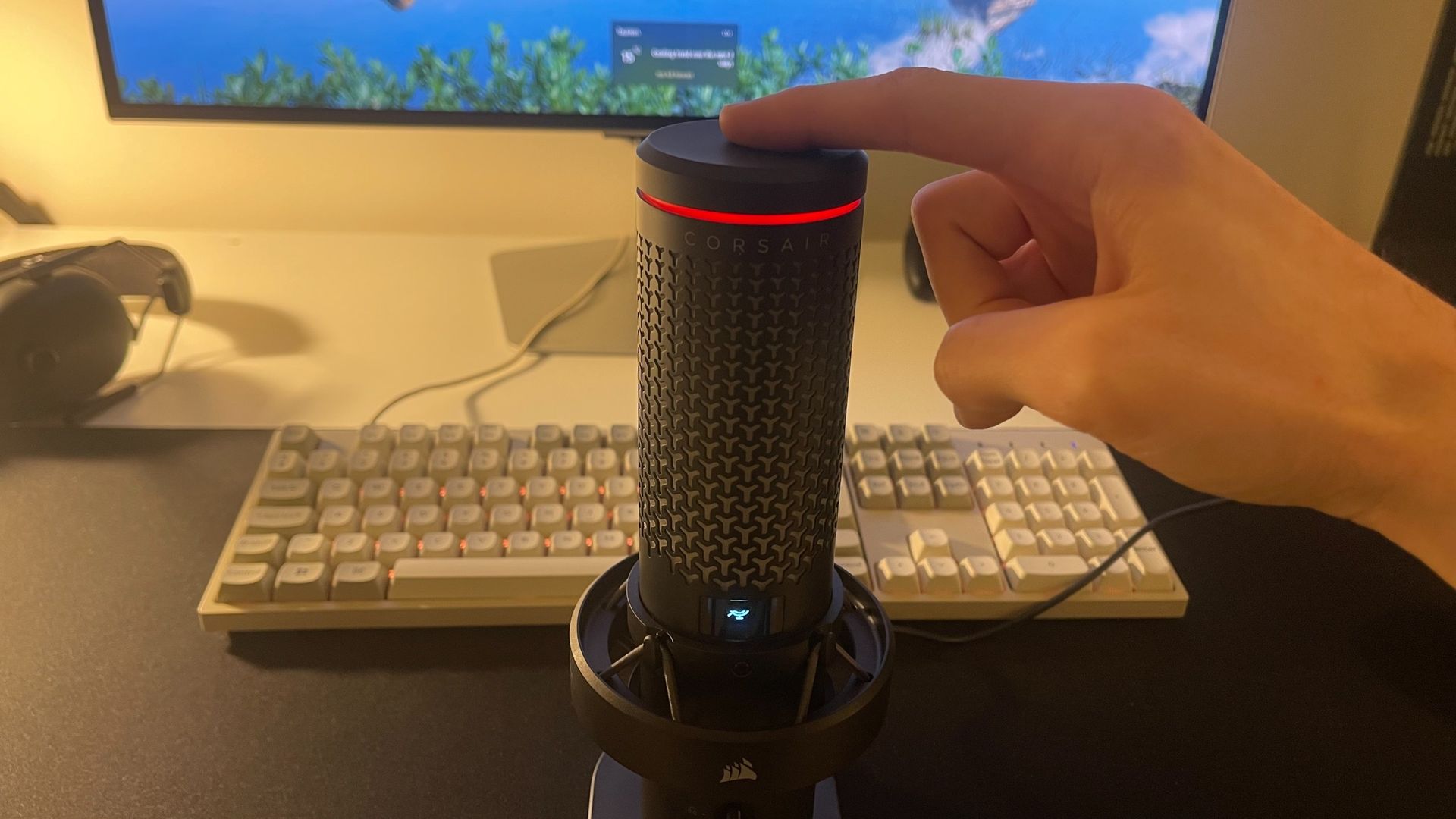
For build quality, software features, and crisp sound, the Voxara offers solid value. Compatibility covers PC, Mac, PlayStation 5, and Nintendo Switch — though not Xbox — making it easy to move between devices in a battlestation. The RGB lighting is a meaningful part of the premium price, so buyers who plan to switch it off should look elsewhere.
The competition is stiff. Rode’s PodMic USB offers both XLR and USB connections at around the same price, while the SteelSeries Alias is a favorite for easy out-of-the-box sound. Razer’s Seiren V3 Pro sits higher at $249.99 / £249.99 and adds an XLR input. Against those options, the Voxara’s lone USB-C port is the clearest reason to hesitate.
Verdict
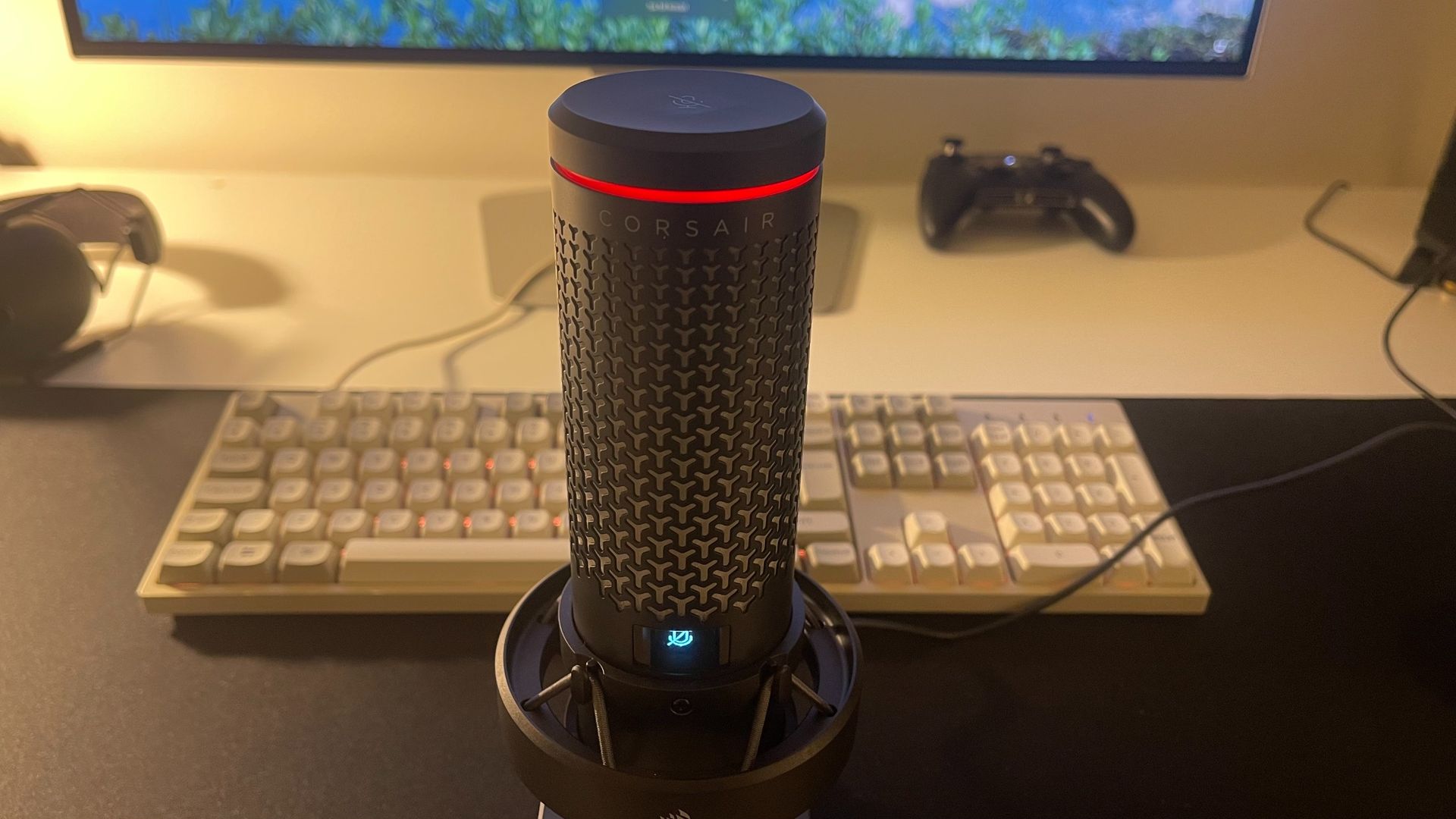
Corsair’s debut microphone is an impressive first effort. It sounds polished without tweaking, looks at home in an RGB-heavy setup, and pairs with capable software. But ‘studio-grade’ is the wrong label for a USB-only device, and the Voxara’s price asks buyers to value its lighting and ecosystem. For clear comms and streaming, it is a strong choice. For studio tasks, it is not the tool.