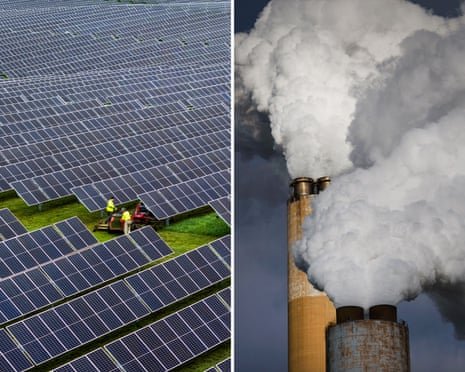
A procedural vote in the Senate on Monday pushed the Baaja permitting bill past its first hurdle, opening debate on legislation that would accelerate construction of pipelines, power lines and other large infrastructure by narrowing environmental and social safeguards.
The motion carried 73 to 25. It does not enact the Bipartisan American Affordability and Jobs Act, but it keeps the 417-page measure alive as supporters try to move it through both chambers before the new Congress is seated in January.
The bill is sponsored by two Republicans and two Democrats. Its backers say federal reviews have become too slow and that shortening them is essential for building interstate transmission that can carry renewable energy to the grid. Opponents, including Earthjustice, the Sierra Club and the ACLU, argue the trade-offs are too steep, weakening laws that protect clean water, endangered species, historic sites and tribal sovereignty.
A push from Trump and a pull from the left
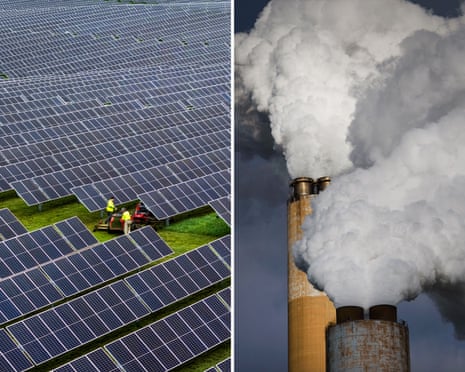
Donald Trump urged all senators to support the measure. The political ground shifted after last week’s midterm elections, which delivered a historic blue wave and prompted some environmental and tribal advocates to ask Democratic leaders to slow down.
House minority leader Hakeem Jeffries, who is expected to become speaker in the new Congress, said the bill falls short in several areas, including protections for tribal sovereignty. He indicated he would not rubber-stamp legislation without more constructive engagement with his caucus.
Senators Martin Heinrich and Sheldon Whitehouse, the bill’s Democratic sponsors, said earlier on Monday that they had the votes to pass it. Heinrich said last-minute changes were made to strengthen tribal consultation, and he argued the bill would create a more level playing field where clean energy can compete on cost. Whitehouse, wearing a tie patterned with wind turbines, said the measure would set the stage for broader clean energy work next year and asked critics to have some patience.
Tribal and civil liberties objections
Indigenous groups held a press conference on Friday urging senators to reject the bill, saying it would weaken the federal government’s obligation to consult tribes on projects that affect them. Mark Macarro, president of the National Congress of American Indians, called it an existential threat to Indian country.
The ACLU sent senators a letter warning that the bill could speed up the development of ICE detention centers by limiting the National Environmental Policy Act, the law that attorneys have used to challenge the Trump administration’s plans to convert 11 mega-warehouses into detention facilities. The group said the measure would hamper its work to halt the expansion of immigrant detention.
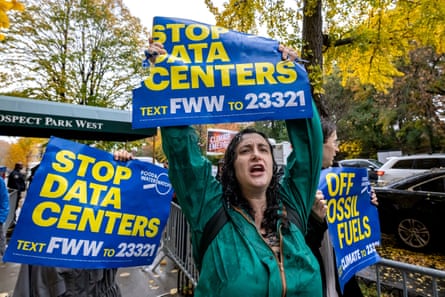
Protesters also gathered outside Senate minority leader Chuck Schumer’s building on Friday, raising concerns that the bill would make it easier to build datacenters. Bill McKibben noted the irony of Congress acting to accelerate datacenter construction right after an election in which opposition to such projects was prominent.
What the legislation would change
The bill would simplify federal rules for interstate transmission lines, narrow the scope of reviews under the National Historic Preservation Act, limit tribal consultation, restrict use of the Clean Water Act, shorten timelines under the Endangered Species Act, and constrain how the executive branch can interfere with federal permitting.
It would also make major changes to the National Environmental Policy Act, narrowing the definition of a major federal action that triggers review and effectively eliminating the authority of courts to enforce compliance. Abbie Dillen, president of Earthjustice Action, described the package as the single biggest overhaul of American environmental law since the 1970s.
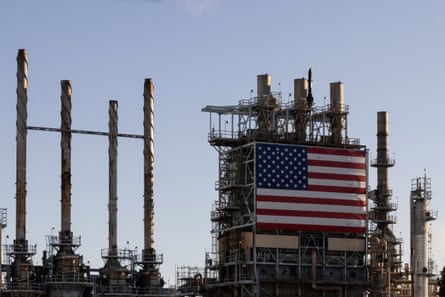
Dillen said the bill creates an accelerated fast track for gas pipelines. The American Petroleum Institute has welcomed it as a historic opportunity and called on Congress to finish permitting reform this year. The bill could benefit the Constitution gas pipeline that Williams Companies is trying to build through New York, a project whose water quality permit was denied in 2016 and which has been revived under the Trump administration. It could also help gas pipelines in the west, including projects that the advocacy group Western States and Tribal Nations wants to build to supply datacenters and export liquefied natural gas.
Clean energy hopes and emissions uncertainty
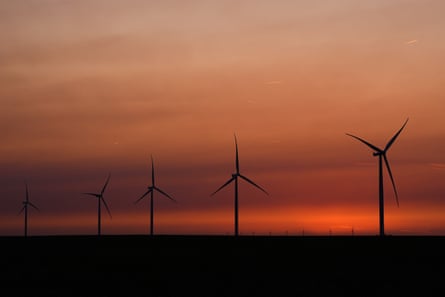
Some clean energy advocates support the bill because it would help connect wind, solar and battery storage to the grid. At the end of 2025, about 2,060 gigawatts of generation and storage capacity were waiting in interconnection queues, and interstate transmission lines can take a decade to build.
Ben King, energy and climate director at Rhodium Group, said the bill would reform the interconnection queue process and unlock needed transmission. He described the current moment as a low point for clean energy policy support after Trump repealed clean energy tax credits, and said the bill would set up the ability to build more quickly when the next wave of climate policy arrives.
Modeling on the bill’s emissions impact is unsettled. Rhodium Group found that domestic emissions would fall if it passes, while Purdue engineering professor Kevin Kircher found they would rise. Kircher said the optimistic case assumes a large amount of clean energy is ready to go and would win on economics once queues and regulations are cleared, but he considers that understanding outdated. He noted that grid operators have updated their queues this year to remove redundant and speculative offers, and that some queues now look quite gassy.
King said the economics favor renewables, whose costs have fallen impressively while fossil fuels have not become cheaper. He acknowledged that the American Petroleum Institute might bet on more room for fossil growth. Kircher stressed that the models have not had time for peer review since the bill was introduced on 30 September, and that mapping dense legal text onto energy outcomes is complicated and uncertain.
Dillen said the bill would