ANC's worst local election result — The African National Congress (ANC) has recorded its worst local election result since Nelson Mandela led South Africa to democracy, capturing just 31% of the national vote—a sharp fall from the 46% it won in 2021 and far below the 65% it held two decades ago. The party’s secretary-general, Fikile Mbalula, described the outcome as “catastrophic” on Saturday, acknowledging that the high cost of living had driven middle-class voters away in large numbers.
A Dramatic Loss of Ground

The decline is visible across every layer of government. The ANC secured a majority in only one of the country’s nine provinces, Limpopo, compared with six in 2021. In the country’s eight major cities, it won the most votes in just two, down from six at the last local elections. President Cyril Ramaphosa, speaking at the count centre on Sunday night, said the party accepted the people’s verdict “with humility” and characterised the decline as concerning.
The Democratic Alliance (DA) finished second nationally with 25% of the vote, retaining control of Cape Town. Former president Jacob Zuma’s MK party took third place with 10%, unseating the ANC as the leading party in Durban. The Economic Freedom Fighters (EFF), led by Julius Malema, came fourth with 6%, a result that marks a significant drop from its earlier ambitions to challenge the ANC directly.
Voter Turnout and Shifting Patterns

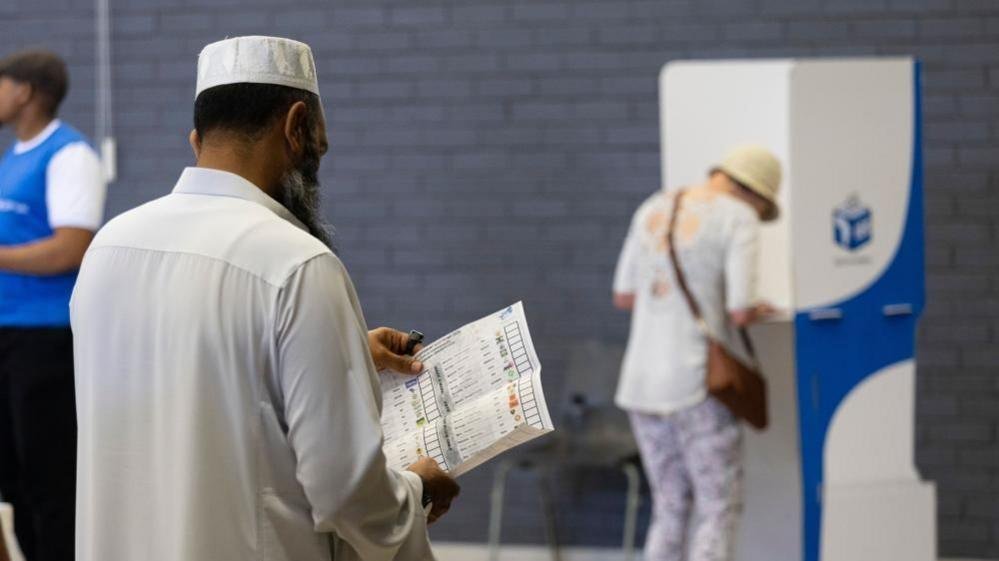
Turnout rose to 52%, up from 46% in 2021 when elections were held under Covid-19 restrictions. While the DA made gains in urban areas, its overall share edged up only slightly from 22% to 25%, still below the 27% it achieved in 2016. Analysts also noted a shift in voting behaviour, with the DA—historically associated with white voters—attracting more black support, a trend that political analyst William Gumede described as moving toward a post-racial voting pattern.
Coalition Politics Takes Centre Stage
With no party able to claim an outright majority in most centres, South Africa now enters a period of local coalition negotiations. Parties have 14 days from the announcement of results to form alliances. The three metropolitan municipalities in Gauteng—the country’s economic heartland—are under particular scrutiny, and the ANC may even be excluded from power in Johannesburg and Pretoria.
“We are now in a coalition country,” Gumede said, explaining that voters are signalling a desire for cooperation rather than dominance after three decades of ANC rule. He added that the ANC could become the second-largest party by 2029 and warned of potential internal infighting as the liberation movement era draws to a close.
Leadership Transition Adds to Uncertainty
The result compounds pressure on the ANC, which lost its parliamentary majority in the 2024 national elections and was forced into a Government of National Unity. Ramaphosa is due to step down as ANC leader next year when his term ends, though he will remain president of the country until the 2029 national elections. Few candidates are lined up to succeed him in either role, adding to the party’s uncertainty.
Political analyst Susan Booysen said the outcome delivers a “devastating message” to the ANC, driven largely by poor service delivery and failing infrastructure—from water and electricity to sanitation—that has affected daily life in suburbs and townships alike. “These are huge problems,” she said, “and have really been affecting the lives of ordinary people in very dramatic ways.”
The ANC’s decline at local level mirrors its national trajectory, and the party now faces the challenge of rebuilding trust while navigating a political landscape where coalitions are becoming the norm. For South Africa, the election marks a new chapter in which no single party can take power for granted.