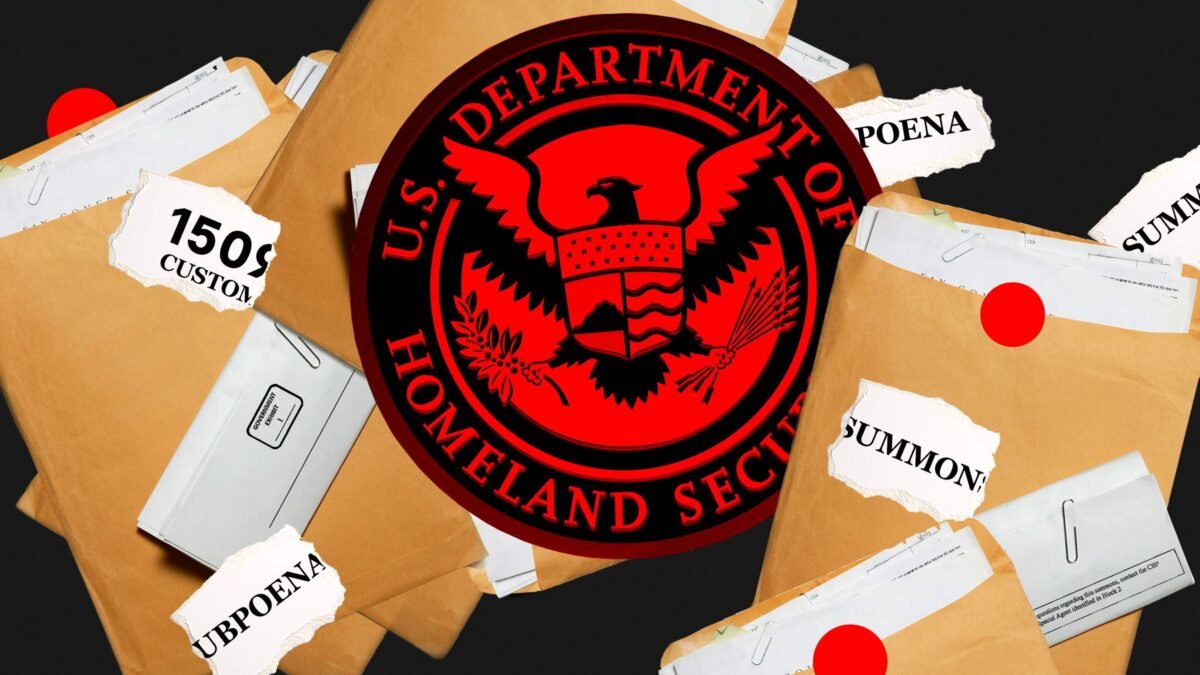
Homeland Security Investigations has told a federal court it estimates sending at least 185,000 administrative subpoenas since the start of the Trump administration — a figure that highlights how the agency has come to rely on a warrantless investigative tool known as the administrative subpoena surge.
The number surfaced in a court filing tied to a Freedom of Information Act lawsuit brought by the Electronic Frontier Foundation against the Department of Homeland Security. EFF deputy legal director Aaron Mackey said the group is seeking more detail about what that 185,000 estimate actually covers. The original request sought records on how many administrative subpoenas ICE or DHS sent to technology companies, internet platforms and service providers after January 20, 2025. It remains unclear whether the estimate is limited to those companies or reflects a broader set.
A Tool With Deep Roots and New Reach

Administrative subpoenas differ sharply from grand jury subpoenas or court orders. The government does not have to persuade a judge that it needs the documents or explain what data it is seeking from a company.
Congress first gave the stand-alone US Customs Service the power to issue what is called a 1509 customs summons nearly a century ago. The purpose was to let customs officers examine business records tied to imported merchandise and determine whether duties were owed. In 2003, Congress moved that authority, including the customs summons power, to the newly created Department of Homeland Security.
For years, DHS maintained that customs summons could be used only for narrow purposes. In 2017, the DHS inspector general criticized Customs and Border Protection’s Office of Professional Responsibility for attempting to use a customs summons to identify an anonymous Twitter user. The inspector general noted that the agency’s own procedures manual limited such summons to information related to customs or immigration laws.
That position has since shifted. The Trump administration recently argued in court that because the Customs Service’s powers passed to DHS under the Homeland Security Act, the department can deploy that authority across what it describes as a broad investigative portfolio — including laws beyond traditional customs and immigration enforcement.
Scale Compared With Earlier Years
To grasp the scale of the current figure, a prior WIRED analysis found that ICE agents issued roughly 170,000 of the 1509 customs summons type over more than six and a half years, from the beginning of 2016 through mid-August 2022.
ICE did not answer questions about the reason for the sharp increase. Mackey offered one possible explanation: there is almost no downside to filing them. In the worst case, the recipient declines to comply. ICE can then take the company to court to force compliance, as it recently did with Google, or withdraw the summons and pursue the information through a grand jury subpoena, as The Intercept reported it recently did with Reddit.
Since the current administration began, federal officials have used DHS’s administrative subpoena power in attempts to unmask anonymous online critics and to obtain broad customer records about protesters. One example involved a list of people in the Minneapolis-St. Paul area who purchased a particular green beanie from REI.
Lawmakers and Advocates Raise Alarms
Senator Ron Wyden of Oregon described the numbers reported to EFF as a dragnet domestic surveillance program run by the Trump administration’s Homeland Security Department.
Mackey said that even without exact details about all 185,000 subpoenas, their prolific use raises serious concerns about an agency potentially operating without internal oversight that respects First Amendment rights and privacy.
Wyden pointed to his proposed Subpoena Abuse Prevention Act, a bipartisan bill he said would sharply curb federal subpoenas and create consequences for officials who abuse surveillance authorities. He added that next year he plans to use the Senate Finance Committee gavel to examine what he called HSI’s unprecedented misuse of customs law to target Trump’s enemies.
When law enforcement agencies receive powerful investigative tools, Mackey said, even with good intentions and legitimate investigations, careful limits are essential.