If you have been searching for a Creative XF1 review that cuts through the marketing, the headline is straightforward: these compact desktop speakers deliver an awful lot for $179 / £139 / AU$339, even if their bass response keeps them shy of true all-round greatness. Creative launched the XF1 on June 24, 2026, and the system is on sale now. It is a fully active, bi-amped stereo pair with 72 watts on board, a USB-C input that handles files up to 24-bit/96kHz, Bluetooth 6.0 with LDAC support, and a control app that includes a 10-band parametric equaliser. For the money, that is a specification list that demands attention.
Design and build: small boxes, clever stands
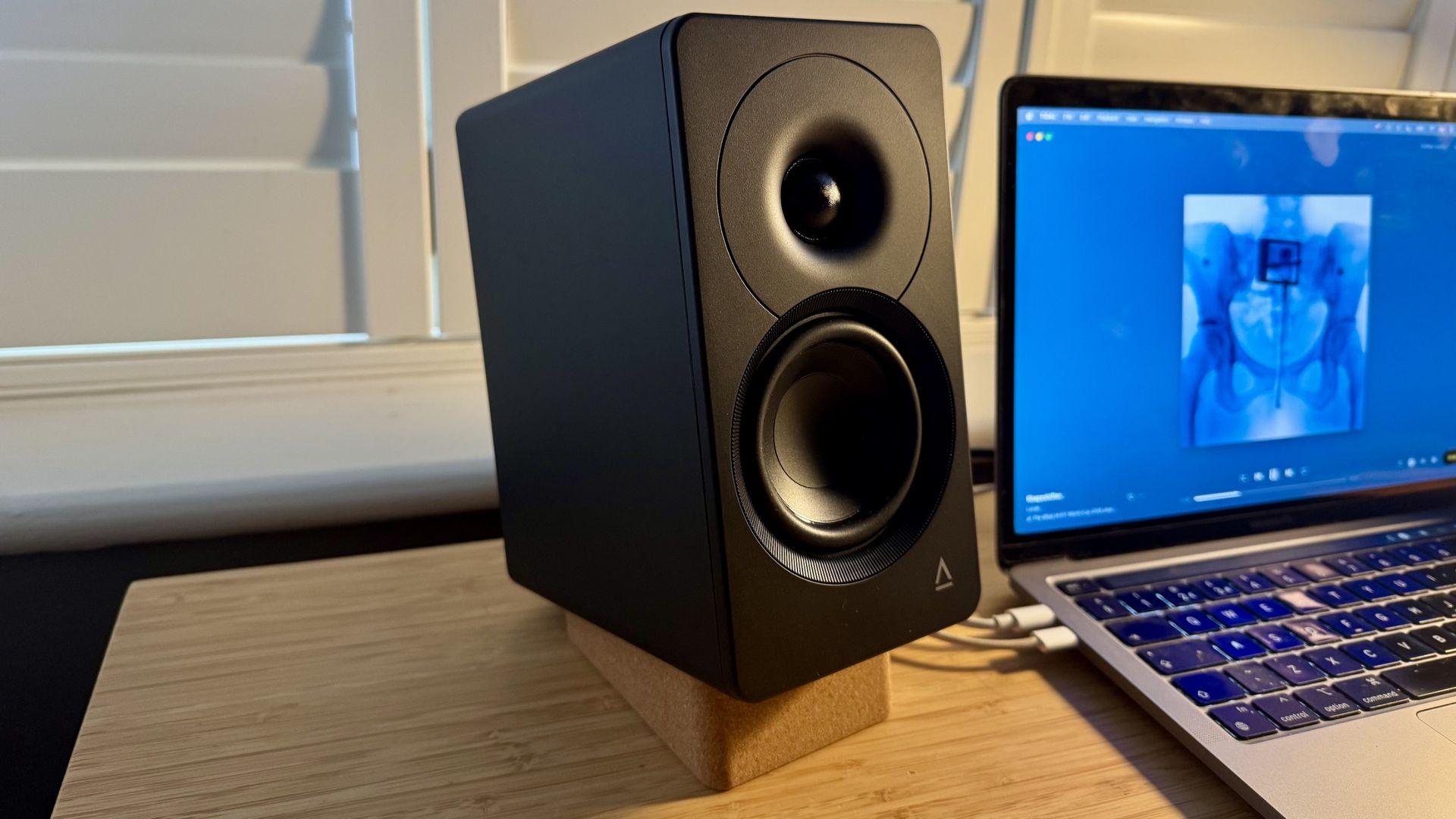
The XF1 measures 191 x 100 x 155mm (HxWxD), so it will not crowd a busy desk. Each cabinet is made almost entirely from MDF, with curved horizontal edges and a soft-touch matte finish that looks more expensive than the asking price. Buyers can choose black or white. The detachable cork stands are a particularly practical touch: they raise each speaker by 15 degrees so the drivers aim towards your ears rather than your torso. You do have to screw the stands into place yourself, but the result is a more natural listening angle without any extra outlay.
Features and connectivity
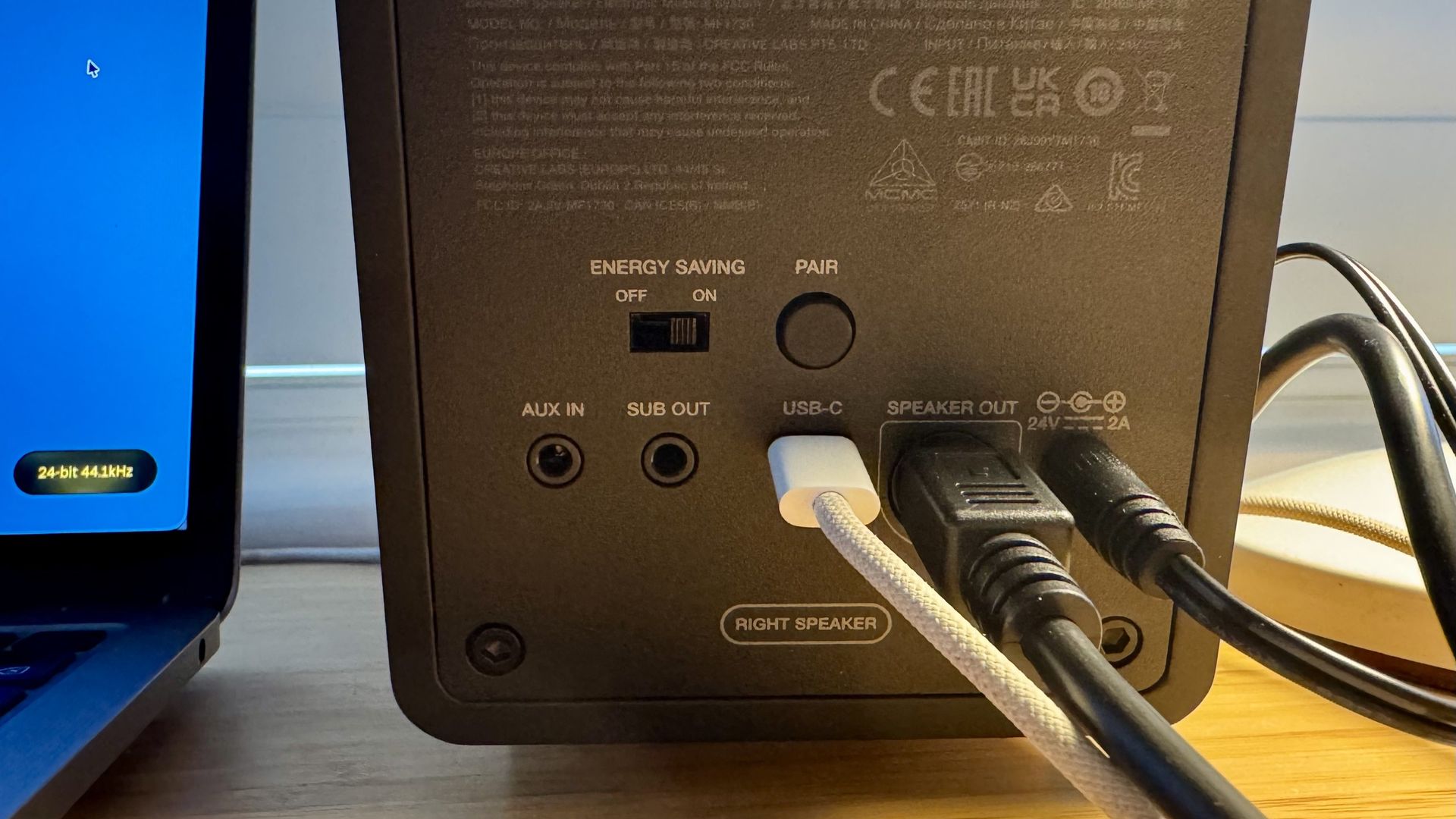
The right-hand speaker is the control centre. It houses the mains connection, the USB-C input, a 3.5mm analogue input, a subwoofer pre-out, a Bluetooth pairing button and an energy-saving switch that powers the system down when inactive. A supplied four-pin cable carries both audio and power to the left channel, so the pair is wired together even when you are streaming wirelessly. There is no option to swap the left and right orientation.
Amplification is Class D throughout. Each 19mm soft-dome tweeter receives 10 watts, while each 76mm mid/bass driver gets 26 watts. Creative says the mid/bass units were designed using finite element analysis to minimise distortion, and the claimed frequency response is 55Hz to 40kHz. A rear-firing bass reflex port sits towards the top of each cabinet. On the wireless side, Bluetooth 6.0 covers SBC, AAC and LDAC, and the USB-C connection opens the door to genuinely hi-res content from a laptop or smartphone.
Sound quality: spacious and detailed, with a soft underbelly
On a desktop, the XF1 rarely needs to be pushed hard, but it is louder than its dimensions suggest and can fill a larger room without sounding lost. More impressive is the sense of scale. A 24-bit/44.1kHz FLAC of Lorde’s ‘Shapeshifter’ comes across as open and airy, yet the speakers keep the performance focused and coherent. That combination of space and togetherness is not a given at this price.
Detail retrieval is strong, particularly through the midrange, where small shifts in tone and texture make voices sound individual and full of character. The tonal balance is never truly neutral, and the tweeter can be a little eager at the very top, but a hint of warmth takes the edge off. Dynamic headroom is decent too: big swings in volume or intensity do not upset the composure or the frequency response.
The low end is where the XF1 falls short of the best. Bass hits with admirable weight, but it is not especially well controlled, and it can plod. That has a knock-on effect on rhythmic expression, and the bottom octaves are largely one-note, lacking the variation and fine detail found elsewhere. Over Bluetooth, streaming Girl and Girl’s ‘Call a Doctor’, the overall character holds up well, though detail and stereo focus drop back slightly.
Usability and the Creative Nexus app
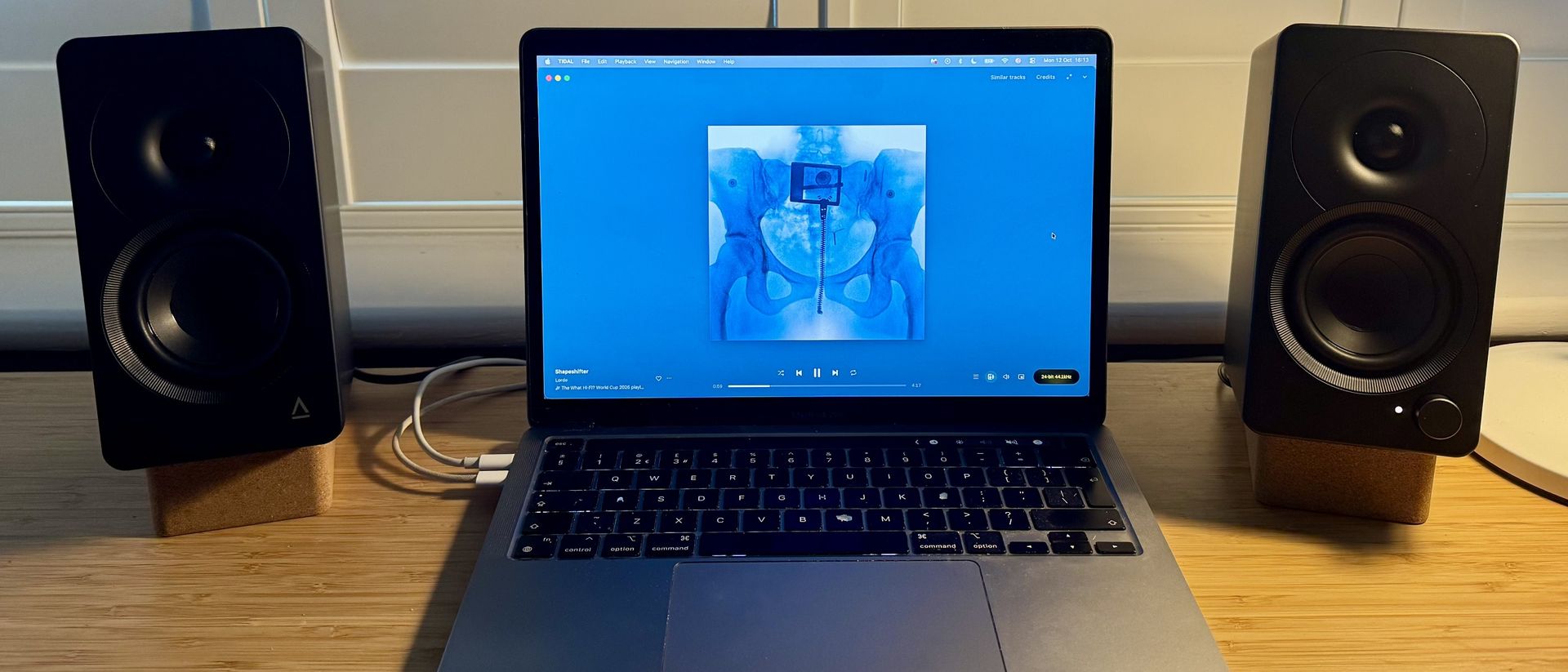
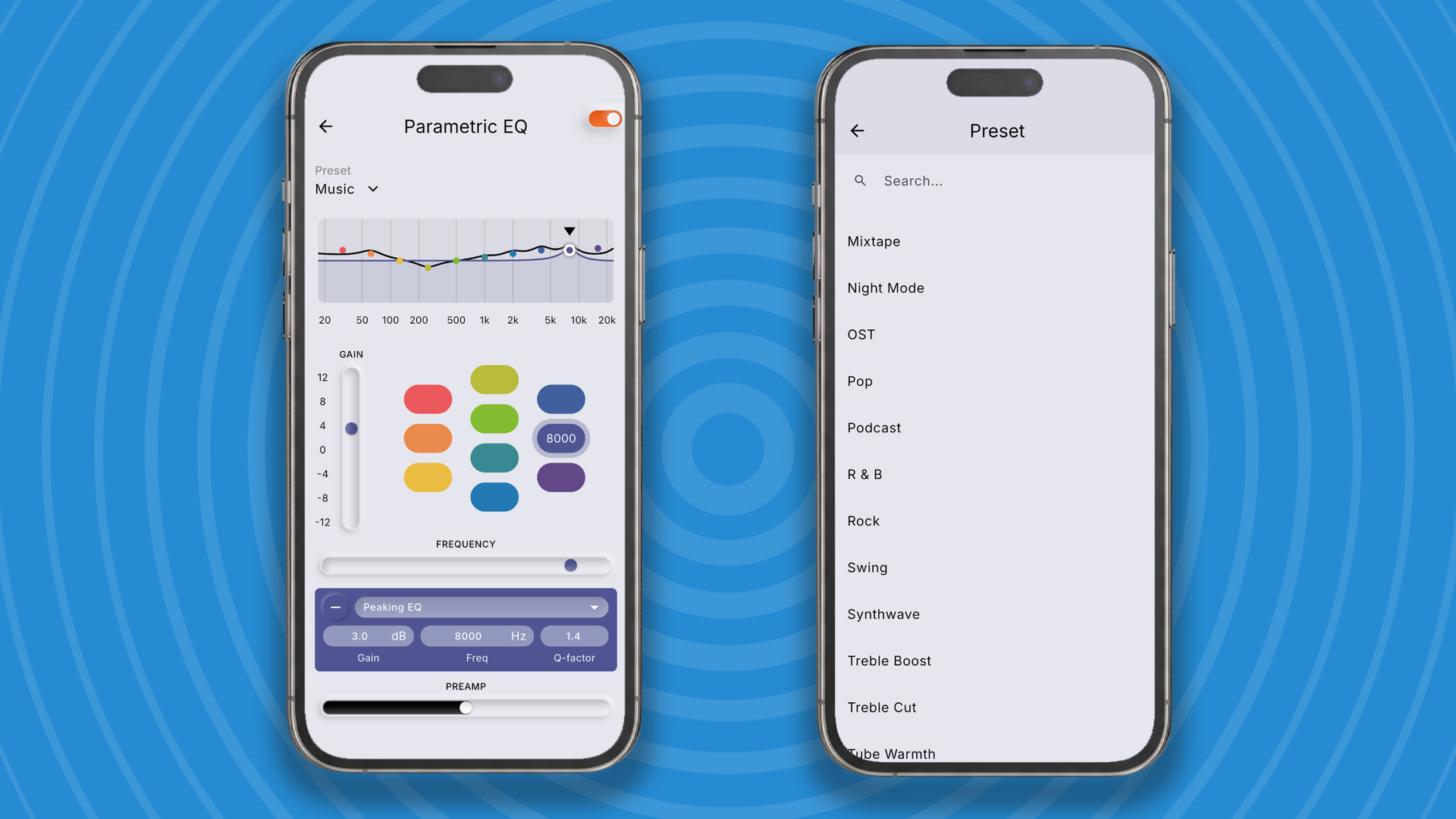
Setting up the XF1 is simple: connect the two speakers together, plug the right-hand unit into the mains, and pair a source. A single turn-and-push dial on the front of the right speaker handles power, volume and input selection, with an LED indicator alongside. The Creative Nexus app offers no playback controls, but it does handle firmware updates, let the system know whether it is on a desktop, and unlock the 10-band parametric EQ. That EQ includes scope for custom settings and dozens of presets, some from Creative and some uploaded by users, giving tinkerers plenty to work with.
Value and verdict
At this price, the Creative XF1 is a compelling package. The build quality would not look out of place on a system costing two or three times as much, the dimensions are neat, and the PEQ allows a great deal of tailoring. Sonically, it gets more right than wrong: detail, midrange communication, dynamic composure and a soundstage that feels larger than the cabinets. The bass is the weak link, and anyone who prizes low-frequency subtlety should consider the Logitech Z407, which includes a subwoofer for slightly less money. But if you want a compact, hi-res-capable desktop system with a big sound and a small footprint, the XF1 deserves a place on your shortlist.