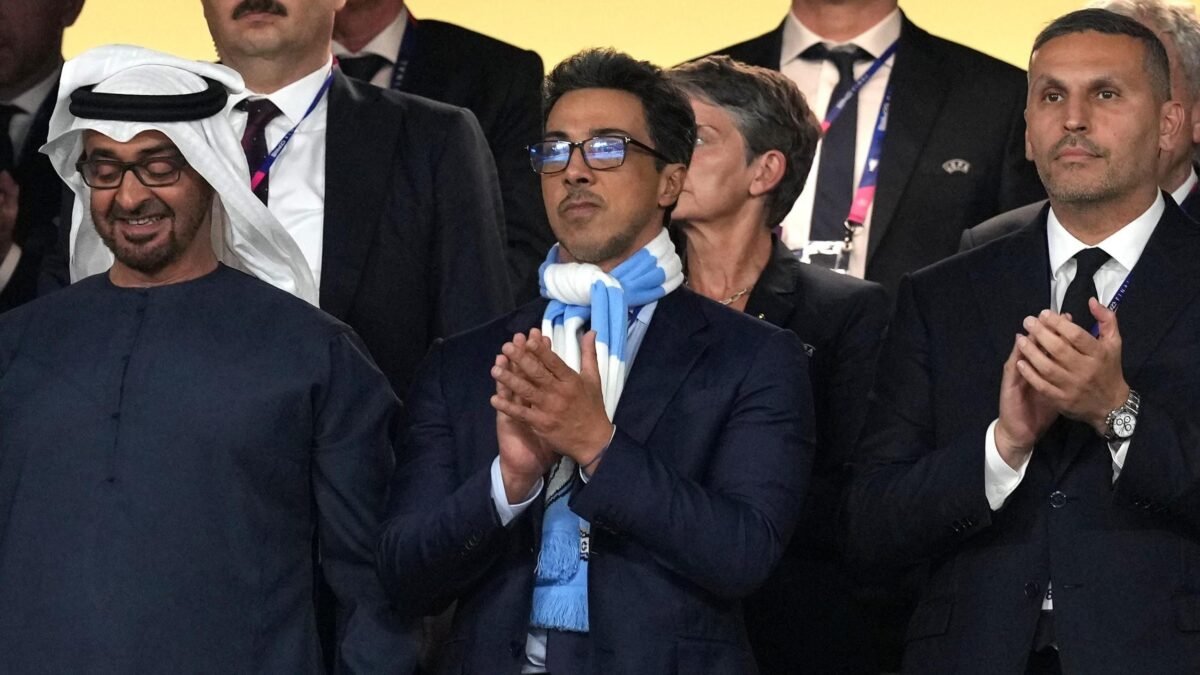
The Manchester Abu Dhabi links extend well beyond the pitch at the Etihad Stadium. Since 2008, when the Abu Dhabi United Group (ADUG) bought Manchester City for £200m, the Gulf investors have become a force in the city’s property, regeneration and political story as well as its football one.
The club’s owner, Sheikh Mansour bin Zayed Al Nahyan, is a deputy prime minister of the United Arab Emirates and a member of its ruling family. Under his ownership, City have spent billions to become one of Europe’s leading clubs. But the relationship with Manchester’s civic leadership has also grown, and it is now under fresh scrutiny after an independent commission found the club guilty of breaching Premier League financial rules between 2009 and 2018. City deny wrongdoing and have appealed.
From stadium lease to joint venture

Manchester City’s ties with the council were established before the Abu Dhabi takeover. The club held a 250-year lease on the City of Manchester Stadium, which had been built for the 2002 Commonwealth Games. In 2014, six years after buying the club, ADUG formed a partnership with the Labour-led council called Manchester Life.
The plan was ambitious: more than 6,000 homes built through investment of up to £1bn over a decade. So far, about 1,500 homes across nine sites have been completed, with more under construction. ADUG has also put money into local facilities, including the East Manchester Leisure Centre, which opened in 2014. The area around the stadium has been extensively redeveloped into the Etihad Campus, home to the women’s and youth teams as well as the first team. More recently, Co-op Live, the UK’s largest indoor arena, opened next to the stadium with ADUG holding a significant stake.
Praise and criticism for regeneration

Bev Craig, the recently elected Mayor of Greater Manchester, has said ADUG showed a “unique passion” and commitment to Manchester. Speaking to the BBC in 2024 while she was leader of Manchester City Council, she described the owners as a “catalyst” for “remarkable” regeneration.
Others are less convinced. A 2022 University of Sheffield report questioned the wider public value of the schemes and the transparency of their finances. Critics have repeatedly claimed the council sold public land to ADUG too cheaply, and have pointed to a lack of affordable housing in the Abu Dhabi-owned flats and apartments. The council says later developments in the area do include social and affordable homes.
Sir Richard Leese, who led the council when the 2014 deal was struck, strongly rejects the criticism. He argues that Abu Dhabi investment is what created the value, and that there was no other significant interest in developing the land during the recession that followed the 2008 financial crash. “It was a time when development in Manchester had stopped,” he told the BBC, saying the deal kick-started development, particularly in Ancoats.
The agreement is an “overage” deal, meaning the council receives extra payments if the land increases in value after sale, taking a share of so-called “super profits”. The council says it has made just under £3m from Abu Dhabi-owned developments so far and expects another payment soon. It also says allegations that the deal was bad for the authority or taxpayers have been “debunked repeatedly”.
Prof Adam Leaver, co-author of the Sheffield report, argues that commercial secrecy makes it hard to know whether the council got the best possible deal. He says it is “not possible” to know how much profit ADUG made compared with the council, and challenges the claim that there was little other interest in redeveloping Manchester at the time, noting that several large projects were already in the pipeline.
Political attention turns to Burnham

Scrutiny intensified after Prime Minister Andy Burnham, while he was Greater Manchester mayor, said he would be “really concerned” if the club’s owners sold up, and praised them as a “huge partner in the building of modern Manchester”. Downing Street later said Manchester City was not “above the rules” and stressed that the outcome of the independent process must be respected.
It then emerged that Burnham had two hospitality dinners with City chairman Khaldoon Al Mubarak at matches in 2017 and 2018, and met him at a Global Investment Summit in 2021. Political opponents demanded full transparency over his dealings with the owners. Burnham recently told MPs he was happy for “everything to be set out in full”.
A Greater Manchester Combined Authority (GMCA) scrutiny committee will investigate loans made to property companies, including three controlled by Sheikh Mansour, while Burnham was mayor. More than £1bn was lent to about 50 developers through the Greater Manchester Housing Investment Loan Fund. Burnham chaired two meetings that approved about £55m in loans to firms ultimately owned by the City owner. The decisions were made in public by all GMCA members, not the mayor alone. There is no suggestion of wrongdoing, but critics have asked why seemingly wealthy companies needed public money.
Craig says the intense coverage has made “cheap shots” at Burnham and been used to “bash” the city. She says that if City lose their appeal, they “should face sanctions”, but insists that “what was a football story should have stayed a football story”. Not everyone agrees, and with the club’s fate still to be decided, the spotlight on the Manchester Abu Dhabi links is likely to remain.