


Warp Sciences, a new startup founded by Kevin Weil, the former science lead at OpenAI, launched publicly on October 22, 2026, with $215 million in funding and a valuation of $865 million. Weil disclosed the launch and the raise on X, according to the source.
What the company does

Warp Sciences is built around a straightforward proposition: robots should do more of the physical work of drug discovery. The company trains machines to synthesize and test compounds that researchers have already identified, automating tasks that have traditionally occupied human hands at the bench.
The training method is unusual. Human chemists wear cameras and sensor gloves while performing lab work, and the robots learn from what those chemists do. The goal is round-the-clock operation, with machines continuing to make and test compounds while researchers sleep. Whether that translates into faster drug discovery remains the company’s stated aim rather than a demonstrated outcome.
Who put money in

Lightspeed led the round, which also drew participation from IVP, Mayfield, Lux Capital, Premji Invest and Menlo Ventures. That is six named investors in total, with Lightspeed carrying the lead role.
The $865 million valuation places Warp Sciences among the more richly valued young companies in the drug-discovery automation space, though the brief does not specify whether the funding was equity, debt or a mix, nor does it disclose ownership structure or board composition.
The outsourcing problem Weil wants to solve

Drug discovery involves the labor-intensive synthesis of many molecule variants. For years, biotech firms have handed that work to Chinese contractors, with WuXi AppTec cited as one example. Weil wants to bring that work back onshore.
The motivation is geopolitical rather than purely scientific. By reshoring compound synthesis and testing, Warp Sciences aims to reduce the drug-development industry’s exposure to supply-chain risk tied to foreign contractors. It is a framing that connects a lab-automation startup to a broader conversation about where critical scientific work happens.
What remains unknown

The company has not disclosed its headquarters location, employee or chemist headcount, specific robot hardware or software stack, product timeline, customers, partners or pilot programs, regulatory details or commercial availability. For now, the public record consists of the launch, the funding, the investor list and the training approach.
What is clear is the shift in Weil’s own trajectory: from a science leadership role at OpenAI to founding a company that puts robots in the wet lab. The bet is that automation, trained by human chemists and running continuously, can compress the slow, repetitive work that stands between a promising molecule and a tested compound.




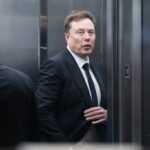
[…] Kevin Weil Launches Warp Sciences With $215M to Put Robots in the Drug Lab […]