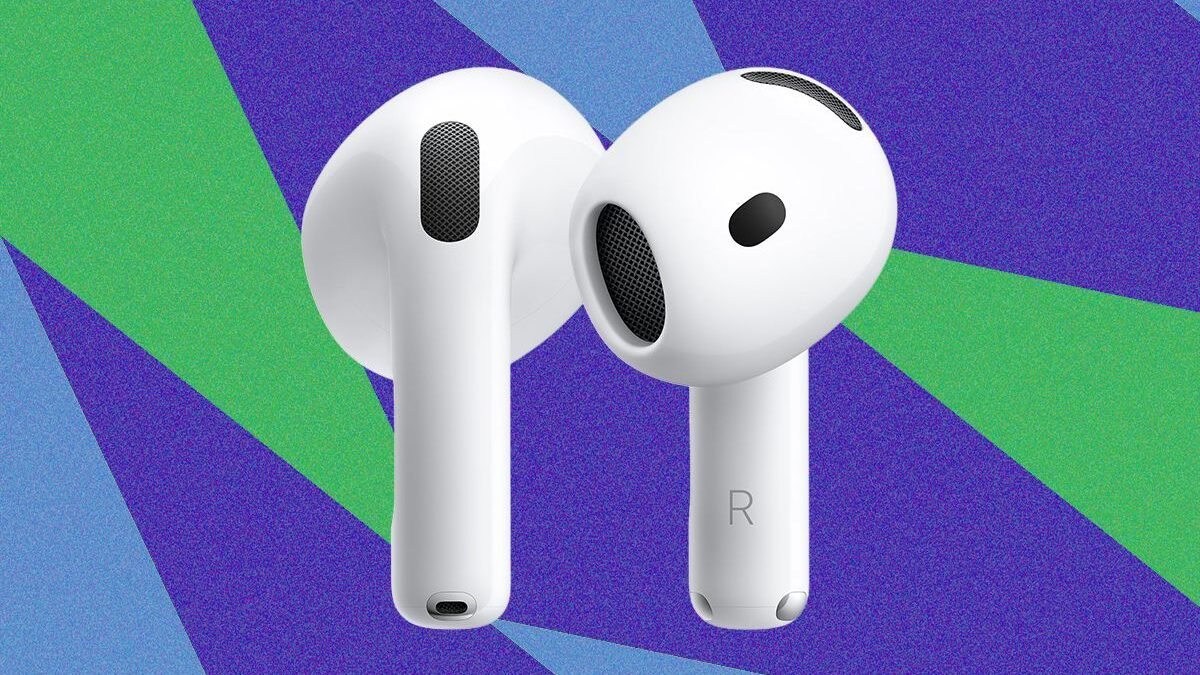
This AirPods 5 review comes after a month of living with Apple’s latest semi-open earbuds, and the headline is simple: active noise cancellation is now standard across both models, and the starting price is lower than before. The AirPods 5 cost $129 with a standard case or $149 with a wireless charging case that works with Apple Watch chargers, Qi-compatible chargers, and USB-C. That is a meaningful change from the AirPods 4, which charged $179 for the version with ANC.
The $149 model is the one to get. It adds an hour of listening time on the earbuds—up to five hours—and two extra hours with the case, for up to 22 hours total. That matches the battery life of the non-ANC AirPods 4, so you are not sacrificing playtime for quiet. Both AirPods 5 versions include Conversation Awareness, Live Translation, Spatial Audio, and Siri features.
Noise Cancellation That Punches Above Its Class

Apple claims the AirPods 5 remove up to 50 percent more external noise than the AirPods 4 with ANC, thanks to a redesigned multi-port acoustic architecture and improved audio processing. That percentage is hard to verify in daily use, but the improvement is obvious. On a domestic flight, the earbuds did a stellar job of suppressing engine noise. They did not make the cabin disappear, and the AirPods Pro 3 still isolate more, but the gap between the standard and Pro lines has narrowed.
Transparency mode sounds more natural, too. Adaptive Audio makes good use of it by automatically shifting between ANC and Transparency based on surroundings. During a run, footsteps from behind prompted the earbuds to lower the music and let in more ambient sound. The transition was smooth enough that outside noise almost blended into the track, keeping the runner aware without constant distraction.
The Open-Ear Trade-Off

The semi-open design is a genuine advantage for outdoor runners and commuters who want to stay alert. It is also the source of the AirPods 5’s main weaknesses. The silicone tips on the AirPods Pro 3 create a snug seal in interchangeable sizes without feeling clogged, and that seal improves both fit and isolation. During longer runs, the AirPods 5 began slipping as sweat built up. The Pros stayed put.
Controls are another area where the Pros pull ahead. The AirPods 5 inherit the Pro 3’s stem-swipe volume controls, but the stems are short and slim, making the gesture tricky—especially with long nails. The Pro 3’s stem protrudes a little more where it meets the earbud, giving a more accessible spot to press. With the AirPods 5, locating the right control spot sometimes required taking an earbud out mid-run. A recent fumble nearly sent one into Lake Michigan. The upgraded IP57 rating means the earbuds can survive brief immersion, but that is not a claim worth testing in a lake.
What the Pros Add for $100 More

The AirPods Pro 3 cost $249, a $100 premium over the wireless-charging AirPods 5. For that money, you get integrated heart-rate sensing for workouts, hearing aid features, longer battery life with ANC enabled, and a more secure fit. The Pros also deliver stronger noise cancellation. For daily workouts and frequent travel, those advantages are worth the splurge.
Still, the AirPods 5 make a strong case for casual listeners, tweens, and teens. The open-ear design is more comfortable for people who dislike silicone eartips, the smaller charging case slips easily into a pocket or the waistband of leggings, and the core Apple ecosystem integration remains seamless. The AirPods 5 are the better value; the AirPods Pro 3 are the better earbuds.