The Roli insolvency has moved from rumor to formal notice, and the company’s most devoted users are confronting an uncomfortable reality: instruments they paid for may never arrive, and the software that makes those instruments fully usable may never be updated again.
In an email to users on Monday, Roli said two licensed insolvency practitioners had been appointed joint administrators on October 20, placing the British music-technology firm into administration—the UK’s process for managing corporate insolvency. It is the second time Roli has entered administration.
A Founder's Exit and a New Company

Although the company has not made a public announcement about its leadership, Roli reportedly removed founder and CEO Roland Lamb earlier this year. Since then, the business has effectively dissolved. In August, a new entity called Instrumental Intelligence was registered with the UK government under Lamb’s name, a step that could position the founder to acquire Roli’s assets.
Roli did not respond to requests for comment. Lamb also did not respond to multiple inquiries, and neither did Roli’s primary financial backers, TriplePoint Capital and Hoxton Ventures.
Customers Left in the Dark

The insolvency has hit a small but passionate community. In Facebook groups, the r/Roli subreddit and other forums, customers have described paying for equipment worth hundreds or thousands of dollars and receiving neither the product nor a refund. Some say their orders date back months or years, with no response from the company since.
Owners of existing Roli devices have a separate worry. Roli instruments depend heavily on proprietary software launchers and companion apps to connect, map sounds and configure settings. The hardware still works for now, but users fear that without continued software support, their gear will eventually become unusable.
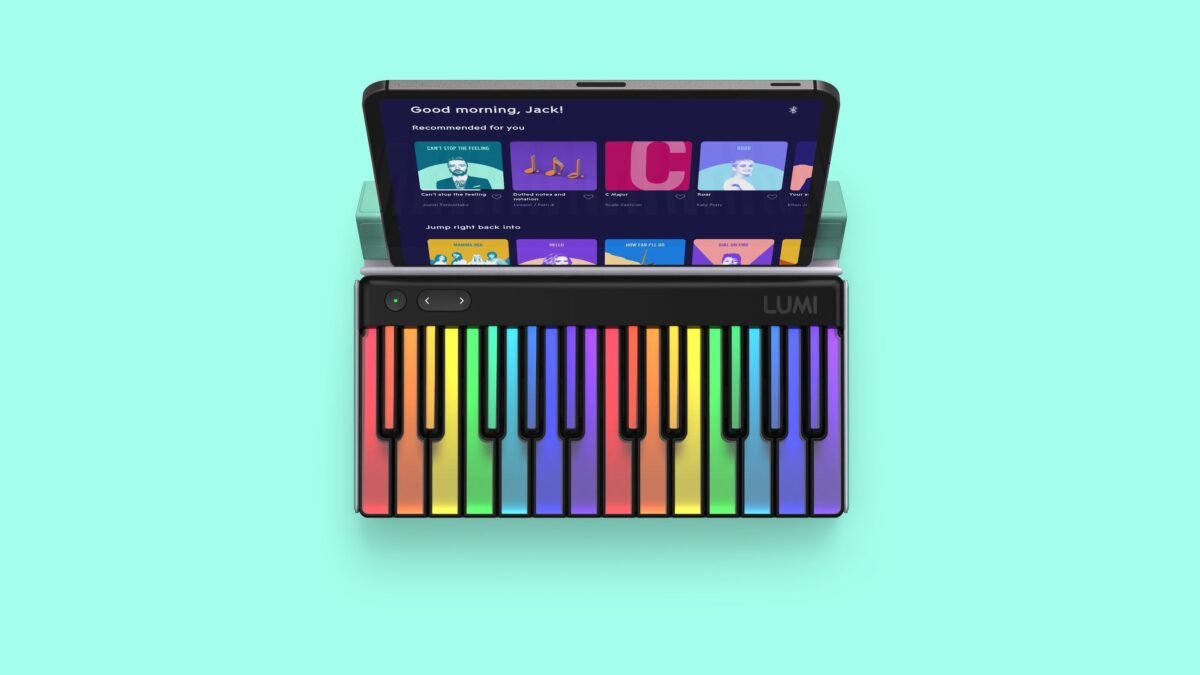
Communication has been a persistent complaint. Lluís Gerard, a YouTuber who has reviewed Roli products for years under the handle WasabiNoise, said the company has long struggled to explain delays and keep customers informed. He described a pattern of secrecy followed by unexpected postponements, including with orders for the Lumi keyboard.
A Company Built on Vision—and Turbulence

Roli launched in 2009 and gained prominence after musician Pharrell Williams invested in 2017 and Sony’s Innovation Fund followed in 2018. Its touch-sensitive instruments, including the Seaboard and Roli Blocks, became closely associated with MIDI polyphonic expression technology, which lets players shape pitch and timbre through finger movement on a continuous surface. Musicians such as Dream Theater keyboardist Jordan Rudess endorsed the gear, and a Seaboard Grand appeared in the 2016 film La La Land.
Financial trouble arrived in 2020. The British government’s Future Fund, a taxpayer-backed pandemic relief program, helped Roli through a Covid-19-induced crisis. The company still entered administration in 2021, then survived by relaunching as Luminary Roli and pivoting toward music-learning products such as the light-up Lumi keyboard and the Airwave, a digital theremin that also served as an AI piano teacher.
Former employees, who spoke on condition of anonymity to protect future job prospects, described a workplace culture centered on Lamb’s preferences. Multiple people compared him to a Steve Jobs-like figure. One former staffer said working at Roli felt like being in a film where Lamb was the lead and everyone else was background. Another said the company’s greatest strength—its founder’s all-encompassing vision—was also its critical weakness. A 2021 GitHub upload from another former employee included a 16-page document titled “Keeping Roland Happy,” with sections on interacting with a pathological narcissist. Several former employees independently characterized Lamb as an arrogant visionary and described him as a pathological narcissist, calling him brittle when challenged and reluctant to learn from past setbacks.
Users Build Their Own Lifeboat
Amid the frustration, some Roli owners are taking preservation into their own hands. Sam Hocking, a UK audio engineer who runs an audio tools company called Demix.me, owns multiple Seaboard Blocks. Even before the administration, he had been developing software to keep the devices functioning as capable MIDI controllers. He shared his configuration tools on the Roli subreddit and GitHub so that the Grand, Rise, Airwave and Block devices can operate without the Roli launcher.
Hocking said his Seaboards are nearly a decade old and still working. Despite the company’s rocky history and poor communication, he wants to keep them. They are high-quality, expensive and difficult to replace. Other subreddit users have contributed their own tweaks and fixes, creating a small, ad hoc support network for hardware that may otherwise be orphaned.
“They’re quite a unique product; there’s not another keyboard type out there,” Hocking said. “Nobody likes to spend money and then not be able to use it.”
For a company once counted among music technology’s leading innovators, the collapse leaves behind a familiar wreckage: unanswered orders, uncertain refunds and a community left to maintain the tools its former maker no longer can.