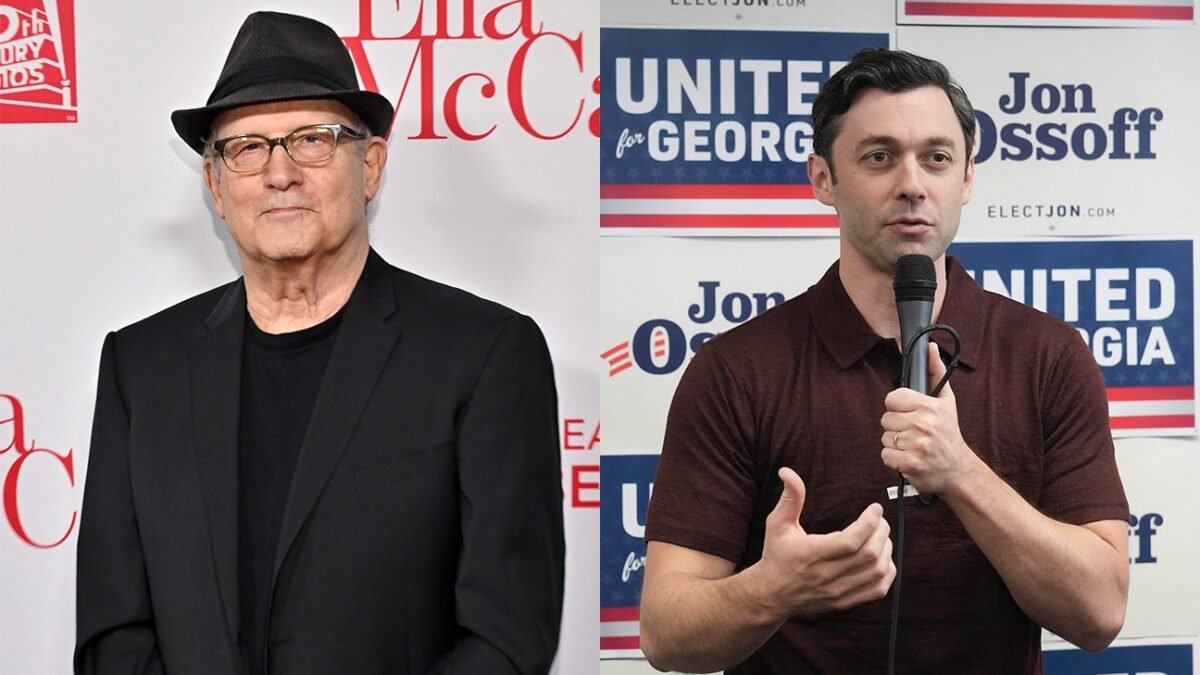
Albert Brooks wrote a novel in 2011 that imagined a future with a weight-loss drug that worked almost universally, smartwatches, self-driving cars, and a Jewish president. More than a decade later, the comedian and filmmaker says the book’s forecasts feel less like fiction and more like a preview. And the idea that has him most rattled is the one about President Ossoff.
A Novel That Anticipated the Present

In Twenty Thirty, Brooks created a candidate named Matthew Bernstein, the son of a Jewish father and a non-Jewish mother, who wins the 2028 election and becomes America’s first Jewish president. Brooks, now 79, was watching Georgia Sen. Jon Ossoff deliver a campaign speech when the parallel struck him. Ossoff also has a Jewish father and a non-Jewish mother. Brooks called a friend and recalled saying, “God damn it, my entire book is going to come true.”
Why a Mixed Heritage Matters to Brooks

Brooks explained that having one parent from one religion and one from another places a person in a kind of third space. Coming from two ends of a spectrum, he said, means experiencing more in life. That, in his view, is what Ossoff represents. He also compared the senator’s emergence to Barack Obama’s, saying Ossoff connects with an audience as well as anyone he has heard.
The Antisemitism Question
In the novel, Bernstein’s opponent is caught on a hot mic making an antisemitic remark, and that is what helps Bernstein get elected. Asked whether rising antisemitism could affect a candidate like Ossoff, Brooks said that in the many times he has watched Ossoff speak, the issue has not come up. Instead, Brooks said, Ossoff talks to audiences about their financial concerns and healthcare, not about religion. He returned to the Obama comparison, noting that early questions about whether an African American could be elected faded as Obama captivated people. Brooks argued that when a candidate is compelling, voters are less likely to lead with questions about color or religion and more likely to listen because they want problems solved.
Looks, Language, and Connection
Brooks was candid about the role of appearance. He called Ossoff very handsome and said he might be the most handsome president since Kennedy, adding that he looks like a movie star. In politics, Brooks said, good looks are an advantage, and when combined with language skills, they become potent. But he stressed that Ossoff is smart, and that he does not feel insulted or spoken to in cliches when he hears him.
The Generational War He Foresees
Brooks’s novel also features a conflict between young and old, with the young resenting the old enough to want to harm them. He pointed to France and Europe as evidence that such a revolution is already on the ground and said he believes it is coming to the United States. In his view, no politician can solve the world’s financial problems without many millions of people getting hurt.
He was skeptical of the idea that AI will fix things. The current excitement about AI, he noted, often centers on the possibility of people living to 120. But he doubts that 25-year-olds want to care for 75-year-olds, let alone 125-year-olds. He described the economic outlook for today’s young adults as far worse than what their parents or grandparents had. Long-term employment, pensions, and guaranteed healthcare have largely disappeared, replaced by gig-to-gig work that makes healthcare difficult.
As for universal basic income, Brooks questioned what it would even mean. He imagined someone being told there is no more work but they will receive a modest annual sum for the rest of their lives. In his view, people alive today are not programmed to sit and do nothing, and it would take raising an entire population from scratch to teach them how to live in that world.
What Hasn’t Happened Yet
One element of the book that has not come true is a “Big One” earthquake so severe the country could not respond. Brooks said he hopes it stays that way in his lifetime. The recent fires in Pacific Palisades and Altadena reminded him of the novel’s disaster scenario, and he observed that rebuilding is not happening at the pace anyone hoped. He estimated it will take at least a decade. That slow pace is why, in the book, China’s offer to rebuild half the land in exchange for ownership was appealing to the United States.
The Technologies That Arrived
Brooks also imagined a futuristic watch similar to the Apple Watch and cars that you tell where to go. He suggested health kiosks around a city where people could be diagnosed electronically and sent to a hospital if needed. In the book, a single drop of blood could be analyzed to reveal what was wrong, which he acknowledged brings Theranos to mind. In his novel, the technology worked.
He said he did not write the book on a whim. The ideas had been building for years, and he chose a novel because he never could have secured a budget to make a film of that scale. He did develop a series version with a friend, writing about four episodes, and FX bought it before COVID. The project did not survive the shutdown, and Brooks said he feels bad about that. He still believes the story is the big one, and until people can see it, he does not think they fully grasp it.
On Truth and a Prediction
Brooks also reflected on the splintering of legacy news outlets and the difficulty of establishing truth. When a human event happens, he said, it is real, but the more time passes, the more the truth is reflected and talked about until it is gone.
Asked directly whether Jon Ossoff will be president, Brooks did not hesitate.