
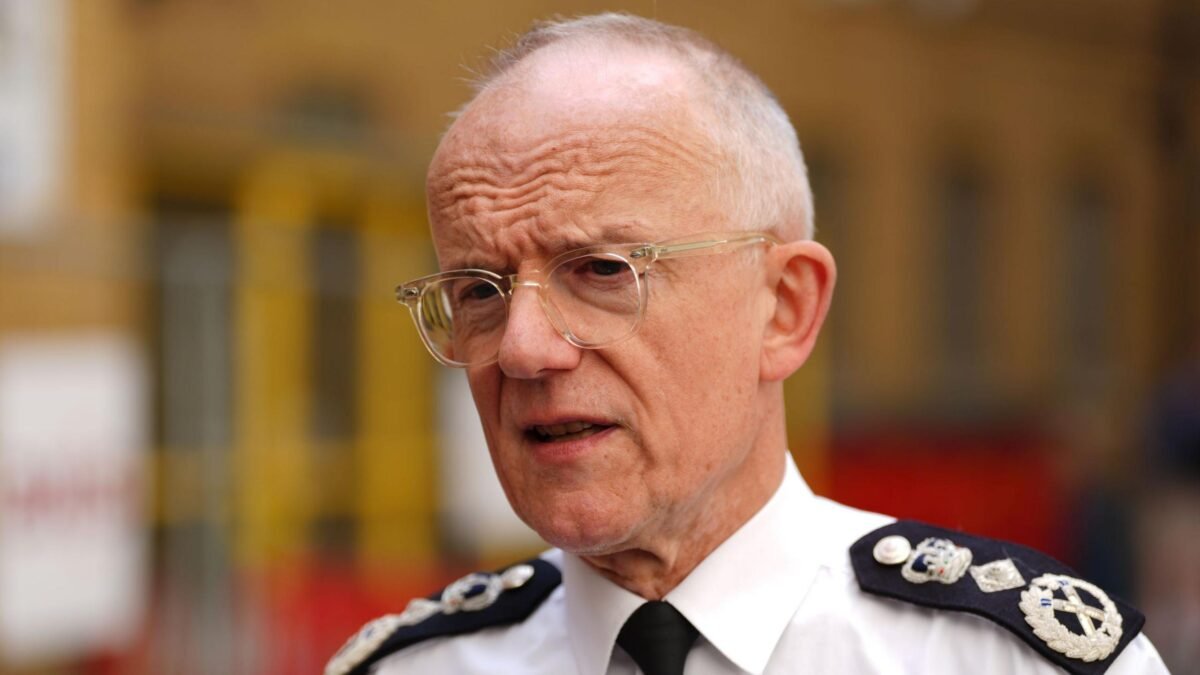
Sir Mark Rowley, head of the Metropolitan Police, will deliver a stark assessment on Friday: without urgent policing reform, the system in England and Wales is on a path to failure. In a speech, he will argue that the current structure cannot match the sophistication of modern criminals and must be fundamentally redesigned.
A three-tier overhaul

Rowley is proposing the most significant restructuring since the 1960s. His plan would replace the existing 43-force model with three distinct layers: local teams focused on neighbourhood priorities, regional forces pooling specialist capabilities, and a new National Police Service dedicated to the most serious crimes.
Under the proposal, eight to ten regional police forces would be supported by hundreds of local policing commands, all coordinated with the national body. Rowley contends that merging forces would cut duplication and free thousands of roles for frontline duties.
He will point to organised crime groups, fraud networks, cyber-criminals and online child abusers, who increasingly operate across regional and international borders while police forces remain tied to local geographies. The current setup, he warns, is “overstretched” and trying to do too much with too little.
Financial strain and falling performance

The commissioner will also highlight long-term financial pressures. According to his remarks, policing spending has dropped from roughly 0.9% of GDP in 2010 to 0.7% today. Years of underinvestment have left forces dependent on ageing technology, he says, while officers are pulled away from neighbourhood work to handle other demands, including mental health and social care.
Rowley will further note a decline in police performance: positive outcomes nationally are now less than half what they were 12 years ago, and public confidence has fallen by 9%.
Political backdrop and opposition
The proposals follow a consultation launched in January by Home Secretary Shabana Mahmood, which included plans for a National Police Service and possible mergers of the 43 forces. However, some rural police and crime commissioners have criticised the plans as “political manoeuvring” by larger forces to “load the dice in their favour.”
The Association of Police and Crime Commissioners (APCC) has also raised doubts. While it agrees on the need for modernisation and a national service, it questions whether reducing 43 forces to nine regional “mega-forces” is the right approach.
A Home Office spokesperson defended the plans, stating that the current model has not changed since the 1960s and is no longer fit for purpose. Prime Minister Andy Burnham has not yet commented.


