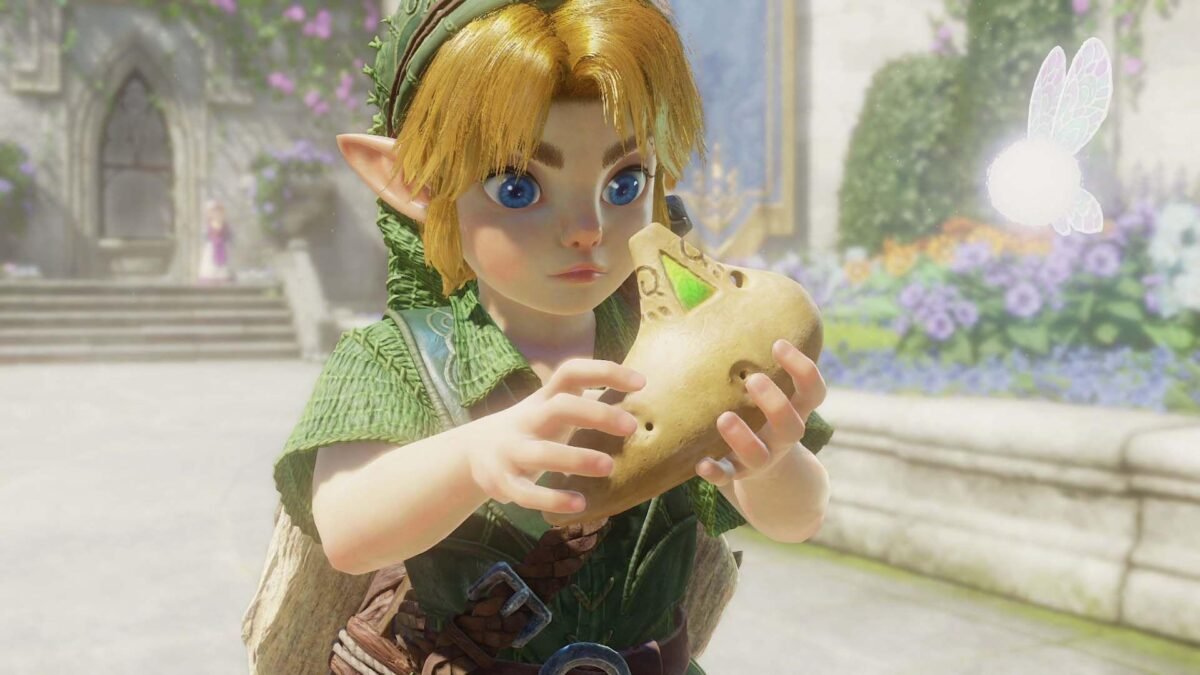
Nintendo has released its long-rumored Ocarina of Time remake, bringing the 1998 N64 landmark to modern hardware with updated visuals and controls. The original set the benchmark for 3D games, introducing or refining mechanics such as horseback riding, sword-and-shield combat, and lock-on targeting. It remains the highest-rated game on Metacritic. The question facing this new version is whether a faithful recreation can preserve what made the original feel revolutionary.
A Deliberately Familiar Approach

Rather than reimagining the structure, Nintendo has kept the core play close to the N64 release. Producer Hidemaro Fujibayashi explained that player expectations have shifted over the decades, noting that earlier games often required imagination to fill in gaps that modern graphics now render explicitly. The trade-off is a visual style that leans cartoonish rather than realistic, a choice that may disappoint some who remember the original’s darker passages.
One such passage, the Skulltula House, where characters are transformed into human-spider hybrids, became unexpectedly intense during development. Series producer Eiji Aonuma, who worked on the 1998 game, said the original team had aimed for a touch of comedy even in scary moments. Enhanced lighting and graphics, however, exaggerated the horror during test plays. Testers reported finding it too frightening, prompting adjustments to restore the original balance.
What the Remake Changes

The most significant overhaul targets the Water Temple, a dungeon roughly two-thirds through the game that has long been criticized for its difficulty. Aonuma said it was the element he most wanted to revisit. Players can now swap the heavy boots more easily and make better use of camera orientation, reducing the dungeon’s friction.
Camera control is another area where modern conventions have been applied. The N64 controller’s single stick pioneered 3D movement, but two-stick control is now standard. Being able to move the camera freely makes a meaningful difference in play.
Smaller details have also received attention. Link’s fingers now move across the ocarina’s holes as he plays, and characters are more expressive thanks to the revised art style.
Critical Reception and Fan Reactions

YouTubers who played the remake responded positively. Mike Channell, co-editor of Outside Xbox, described the project as meticulous and said it appeared to have taken as much effort as an entirely new Zelda title. He called it the best way to experience the story, citing its detailed world and controls suited to modern expectations.
Ed King, known as Zeltik to his large YouTube following, highlighted the detail and charm of the remake, particularly in the Forest Temple, which he said leans into the original dungeon’s surreal and uncanny atmosphere. Fellow creator StrawHatMidas called it a perfect way to bring the classic back, praising its homage to the original and its expansions on what made the game memorable.
Has Nintendo Played It Too Safe?

For players who grew up with the N64 version, muscle memory can make the remake feel effortless. Knowing where to go and how to solve puzzles can reduce the sense of discovery. Some tasks are completed too quickly; some puzzles fall too easily. The familiarity that makes the game welcoming also risks making it less surprising.
Nintendo maintains that the essence of the original has been preserved. Fujibayashi said the team kept what the original developers intended to convey, even if the game looks different. The remake does include changes and surprises, though some players may wish for more.
Channell, despite his enthusiasm, said he does not expect to return to the N64 original. That sentiment may capture the remake’s achievement: it offers the definitive way to play a classic while leaving the memory of the original intact. Whether that is enough depends on what players want from a remake—a faithful restoration or a fresh interpretation.
With a Zelda film due next year, the franchise shows no sign of slowing. As for another remake decades from now, Aonuma laughed off the idea, saying he would be long retired.