Nvidia has moved to restrict how much of its cloud partners’ capacity can serve Chinese customers, a step that lands at an awkward moment for Chinese AI developers already facing scarce and costly hardware. According to reporting, the company has conveyed the new Nvidia overseas cloud rules verbally through its sales and regional teams, and the requirement applies worldwide rather than only in Asia.
The central condition is that cloud providers must allocate at least 51% of their services to firms outside China. Existing contracts and leases are unaffected, but any new arrangements must meet the threshold. Nvidia has neither confirmed nor denied the policy, which if enforced would likely blunt criticism from U.S. lawmakers as Chinese demand for its chips climbs.
A Costly Two-Front Squeeze
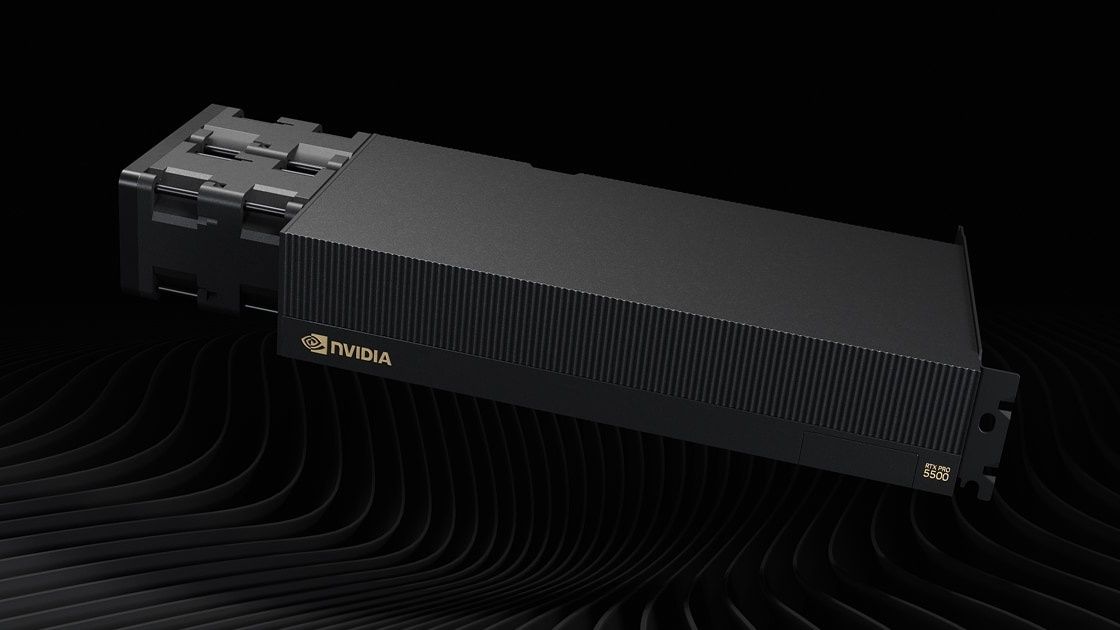
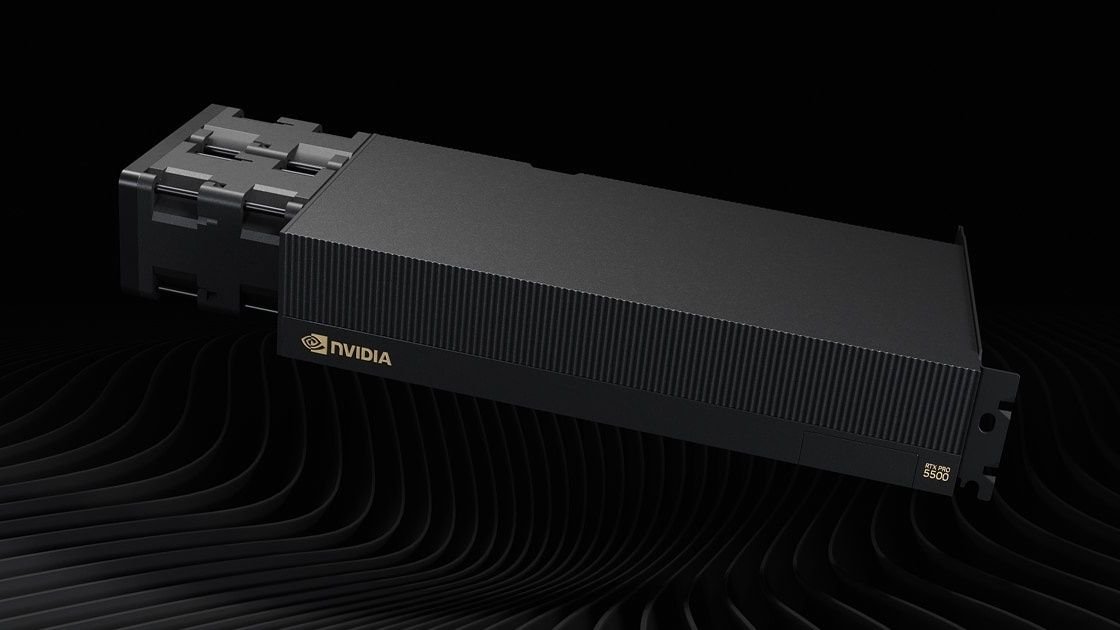
Chinese AI laboratories face pressure on both of their main routes to Nvidia compute: purchasing export-compliant hardware and renting capacity overseas. On the buying side, orders for the RTX Pro 5500 have surpassed six million units, according to the reporting. That figure is at least double the three million units Nvidia could reportedly build in 2027. More than three million of those orders are attributed to ByteDance, Alibaba and Tencent, which placed them at roughly $11,400 per card — a sticker total above $35 billion.
Even if those orders are filled, partners may receive only 5% to 10% of what they originally requested. Starting in 2027, a substantial share of Nvidia’s TSMC capacity may shift toward Rubin, further constraining RTX Pro 5500 output. Early samples of the card are due in December, with commercial deliveries expected in the first quarter of 2027.
The RTX Pro 5500 carries 84GB of GDDR7 memory with ECC and 1,398 GB/s of bandwidth, runs on a full PCIe Gen 5 x16 interface, draws up to 600 W and can be divided into two MIG instances. It remains far below a B300, which has roughly 3.4 times the memory and 5.7 times the bandwidth, plus NVLink — an interconnect the 5500 lacks.
Why Rentals Became the Default
Overseas leasing has become the workaround of choice for advanced AI work, including model training. Chinese technology groups have been the largest customers for data centers in Southeast Asia. That dependence now looks vulnerable: facilities that cannot line up enough non-Chinese clients may have to reduce supply, and one Singapore-based group told the Financial Times that finding sufficient non-Chinese customers outside the U.S. is difficult.
Nvidia’s whitelist has already cut its authorized Asian buyer count by more than half, pushing more Chinese groups toward leasing rather than other channels, including smuggling. Southeast Asian providers seeking Nvidia Cloud Partner status must also adopt Fleet Intelligence tracking. Together, the whitelist, the 51% cap and the tracking requirement may ease Washington’s concerns.
Moonshot and Others Look to Europe
Moonshot has held talks to rent capacity from neoclouds hosting Nvidia GPUs in Europe, specifically seeking Blackwell systems that export controls bar from China. One source said the discussions covered clusters of 8,000 or more Blackwell GPUs in Europe, intended for inference — serving models to end users. The European talks followed a White House statement that Moonshot had accessed Blackwell chips through a facility in Thailand.
Moonshot is not alone. Tencent has an arrangement with Oracle to lease 100,000 GPUs in Southeast Asian data centers, while ByteDance and Alibaba are pursuing similar long-term leases. Most of those overseas facilities run chips such as the prohibited B300. MiniMax also leases substantial compute both at home and abroad.
Domestic Supply Falls Short
China’s homegrown AI chip output is not yet sufficient. Huawei is expected to reach 1.6 million chips this year, with about one million each from Alibaba and Baidu and 300,000 from Cambricon. Total supply this year may reach 3.5 million units, including roughly one million made overseas, against demand well above five million. That demand could more than double next year.
The export-compliant cards Chinese firms have been buying — mainly the RTX Pro 6000D, RTX Pro 5000 and RTX 5090 — are largely suited to simpler work such as prefill. Even so, pricing for the discontinued 6000D in China has reportedly doubled. Huawei’s Ascend 910C outperforms those cards in most areas, but the lower-end Nvidia options remain sought after, partly because developers prefer CUDA over Huawei’s CANN. Most AI frameworks and libraries support Nvidia’s programming platform, and much in-house code is tuned for it.
Legal and Market Uncertainty
Renting is currently easier than owning because U.S. law does not give regulators broad authority over overseas cloud access. The Remote Access Security Act, which would extend export controls to that area, has passed the House but not the Senate. Neoclouds and their financiers are already pricing in a possible ban, which drives the upfront premium. One source said Moonshot was asked to pay 30% to 50% more upfront than a non-Chinese entity would.
China’s side adds its own friction. About 600,000 H200 chips are reportedly sitting in storage in Hong Kong awaiting shipment to the mainland, with Beijing withholding approval for large-volume imports. Small quantities have entered in recent months for some large internet companies, while others arrived through intermediaries and indirect routes. An eight-card H200 server in China cost more than $900,000 at the end of last month, roughly triple the price a year earlier, despite H200 sales already requiring U.S. licenses.
Pricing gaps are stark: a B300 rack selling internationally for about $600,000 reportedly fetched $2.8 million in China last month. The first real test of how many RTX Pro 5500 cards actually reach buyers comes in the first quarter of 2027. Whether the Remote Access Security Act affects rentals depends on a Senate vote that has not been scheduled. Nvidia reports third-quarter results on Nov. 17, and CEO Jensen Huang has been asked to attend a closed-door briefing with lawmakers