
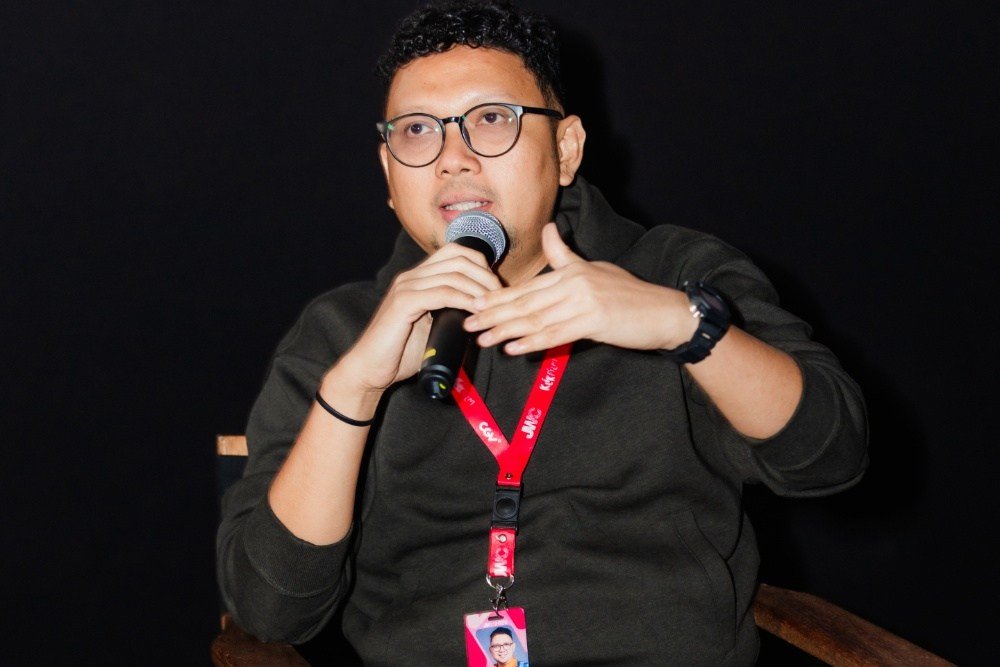
Danial Rifki’s Invisible Guest remake, an Indonesian-language reworking of Oriol Paulo’s 2016 Spanish thriller, has finally reached audiences after a lengthy delay. The film, which Rifki says was finished in 2023, was held back from release by exclusivity clauses tied to HBO. It has now debuted on HBO Max and screened at Jakarta World Cinema, where it stands as one of three Rifki titles in the festival lineup.
Produced by Falcon Pictures, the project stars Reza Rahadian, Mawar de Jongh and Arifin Putra. It adapts Paulo’s “Contratiempo” for an Indonesian setting, shifting the story’s frame of reference while keeping the suspense-driven premise intact. The film’s long route to the screen reflects the complicated overlap between streaming deals and theatrical or festival exposure that can shape a production’s life after completion.
A festival moment after a stalled rollout

The Jakarta World Cinema screening gives the remake a public platform that its original completion date did not secure. With the HBO Max launch set for Aug. 7 and the festival presentation following, the film is moving through two distinct release channels in quick succession. For Rifki, the occasion is notable not only because the film is his own but because it sits alongside two other features of his at the same event, placing a substantial body of his recent work before festival audiences at once.
The director has described the new thriller as a story about fighting back, framing it against the fear that defined Indonesia under Suharto. That context gives the remake a political and psychological dimension beyond the mechanics of a twist-driven mystery. Rather than treating the source material as a purely commercial exercise, Rifki positions the adaptation as a way to examine how people respond when intimidation is part of everyday life.
Cast and production context

Rahadian, de Jongh and Putra anchor the Falcon Pictures production, bringing established Indonesian screen talent to a story originally built around a high-stakes interrogation of memory and motive. The film’s completion in 2023 and its eventual HBO Max debut in August indicate a gap between production and public availability that Rifki has attributed to contractual exclusivity. The Jakarta World Cinema slot adds a festival chapter to that timeline.
Rifki’s remarks connect the thriller’s suspense to a historical atmosphere of fear, suggesting that the remake’s Indonesian setting is not merely a change of location but a way to reframe the material’s emotional stakes. The director’s stated interest in how characters resist pressure places the film within a broader conversation about Indonesian cinema’s engagement with the Suharto era.
With three films at the festival and a streaming release now behind it, the remake arrives with unusual visibility for a project whose completion date was years earlier. Its journey from a finished 2023 production to a 2026 festival title illustrates how distribution arrangements can delay even completed work, and how festivals can offer a second point of entry for films whose initial rollout was constrained.

