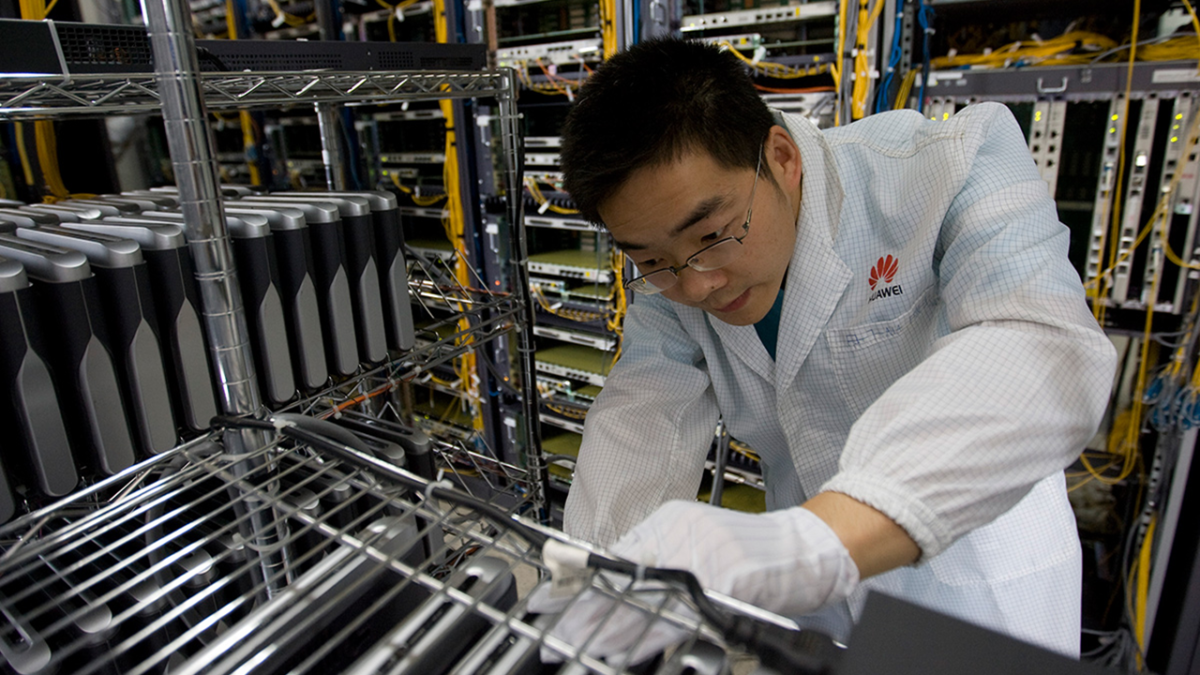
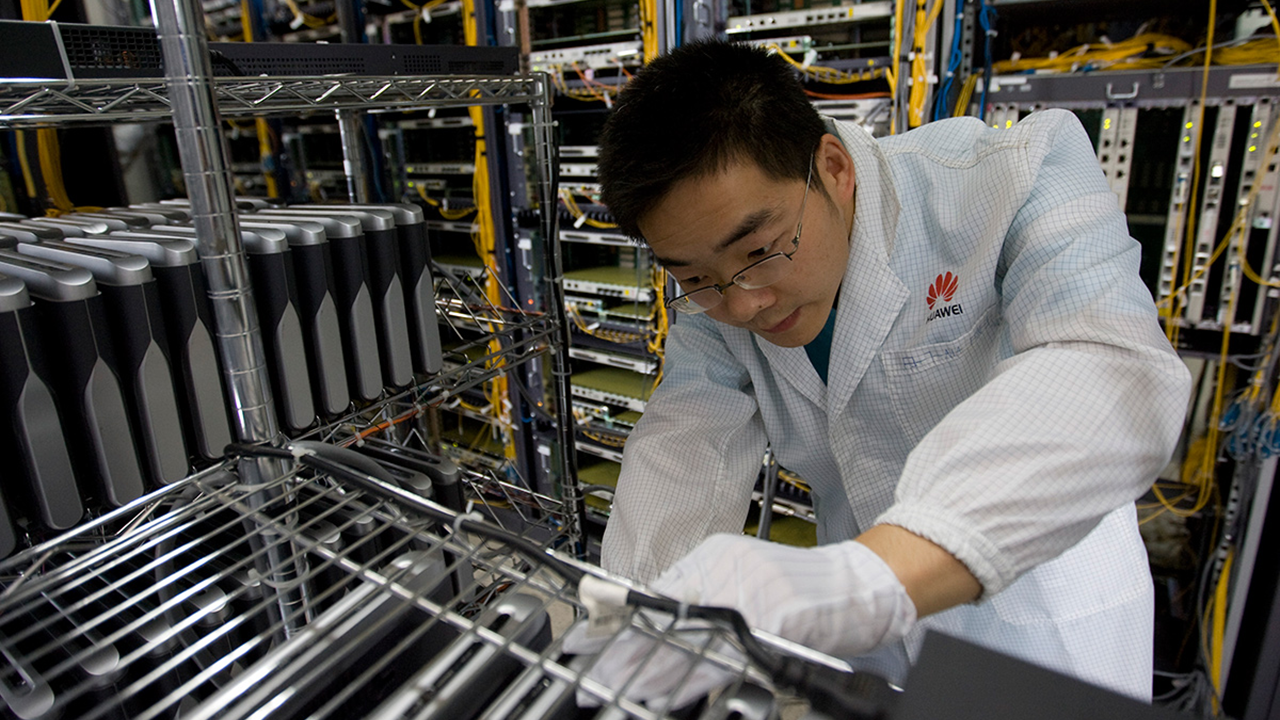
Huawei has unveiled its first desktop computers built around its own processor and operating system, a step toward reducing reliance on foreign technology suppliers. The Huawei Qinyun HM650 and HM650g pair the company’s Kirin X90 system-on-chip with HarmonyOS Enterprise Edition, and Huawei says the machines are assembled from components manufactured in China.
The claim carries weight for Beijing’s national security and domestic supply chain goals, but it does not mean the entire semiconductor ecosystem behind the PC is Chinese.
What the Qinyun HM650 Contains
The desktop series ships with 16 GB of LPDDR5 memory, likely supplied by China’s CXMT, and either a 256 GB or 512 GB solid-state drive, probably from Chinese flash maker YMTC. The central component is the Kirin X90, which first appeared in Huawei’s consumer systems in 2025.
Huawei designed the chip with ten Armv8-based Taishan CPU cores arranged in a 4+4+2 layout. All cores support simultaneous multithreading, allowing the processor to handle up to 20 threads at once. The chip also includes Huawei’s Maleoon graphics processing unit, which is based on Arm Mali, and a dedicated neural processing unit for AI workloads.
Huawei does not publicly disclose the manufacturing process for the Kirin X90. However, a teardown analysis by TechInsights confirmed that SMIC produces the CPU using its 7nm-class N+2 technology. That makes the X90 a demonstration of Huawei’s ability to build PC-class processors with domestically available fabrication, even though the node trails leading-edge processes from Intel, TSMC and Samsung.
The Foreign Dependencies Behind a Domestic Label
Huawei’s assertion that the processor, memory, storage, power supply and wireless connectivity are all made domestically does not guarantee a fully Chinese supply chain. The CPU, memory and storage chips may be fabricated in China, but they still depend on manufacturing equipment from the Netherlands, the United States and Japan, materials from Japan, intellectual property from the UK, and electronic design automation tools from the U.S. and partly from China.
That distinction matters for anyone interpreting the Qinyun HM650 as a completely self-contained Chinese PC. Domestic certification can coexist with deep reliance on foreign tools and software in the chipmaking process.
HarmonyOS Enterprise Edition and Software Compatibility
The operating system claim is similarly ambitious. The machines run HarmonyOS Enterprise Edition, which reduces dependence on foreign technology suppliers compared with conventional PCs running Microsoft Windows. Huawei develops and maintains the software platform itself.
Unlike earlier HarmonyOS versions that incorporated Linux components, HarmonyOS Enterprise Edition uses Huawei’s own kernel and software architecture. That gives Huawei more control over development, security updates and hardware integration. The trade-off is compatibility: existing Windows applications may not run on the Qinyun HM650, which could be a limitation for enterprise customers that rely on software from multinational corporations built for Windows.
Whether the Qinyun HM650 series relies entirely on components developed and made in China is therefore a qualified yes. The processor, memory and storage are domestically fabricated, and the operating system is Chinese-developed. But the semiconductor supply chain still leans on tools and software designed and produced elsewhere, and the break from Windows compatibility may narrow the machine’s appeal for some business users.