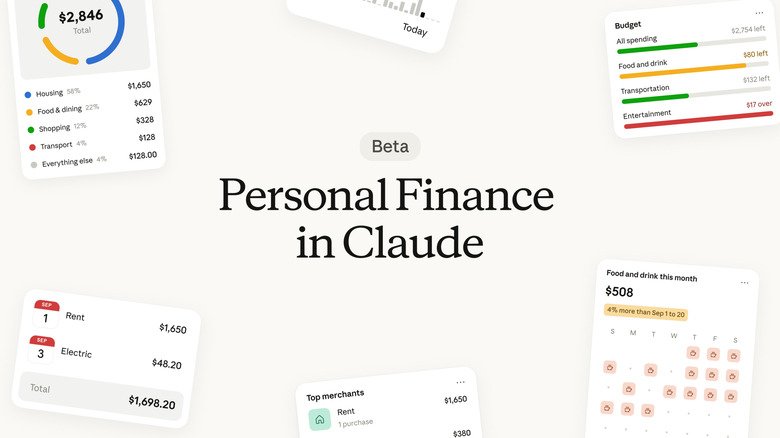
Anthropic has introduced Claude Personal Finance, a feature that lets the chatbot examine your bank accounts and produce financial dashboards. It arrives as a direct answer to ChatGPT’s Finances tool, which OpenAI launched in May. The two products share a lot of surface area, yet they diverge sharply on how your data is handled afterward.
The shared groundwork
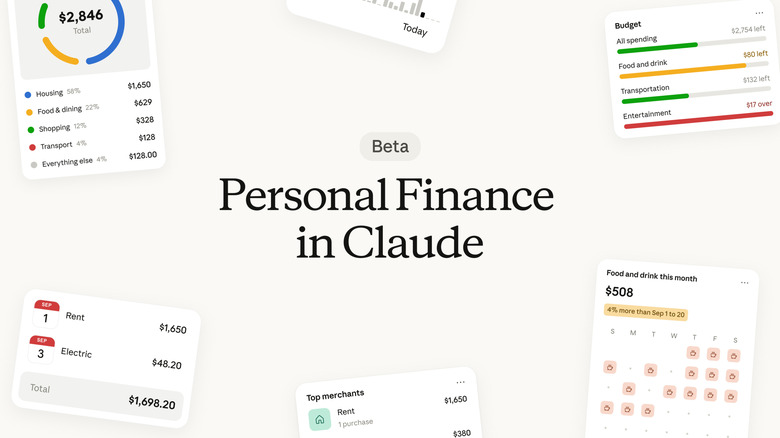
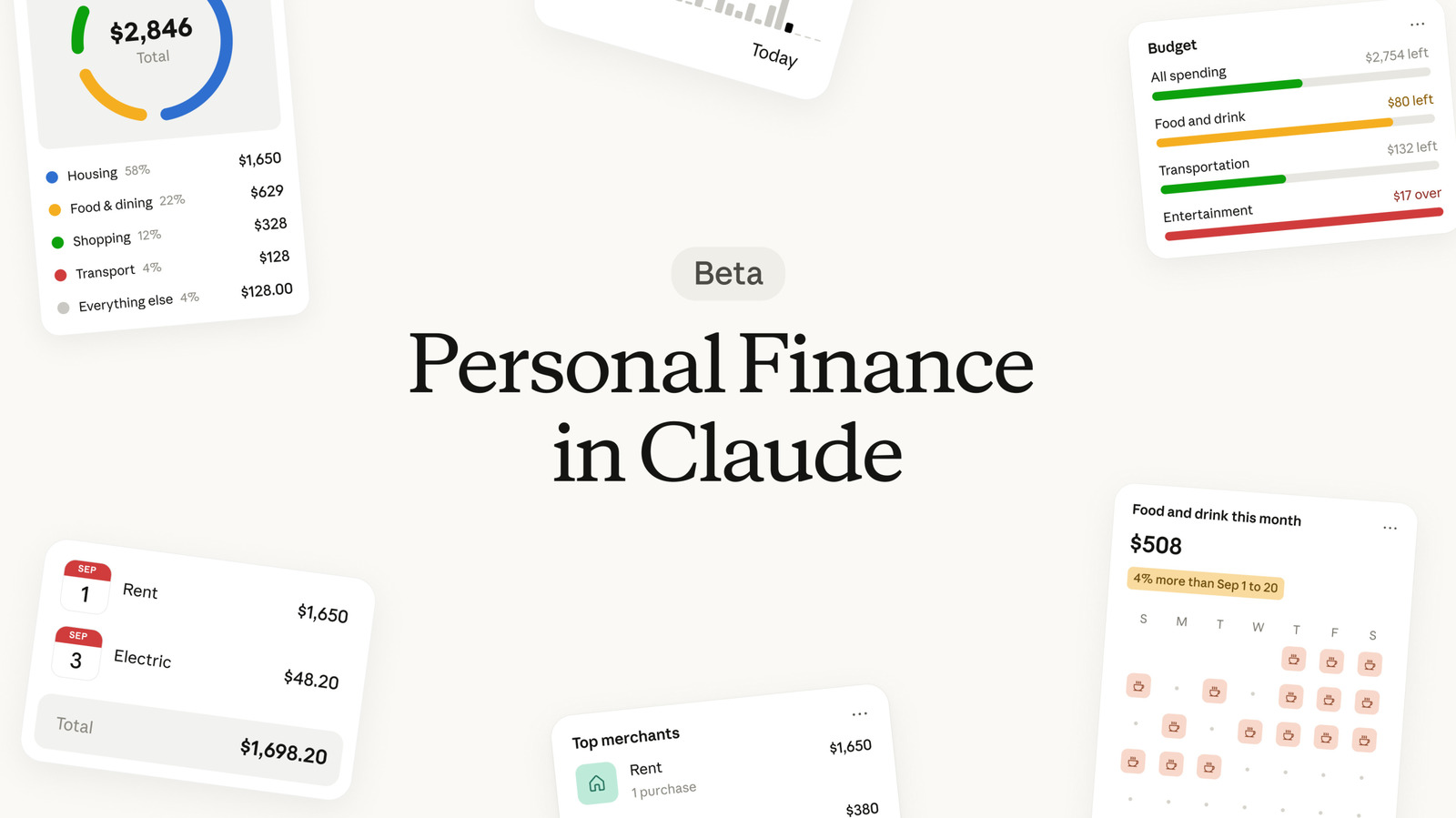
Neither tool is positioned as a substitute for a financial advisor. Both are built to help users make sense of goals such as saving for a home, budgeting a large trip or mapping out a savings plan. Each can generate visual dashboards covering monthly spending, investments and habits.
Getting started works the same way on both platforms: you link a bank account. Anthropic and OpenAI each rely on Plaid to establish those connections, which covers major institutions including Bank of America, Capital One and Chase. Access is read-only in both cases, so the chatbots can inspect account information but cannot move money or alter anything.
The visible data is comparable as well. Claude’s Personal Finance feature can see your bank name, account name, account type, the last four digits of an account number, balances, credit limits and as much as two years of transactions. ChatGPT’s Finances tool sees balances, transactions, investments and liabilities.
Where the two part ways
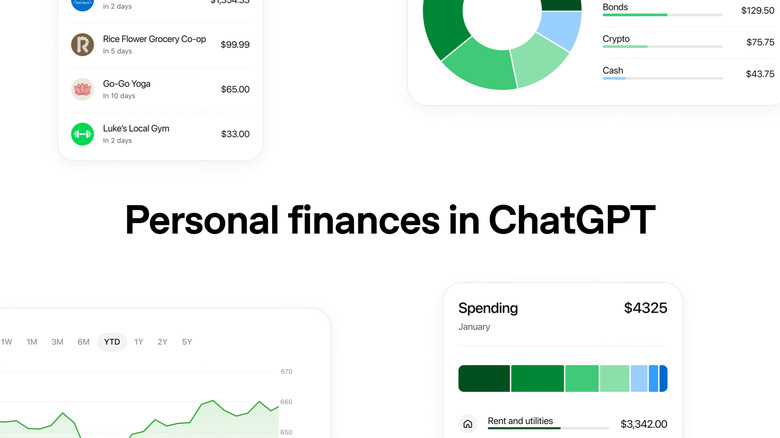
Privacy settings are the clearest split. Anthropic says conversations held inside the Claude Personal Finance hub are not used to train its models by default. It also says that if you unlink a bank account, Claude will stop seeing any data you had previously supplied to the feature.
OpenAI takes a different approach. The company says conversations tied to connected financial accounts inherit whatever model-training preferences you have set across ChatGPT. Because the option to improve the model for everyone is switched on by default, users who want out must open Data controls in settings and disable it. When an account is disconnected, OpenAI says synced account data is removed from its systems within 30 days.
Anthropic leans into boundaries
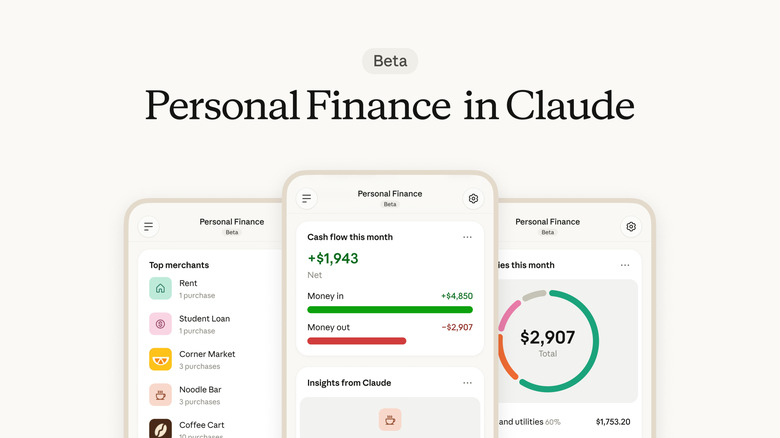
Anthropic is also drawing a line around what Claude Personal Finance will not do. The company says the feature carries no ads or sponsored recommendations, and that it does not push credit cards, loans or savings accounts of its own. OpenAI has not made an explicit statement about advertising within ChatGPT Finances, though it has been testing ads on its lower-cost tiers since January.
OpenAI, meanwhile, is looking outward for expansion. It has said it intends to add capabilities to ChatGPT Finances through a partnership with Intuit, aiming to cover areas such as credit card applications and tax questions.
Anthropic’s roadmap is more collaborative in tone. The company says it wants input from banks, wealth managers and financial services firms as it works to refine the tool.
What the comparison comes down to
For anyone choosing between the two, the functional overlap is substantial: same connection partner, same read-only limits, similar dashboards and similar general-purpose financial guidance. The decision hinges less on what the chatbots can see and more on what happens to the conversation around it. Claude Personal Finance treats those chats as off-limits for training unless something changes, while ChatGPT Finances follows the user’s broader account settings, which favor training by default.
That difference may matter more than any dashboard. A tool that can read your transactions is useful; a tool whose data practices you understand is easier to keep using.