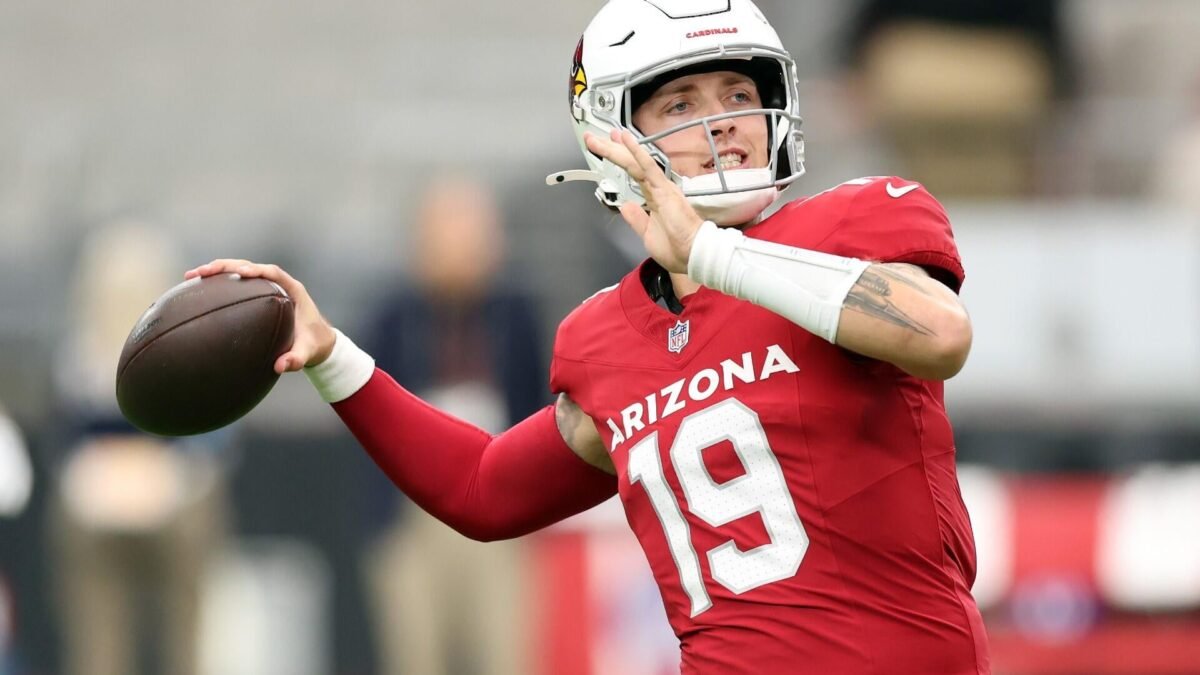
Carson Beck’s eight-game audition begins Sunday against the Rams, and it arrives with unusual stakes for a third-round rookie. Arizona’s quarterback room collapsed in a matter of days: Jacoby Brissett was benched and then traded to Baltimore after Week 8, and Gardner Minshew suffered an elbow injury that could require season-ending surgery. The Cardinals, 3-6, now turn to Beck, the 65th overall pick, with a likely top-10 selection looming in April.
Why the Cardinals need Beck to answer a roster question
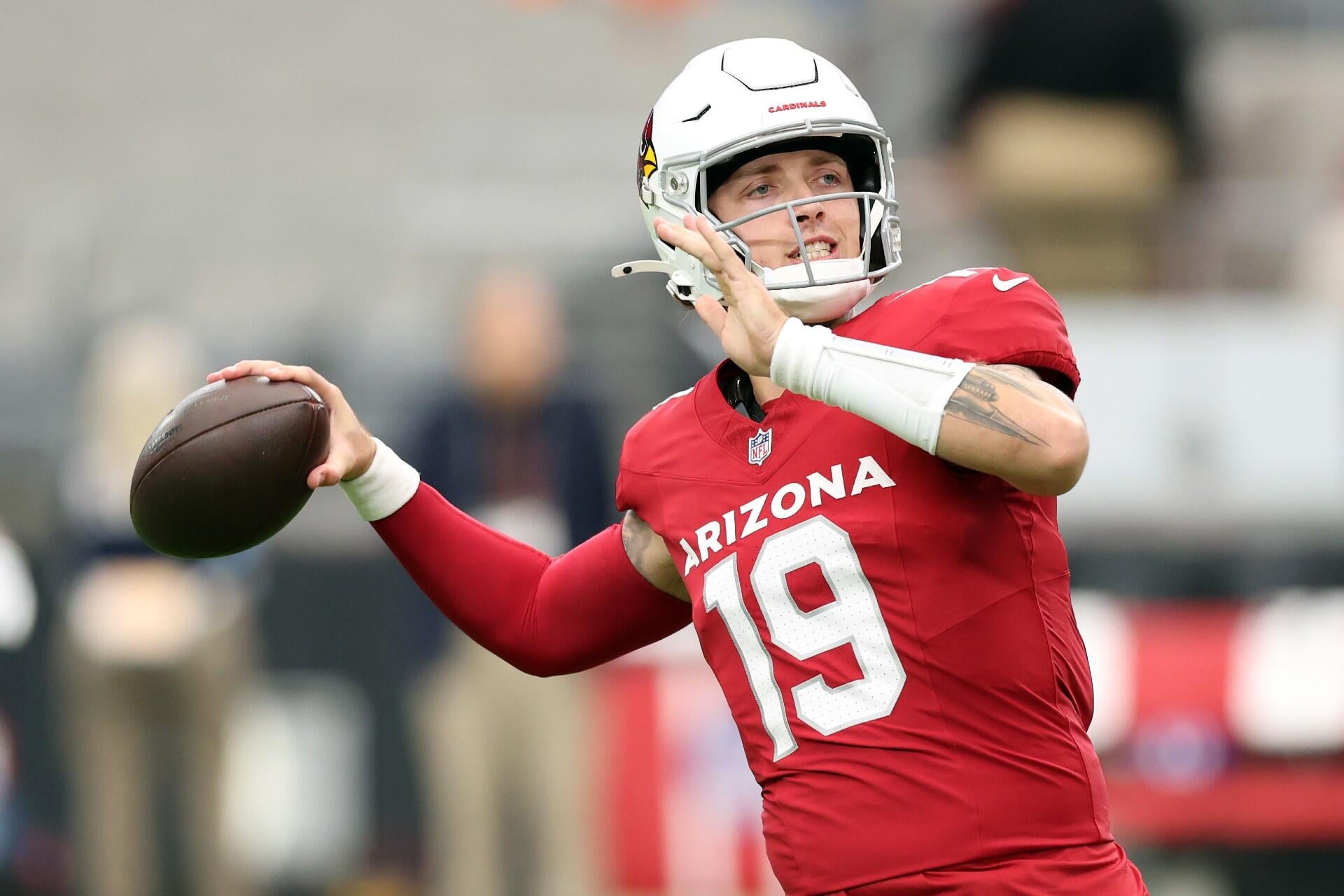
If Beck can show enough over the final eight games, Arizona could use that premium pick elsewhere rather than spending it on another quarterback. That is the central question of this two-month stretch, and it is not a referendum on whether Beck can become a star overnight. The Cardinals need evidence that he can operate the offense, avoid costly mistakes and keep improving as opponents adjust.
Beck entered the league with a reputation as a safe, efficient prospect. He started 43 games at Georgia and Miami, processed quickly and protected the ball. His 38.6% first-down rate ranked in the 95th percentile among draft-eligible quarterbacks from 2015 to 2026. But he also faced pressure on just 19.1% of his college dropbacks, the lowest rate among quarterbacks in more than a decade, and more than 32% of his throws were screens. The question was whether his high floor came from talent, surroundings or both.
What history says about late rookie starts
Since 2007, 24 quarterbacks drafted in the third round or later made their first NFL start after Week 7 of their rookie season, according to the source’s review through the 2024 draft class. Only eight of those 24 started at least four games as rookies. Just three of those eight—Nick Foles, Desmond Ridder and Brock Purdy—started at least eight games the following season. Sam Howell was the only quarterback with fewer than four rookie starts to do so.
Six of those eight improved their yards per attempt between their first two and final two rookie starts, but that improvement did not guarantee long-term success. Ridder, for example, went from 5.3 yards per attempt in his first two starts to 7.0 in his final two, with two touchdowns and no interceptions. Atlanta gave him the starting job in 2023, benched him twice and traded him to Arizona the following March, then drafted Michael Penix Jr. eighth overall in 2024.
Purdy followed a different path. He averaged 8.6 yards per attempt with four touchdowns and no interceptions in his first two starts and maintained that production over his final two. He did not need dramatic improvement because he had already shown he could play.
Passing on a quarterback is not the same as finding one
Five of those eight teams did not draft a quarterback the following spring, but several drafted one within the next year or two. The Cardinals know this pattern well. Injuries forced them to start rookies John Skelton in 2010 and Ryan Lindley in 2012, but neither was viewed as the long-term answer. Arizona took Patrick Peterson fifth overall in 2011, passing on quarterbacks Jake Locker, Blaine Gabbert and Andy Dalton, then selected Jonathan Cooper seventh overall in 2013, ahead of Geno Smith. Instead of drafting a quarterback, the Cardinals traded for veterans Kevin Kolb and Carson Palmer in those offseasons.
Draft position shapes these decisions. Tennessee had the No. 2 overall pick in 2015 and used it on Marcus Mariota after Zach Mettenberger’s six rookie starts. St. Louis took Sam Bradford first overall in 2010, but Keith Null had only started four games because injuries forced the Rams to turn to their sixth-round rookie. San Francisco’s situation was different: the 49ers traded up to draft Trey Lance third overall in 2021, but he suffered a season-ending ankle injury in Week 2 of 2022. Jimmy Garoppolo took over, then broke his foot in Week 13, giving Purdy, the final pick of the 2022 draft, his opportunity. Purdy won all five of his regular-season starts and two playoff games, and by the following season he had taken the job Lance was drafted to fill.
Tyler Shough offers a recent blueprint
If Beck wants a recent example to follow, it is Tyler Shough. The Saints selected him 40th overall in 2025, and he took over the starting job in Week 9, giving New Orleans nine games to evaluate him. Shough went 5-4, but how he played mattered more: he completed nearly 68% of his passes, made smart decisions and ran the offense without the Saints having to protect him. It was not always pretty, but it was enough for New Orleans to pass on drafting another quarterback in 2026 and enter the season believing Shough could be its long-term answer.
That is the goal for Beck. He does not need to become a superstar overnight, but he does need to give Mike LaFleur enough confidence to build around him instead of looking for his replacement. The Saints did exactly that in April when they used the No. 8 pick on wide receiver Jordyn Tyson.
Can Arizona’s offense suit Beck?
There is reason to think this offense should fit him. Arizona has attempted 58.8% of its passes within five yards of the line of scrimmage, while the offensive line has allowed pressure on 31.1% of dropbacks, the fifth-lowest rate in the NFL, according to TruMedia. Beck’s accuracy, anticipation and ability to play on time should, in theory, translate. But the game is not a theoretical exercise.
Arizona also ranks 28th in yards per play, and Brissett and Minshew did not consistently turn those manageable throws into meaningful production. Beck’s challenge is to turn short throws into more first downs and points. Preseason projections had him averaging 6.9 yards per attempt with an 85.8
The Cardinals do not need to reel off eight straight wins, but they do need to see how Beck responds when defenses take away the easy throws. Can he push the ball downfield, keep drives alive under pressure and avoid costly mistakes? At Miami last season, Beck showed he can be an efficient game manager, and his preseason debut suggested those skills could translate. Now comes the part that matters: proving he can do it against NFL starters, week after week, when opponents know exactly what he wants to do.
With a possible top-10 pick awaiting Arizona in April, there is a lot at stake for the rookie quarterback and an organization that last had a winning season in 2021—and before that, 2015. Beck does not have to prove he is a franchise quarterback during this audition, but he does have to give the Cardinals a reason to believe he could become one.