
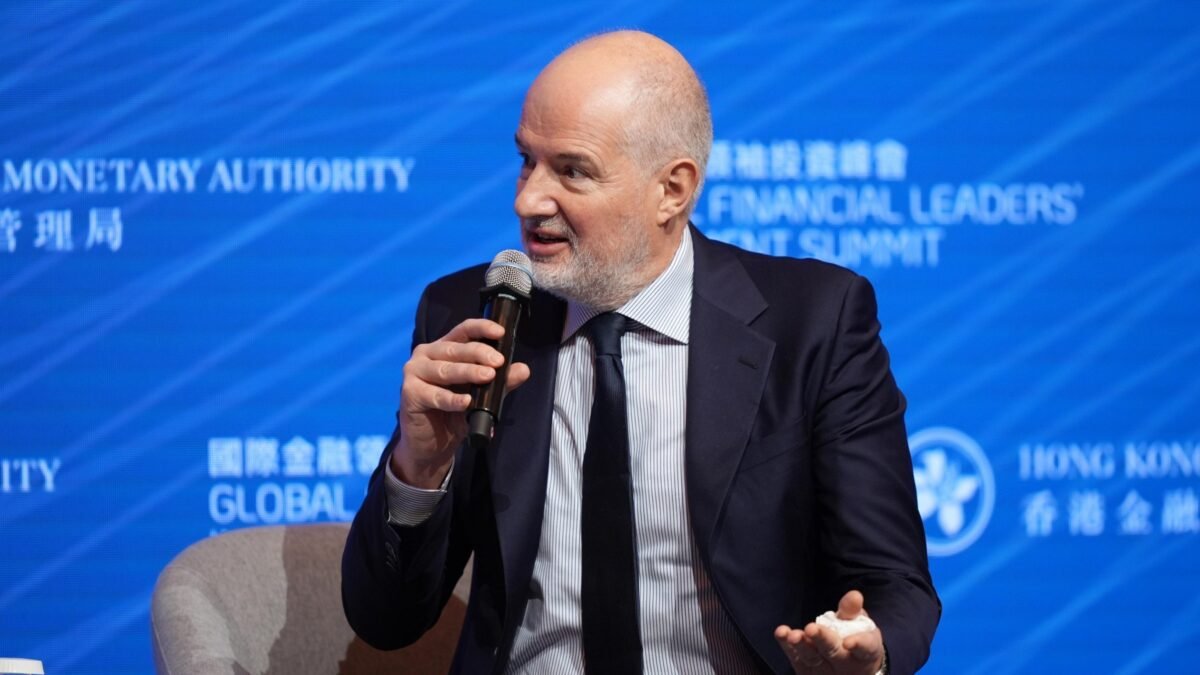
Emmanuel Roman, chief executive of bond giant PIMCO, used a Hong Kong stage this week to deliver a blunt warning about the AI debt boom: a downturn is coming, and when it arrives, some things will break. Roman spoke at the 2026 Global Financial Leaders’ Investment Summit, where his remarks were reported by Bloomberg alongside cautionary comments from other major money managers.
The warning carries unusual weight because PIMCO has been one of the most active financiers of the AI buildout. The firm helped arrange the first chip-based financing for CoreWeave in 2023, booked roughly $2 billion in paper gains on $29 billion of Meta bonds tied to AI infrastructure last year, and bought $4 billion of SpaceX bonds last month. A CEO publicly flagging bubble risk while his firm has just sold a large block of AI-related debt is a signal worth noticing.
The Numbers Behind the Warning

The scale of borrowing is what makes Roman’s caution notable. He has estimated that financing the AI buildout could require $2 trillion over the next five years, compared with a total US bond market of roughly $12 trillion. Recent deal flow shows how much appetite exists: Meta drew $58 billion in orders for a bond offering expected to be $15 billion to $20 billion, Oracle said Monday it would need another $20 billion in bonds on top of existing commitments, Alphabet is selling €6 billion (about $6.7 billion) of bonds, and Microsoft recently sold $25 billion — its first bond sale in a decade.
Roman did not claim to know the timing. He pointed to possible triggers including US rate hikes, war, or a eurozone crisis, and noted that how pricing and economics will evolve remains unclear. That uncertainty is the core of the message: the debt is real, the demand is real, but the path forward is not.
Wall Street Is Split

PIMCO is not alone in urging caution. Apollo Global Management, which has reportedly discussed a $40 billion chip deal with SpaceX, is also warning of AI risk. Apollo president Jim Zelter told analysts that society will likely use dramatically more computing power in the future and that AI is improving quickly, but he stressed that significant uncertainty remains — particularly around how pricing and economics will develop.
Yet the market’s behavior tells a more complicated story. The enormous order book for Meta’s bonds suggests investors are not treating this as a top. Wall Street banks have also been eager to finance $63 billion in debt from Anthropic, which is not even a hyperscaler. At the same time, reports from China indicate that its AI bubble burst some time ago.
Why the Timing Question Misses the Point

For anyone asking when the AI bubble will pop, the honest answer is that nobody knows — and the people with the most exposure are the first to say so. What Roman and Zelter are describing is not a prediction with a date attached. It is a recognition that a market this dependent on debt is vulnerable to shocks, and that the best part of the party may already be over.
The AI trade has moved from enthusiasm to something more fragile. More voices are expressing caution, and the memory of the disaster at Situational Awareness has sharpened the mood. It is possible that Anthropic’s IPO will be a blockbuster and inject fresh energy into the market, the way someone arriving at a dwindling party with a 24-pack can change the night. But the warnings are coming from inside the house — from the firms that have been writing the checks.


