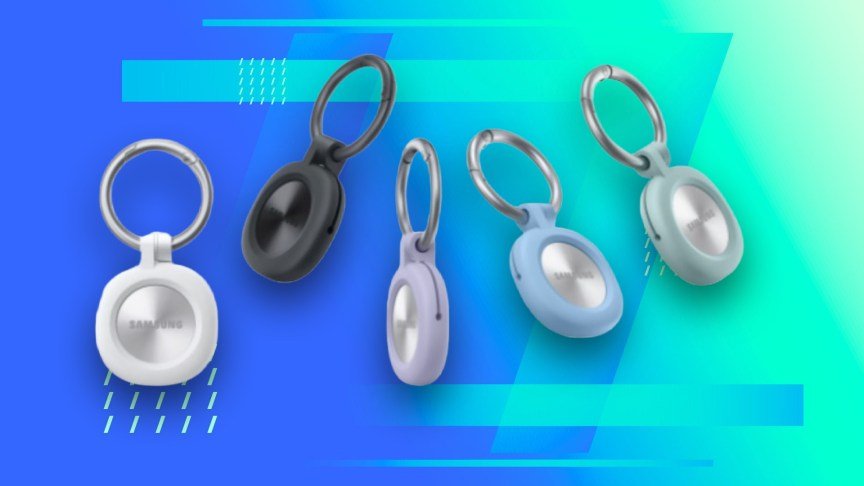
The Galaxy SmartTag 3 is now on sale in the US, and its headline feature is support for Bluetooth Channel Sounding, a next-generation distance-finding technology. However, Samsung’s implementation of Samsung SmartTag 3 Bluetooth Channel Sounding is restricted to a handful of Galaxy phones, undercutting the open promise of the standard.
What the SmartTag 3 Offers

Samsung’s latest tracker is smaller and lighter than earlier models. It carries an IP67 rating for dust and water resistance, promises 550 days of battery life, and includes NFC-powered Lost Mode. It also works with iPhones, but only at a basic level.
Features such as Ring Phone, Left Behind Alerts, and Compass View are reserved for Galaxy users. Compass View, which provides direction and distance guidance, depends on Bluetooth Channel Sounding.
The Catch: Channel Sounding Locked to Galaxy

Bluetooth Channel Sounding is designed to improve distance awareness between Bluetooth devices, ideally regardless of brand. Google’s Pixel Tag and Motorola’s Moto Tag 2 also use the technology, but those manufacturers make it available to any compatible Android phone. Samsung instead ties its Channel Sounding features to the Galaxy Find Network and limits full access to Galaxy devices.
Only the Galaxy Z Fold 8 Ultra, Galaxy Z Fold 8, Galaxy S26 Ultra, and Galaxy S26 Plus can unlock the SmartTag 3’s Channel Sounding capabilities through Compass View. Future Galaxy phones with Channel Sounding support will also qualify. When paired with an older Galaxy phone, a base-model flagship, or an iPhone, the SmartTag 3 behaves like a standard Bluetooth tracker.
Why Samsung's Approach Stands Out

Samsung sits between Apple’s closed ecosystem and Google’s more open model. Its devices run Android, but many of its best features stay inside the Galaxy family. The Galaxy Find Network, which Samsung says includes nearly 900 million devices, uses constant Bluetooth signals from those devices to crowdsource location data. That scale can make tracking faster and more reliable for Galaxy owners.
Google’s Find Hub, by contrast, works across headphones, earbuds, trackers, smartphones, and smartwatches from multiple manufacturers. But cross-ecosystem tracking often shows only the last known location before a device was powered off, or triggers a chime. Live location and precise direction-finding are not available in those mixed setups.
The Tension Between Reliability and Openness

Channel Sounding aims to break down ecosystem barriers. In theory, if a phone, headphones, and smartwatch all support the technology, fine-ranging tracking could work across brands. Samsung’s implementation delivers that precision only within its own ecosystem, which runs counter to Bluetooth’s broader goal of democratizing connectivity.
Apple announced at this year’s WWDC that iPhones with its N1 networking chip will support Channel Sounding with third-party Bluetooth 6.3 devices. Those devices are not yet on the market and are not expected for a few years. The timing suggests Apple is giving itself room to decide how Channel Sounding fits into its own walled garden, much as Samsung has done with the SmartTag 3.
What It Means for Buyers

For Galaxy users with one of the supported phones, the SmartTag 3 offers advanced tracking features backed by a large device network. For everyone else, including iPhone owners and Galaxy users with older or lower-tier phones, the tracker works like any other Bluetooth tag. Google’s Find Hub is still maturing, but it is moving toward a more open, cross-device network powered by Channel Sounding. The choice between ecosystem reliability and broad interoperability is left to the buyer.