more US strikes on Iran — President Donald Trump told reporters at the White House on Monday that additional American military action against Iran is highly unlikely, while insisting US forces remain prepared if conditions shift. The remark came as he described what he called positive momentum behind diplomatic efforts to wind down the Middle East conflict.
Trump framed the current US posture as a deliberate holding pattern, saying Washington was maintaining the status quo at the request of countries neighboring Iran. He also asserted that Iran’s military capacity had been effectively neutralized, repeating a characterization he has used before but applying it to a different political moment.
Shift follows midterm losses

The president’s tone on Iran has changed since Republicans suffered a difficult set of midterm election results last week. Senior party figures, including Vice-President JD Vance, attributed the losses to the war, according to the account. Before the midterms, Trump had described American forces as carrying out minor strikes on an Iranian island in the Strait of Hormuz.
In an interview with 60 Minutes broadcast on Sunday, Trump said he saw no current reason to escalate. Asked why he would not formally declare the war over, he pointed to the risk that Gulf allies could still face Iranian aggression, saying the US had to ensure they were not harmed. He suggested the naval blockade on Iranian ports was contributing to regional security.
Tehran has repeatedly cast doubt on Trump’s earlier statements about resolving the conflict, and Iranian officials have not publicly endorsed his latest assessment.
Qatar talks cited as 'positive'

Earlier on Monday, Trump hosted Qatari Prime Minister Sheikh Mohammed bin Abdul Rahman Al Thani in the Oval Office. Trump said the two had an excellent conversation about negotiations to end the war. In a post on X, the Qatari leader described positive discussions with Trump and Vance on reaching a deal and bringing peace to the region.
Since the war began after joint US-Israeli strikes in February, efforts to broker peace between Washington and Tehran have largely run through indirect mediators rather than direct talks.
Saudi Arabia, Qatar and the United Arab Emirates are among the US Gulf allies that have been hit by Iranian strikes during the conflict. The threat of further strikes has also caused major disruptions to air travel in the region.
Hegseth impeachment push

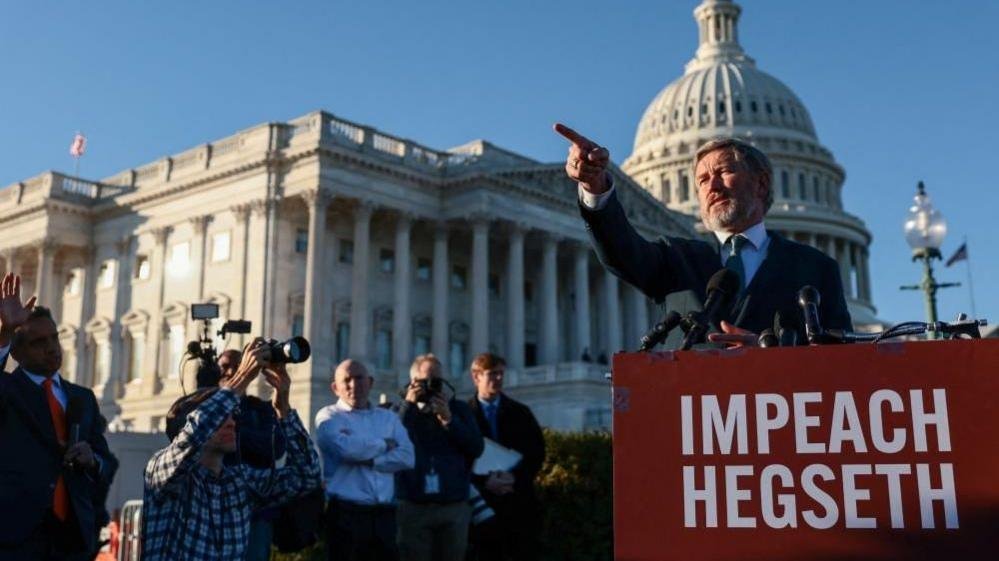
Post-election fallout over the war is already testing the administration. Republican congressman Thomas Massie on Monday launched a sharp attack on Defence Secretary Pete Hegseth over the Iran conflict and requested a House of Representatives vote to impeach him.
Trump has stood by Hegseth, who said he is not worried about the looming impeachment threats. The president dismissed Massie’s effort as a sham. The move is unlikely to succeed while Republicans still control Congress until January, but Democrats have signaled willingness to pursue impeachment once the new session begins and they hold both the House and the Senate.