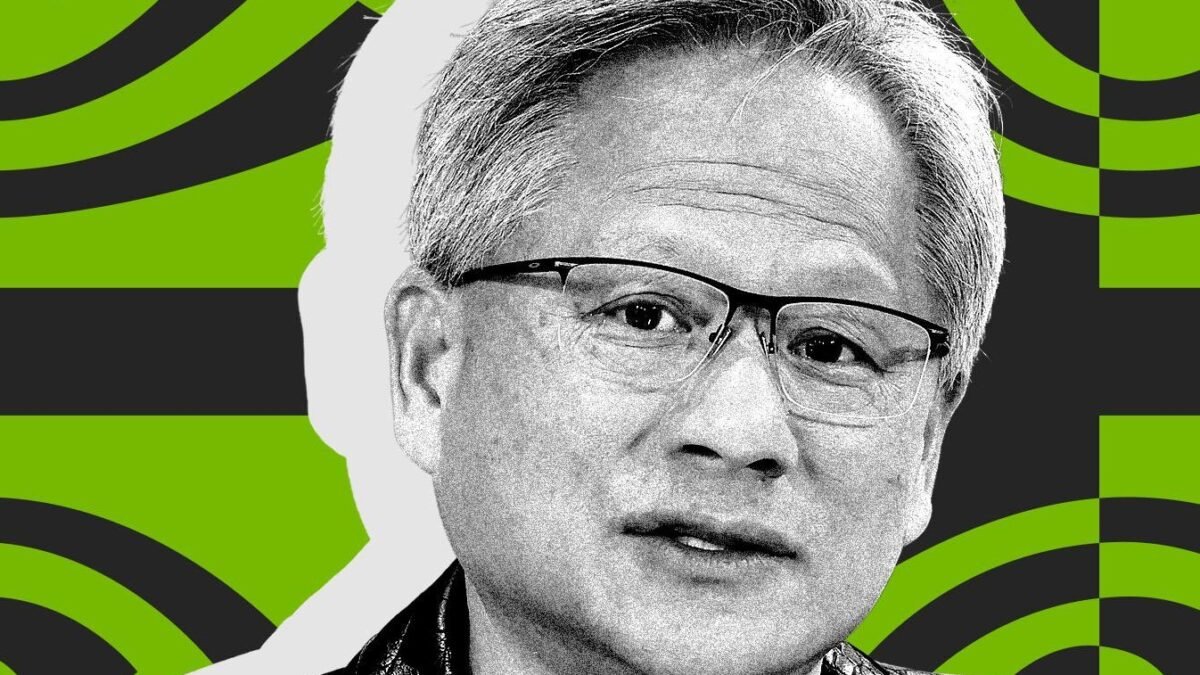
The Jensen Huang spy case has thrust Nvidia’s chief executive into the center of a national security controversy, raising a question with far-reaching implications for the US-China technology rivalry: what could Beijing stand to gain from a relationship with the head of the world’s most important AI chip company?
US officials believe Alice Huang, an executive at Singapore-based cloud provider Megaspeed and a top Nvidia customer, is a foreign intelligence asset who has funneled information to the Chinese government, according to The New York Times. She and Jensen Huang, who are not related, reportedly had an extramarital affair.
A CEO With Unusual Influence

Nvidia’s chips underpin advanced AI development in the United States, and demand has outstripped supply for years. The company has also invested roughly $99 billion in equity across frontier AI labs, neoclouds, and infrastructure firms. Jensen Huang has cultivated a close relationship with President Donald Trump, even putting the president on speakerphone during a public appearance.
That combination of market power and political access is what would make him a valuable target for a foreign adversary, analysts say.
Hanna Dohmen, a senior research analyst at CSET, told The Verge that an alleged spy would potentially be interested in understanding US government thinking on export controls, gathering information on Huang’s conversations with the Trump administration, trying to influence policy, and learning trade secrets such as which buyers receive Nvidia chips first and what products are coming next.
“It’s not entirely surprising that the CEO of arguably one of the most important, if not the most important, AI chip companies is the target of some sort of intelligence-gathering from countries like China,” Dohmen said.
The Megaspeed Connection

Megaspeed’s sister company, headquartered in Malaysia, spent at least $4.8 billion on Nvidia chips and technology between June 2024 and February 2026, the Times reported, citing trade records from ImportGenius. The transaction sizes were unusual for a small company, especially given how difficult Nvidia chips are to obtain. Alibaba is reportedly one of Megaspeed’s top customers.
US officials reportedly believe Megaspeed is connected to a convoluted web of Chinese companies working together to access chips in bulk and potentially move some of them into China illegally.
Nvidia spokespeople initially described Huang’s interactions with the Megaspeed executive as strictly business and “not unusual or unexpected,” saying that meetings with customers are part of a CEO’s job. But at some point the relationship became personal. In June 2024, just before Megaspeed became an Nvidia customer, photos showed the two with other AI executives at a bar in Taipei after a local trade show. The following year, they reportedly had a business dinner in Taipei with others as well.
Lobbying on Export Controls
The revelation is particularly sensitive because of Huang’s lobbying role. He had been trying to persuade the Trump administration and Congress to loosen export controls on advanced semiconductors sold to China, arguing that spreading American chips would help establish US technology as the standard rather than allowing Chinese chips to grow.
According to Culper Research, which shorted Nvidia’s stock earlier this year, Huang was spotted at the Taiwan dinner with Alice Huang in May 2025. That was shortly after Nvidia disclosed the Trump administration’s new restrictions on its China-specific H20 chips in April.
A couple of months later, Huang reportedly met with Trump in the Oval Office in July 2025 to make his case for loosening export restrictions. Days later, Nvidia announced that the administration had approved sales of its H20 chips to China. Huang had begun speaking with then-White House AI czar David Sacks in 2025, who became the key advocate for Nvidia’s view that selling American chips to China would be beneficial, the Times reported.
By October 2025, Huang was lobbying Trump to allow Nvidia to sell more advanced chips to China ahead of Trump’s meeting with Chinese President Xi Jinping. After considering the proposal, Trump ultimately decided not to move forward. That same month, Huang hired an external PR firm known for handling sex scandals, Wired reported.
In December 2025, Trump changed course slightly, allowing Nvidia to sell H20 chips to a greenlit list of approved customers in China, with the US government taking a 25 percent cut of those sales. The same rules would apply to other US chipmakers, he wrote on Truth Social at the time.
Dohmen noted that even without any intelligence operations from the Chinese side, it is in Nvidia’s and Huang’s interest to lobby for looser export controls, since restrictions by definition limit the company’s business expansion. Nvidia’s market capitalization is currently about $4.25 trillion.
A Classified Memo and a Presidential Trip
This spring, a classified memo overseen by Secretary of State Marco Rubio circulated among Trump administration officials ahead of the president’s trip to China in May, according to the Times. It warned of the Megaspeed executive’s alleged involvement in surveillance on behalf of China’s Ministry of State Security. Her reported goal was to learn about advanced AI chips in the US and try to influence them being made available to China on a large scale.
Asked at a briefing whether he had known about the memo, Trump said he would check with intelligence officials and that it “could have been mentioned,” but that it did not make much of an impact on him. He said he was unaware of the alleged spy connection ahead of his trip to China.
Huang was initially left off the list of executives joining Trump on the trip, but the president later asked him to join. Trump had been briefed about a year earlier that US intelligence believed the Megaspeed executive to be a Chinese intelligence operative and that she had a close relationship with a US citizen who turned out to be Nvidia’s CEO, according to the Times. At the time, he reportedly chose not to act.
On Sunday, Huang wrote an internal memo to Nvidia employees, some of whom are family members, apologizing for being unfaithful to his wife and saying his actions hurt her and their children. He added that he is fully committed to leading the company and will work to earn back confidence.
Nvidia’s board of directors launched an independent investigation into the national security allegations over the weekend. Huang will not control who participates in the investigation. The company said it had “no reason to believe that either national security or Nvidia secrets were compromised.”
So far, the allegations have not affected Huang’s position. Trump has stood by him, telling reporters that Huang is an honorable man who probably has an excuse and that he would certainly take him on his next trip to China. “I haven’t heard he’s done anything wrong,” Trump said. “He dealt with somebody, but you know, so does everybody else.”
Morningstar senior equity analyst Brian Colello wrote in a note that the firm cannot rule out the investigation fading away and Nvidia returning to business as usual, particularly since Huang is the only CEO the company has ever known. He also noted that Nvidia struck deals in August with six large financial institutions to provide more than $500 billion in financing for AI data centers and other infrastructure, and it is unclear what those partnerships would look like under a different CEO. Morningstar maintained a very high uncertainty rating for the company, with Colello writing that US approval for Nvidia to sell H20 chips to China could be revoked and the company could ostensibly be sanctioned as well.