After a relatively clean start to the season, VAR errors are back in the spotlight following a weekend of contentious decisions across the Premier League. The Key Match Incidents (KMI) Panel, which reviews every debatable call, had recorded only two VAR mistakes after eight rounds—compared with six at the same stage last season. That tidy record now faces a stern test after almost every top-flight fixture produced a flashpoint.
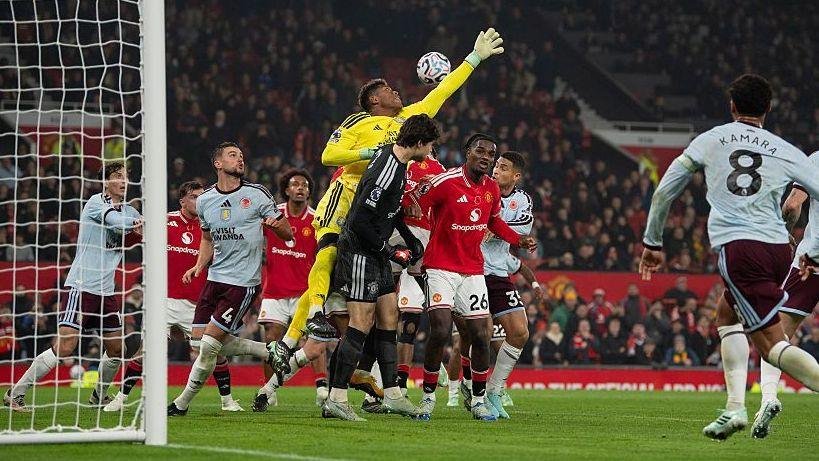
Manchester United 4-4 Aston Villa

Two incidents stood out at Old Trafford. First, United were awarded a penalty in the 16th minute when Boubacar Kamara challenged Matheus Cunha. Replays indicated that the Villa defender made initial contact with Cunha’s foot, so the KMI Panel is expected to judge the spot-kick correct.
The second incident came deep into stoppage time, when Patrick Dorgu scored a 96th-minute equaliser. Villa argued that goalkeeper Zion Suzuki had been fouled by Senne Lammens in the build-up. Lammens was not looking at the ball, which raises the possibility of a VAR intervention. However, given the Premier League’s high threshold for overturning on-field decisions and the minimal contact involved, the panel is unlikely to classify the failure to disallow the goal as a VAR error.
Arsenal 1-0 Hull

Arsenal were denied a penalty despite a VAR review. Kai Havertz was pulled down inside the area by Nobel Mendy, and referee Farai Hallam was sent to the pitchside monitor by VAR Michael Oliver. But no penalty was given because Havertz was judged to have been in an offside position. The foul occurred before any offside offence, meaning the penalty should have stood. Even though rewarding a player in an offside position feels counterintuitive, the law supports the award, and the KMI Panel is likely to log this as a mistake.
Leeds 1-0 Tottenham

Jayden Bogle fouled Mathys Tel, and referee John Brooks awarded a free-kick but no card. VAR Tony Harrington chose not to recommend a red card. The challenge was awkward to judge because Bogle made the foul with his supporting foot rather than his tackling foot. It was still a painful challenge, and opinions are split over whether it warranted a dismissal. The KMI Panel’s verdict will depend on which former players are sitting that week, as ex-professionals are divided on the incident.
Everton 3-1 Coventry

Three incidents drew scrutiny at Goodison Park. First, Coventry’s Caleb Yirenkyi appeared to have his hair pulled by James Tarkowski inside the area, but no penalty was awarded. Although hair-pulling has been treated more leniently this season and would not merit a red card, there did appear to be a yank, so the panel is likely to rule that a penalty should have been given.
Second, Coventry appealed for another penalty when Vitalii Mykolenko clipped Taiwo Awoniyi on the edge of the box. Replays showed the contact occurred just before the line, so the correct call was no penalty.
Third, Thierno Barry put Everton ahead in the 61st minute, but a VAR check examined a possible handball. The VAR found no conclusive evidence, yet there appeared to be a deviation and the goal probably should have been ruled out. Because the VAR does not have immediate access to the super-zoom technology—which takes several minutes to calibrate—the panel may support the decision not to intervene. A split vote is possible.
Brighton 2-0 Brentford
Igor Thiago was sent off after a VAR review when he caught Chema Andres in the head with his forearm. The Brentford striker can consider himself unfortunate, as there is doubt over whether he intended to catch the Spaniard in the face. Still, the VAR intervention is likely to be supported because the law states that a strike to the head should be a red card unless the force is negligible.
Crystal Palace 1-3 Liverpool
Crystal Palace were awarded a penalty three minutes into stoppage time when Milos Kerkez fouled Dario Osorio. A similar incident last season, when William Saliba headed Joao Pedro after the Brighton striker had won the ball, was judged to be a correct penalty. This case is not quite the same and was more of a 50-50 clash. It may be voted an on-field error, but not one that reaches the threshold for a VAR intervention.
Sunderland 0-1 Chelsea
Cole Palmer went down on the edge of the area under a challenge from Luke O’Nien and Jules Ahoka and appealed for a penalty. Referee Jarred Gillett gave no foul. Fouls are judged by the first contact on the attacker, and a player falling into the box with contact continuing does not make it a penalty—only holding offences consider continuing contact relevant. With no conclusive evidence that initial contact occurred inside the area, no penalty is likely to be supported.
Fulham 1-1 Newcastle
Newcastle thought they had taken the lead at Craven Cottage, but the goal was ruled out for a foul by Yoane Wissa on Timothy Castagne. Matthias Jaissle was perplexed in his post-match interview, yet he would surely have been furious if a Fulham player had held one of his defenders back to create an onside corridor for another attacker to score. The panel is likely to vote this a correct decision.
So, was it a bad weekend for VAR?
Two decisions stand out as very likely to be logged as VAR errors: the failure to award penalties to Arsenal and Coventry. Two further calls—Barry’s goal and the potential red card for Bogle—may also be errors, but those will depend on the panel’s subjective view. The remaining incidents are likely to be judged correct. That leaves a potential tally of two to four errors—not a good weekend for VAR.