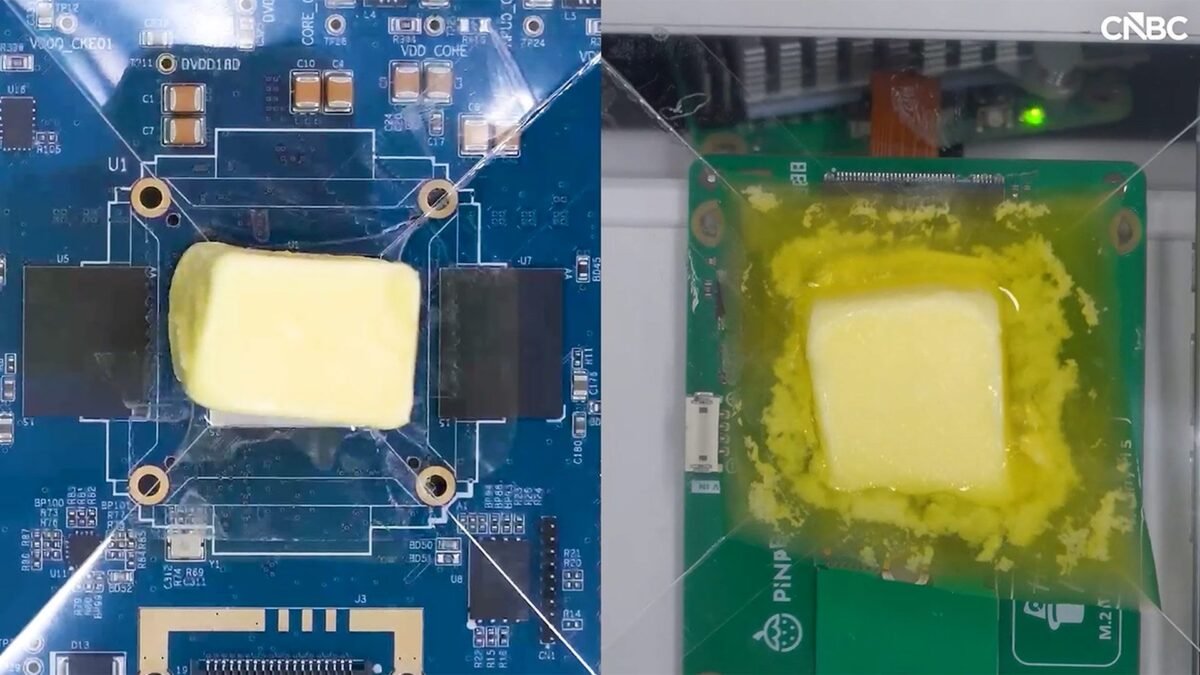
South Korean startup DEEPX has drawn attention with an unusual demonstration of its DX-M1 processor, claiming the DEEPX AI chip runs cooler by 25 to more than 40 degrees Celsius compared with unnamed competing chips. The test involved placing a knob of butter on each processor while running what the company described as the same AI workload. According to CEO Kim Nok-won, every rival chip melted the butter, while the DX-M1 left it solid.
The demo was featured in a CNBC report on the growing concerns surrounding AI data centers, where heat generation drives up power and cooling costs. DEEPX positions its approach as a simple fix: make the chips themselves run cooler.
A Dairy-Based Thermal Test
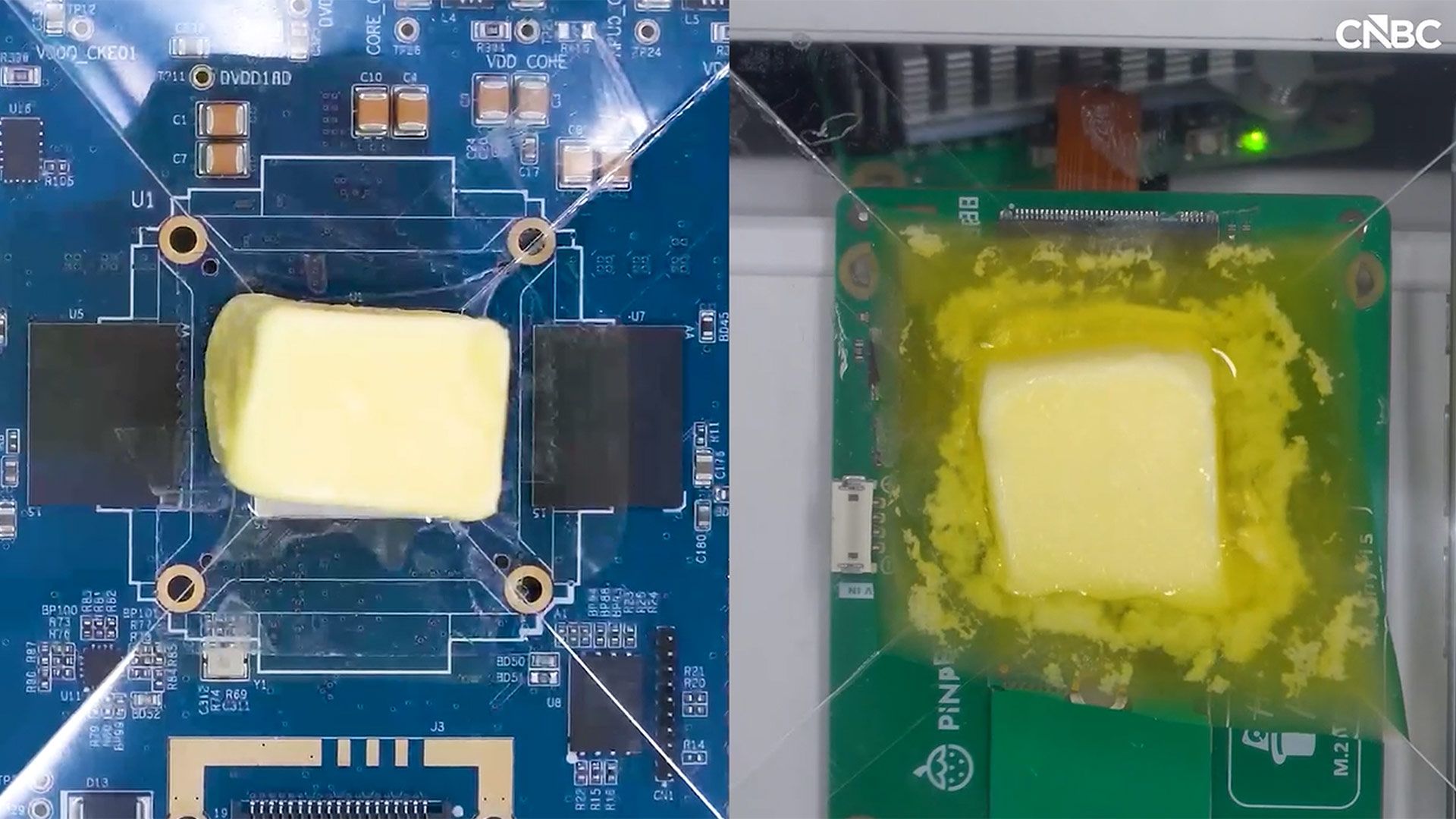
The side-by-side comparison showed the DX-M1 neural processing unit maintaining a visibly lower temperature than the competing chips. The butter remained intact on the DEEPX chip, while it sizzled on the others. While the visual is striking, the test leaves several important questions unanswered. Chief among them is how quickly each processor completed the workload. A chip can run cool if its power and clock speeds are scaled back, a common tactic among PC enthusiasts who undervolt or underclock GPUs to improve efficiency and reduce fan noise.
DEEPX has not disclosed the performance details of the rival chips or the exact conditions of the test. Without that information, the butter benchmark offers limited insight into real-world efficiency.
Production and Orders
The DX-M1 NPU has been manufactured on Samsung’s 5nm process since August 2025, according to reports from The Elec. That production has helped DEEPX secure approximately $13.3 million in orders. The company is already planning a next-generation DX-M2 chip based on Samsung’s 2nm process, with mass production targeted for the second half of 2027.
These chips are designed for edge computing and robotics applications, not for the racks of high-power Nvidia Blackwell and Rubin GPUs that dominate AI data centers. As a result, the DX-M1 and its successor are not direct competitors in the data center space, making the butter test something of a distraction from the broader challenge of cooling large-scale AI infrastructure.
Data Center Heat and Cooling Innovation
The CNBC report also highlighted SK hynix’s work on iHBM, a next-generation memory solution with a low-power, cool-running design. An executive told CNBC that the ‘i’ stands for ‘Integrated Cooling Element.’ CoolIT is pursuing a similar strategy by bringing water cooling closer to the heat-generating silicon.
These developments reflect a wider industry effort to address the thermal demands of AI computing. While DEEPX’s demonstration may raise eyebrows, it does not signal an imminent replacement for the liquid-cooled GPU racks that power today’s AI models. Instead, it underscores the potential for specialized low-power chips in edge and robotics markets, where efficiency matters as much as raw performance.