

Kyiv-based radio manufacturer CODE380 has introduced the D·Vision SDR, a software-defined radio aimed at drone signal detection. The unit is built to sweep radio frequencies and turn intercepted analog video transmissions from Russian drones into viewable feeds, which could help troops locate and intercept the aircraft.
The device covers a frequency range of 500 MHz to 8.7 GHz. Its detection reach extends up to six miles for signals in the 540 MHz to 6 GHz band, and up to two to three miles at higher frequencies.
Lightweight build sets it apart
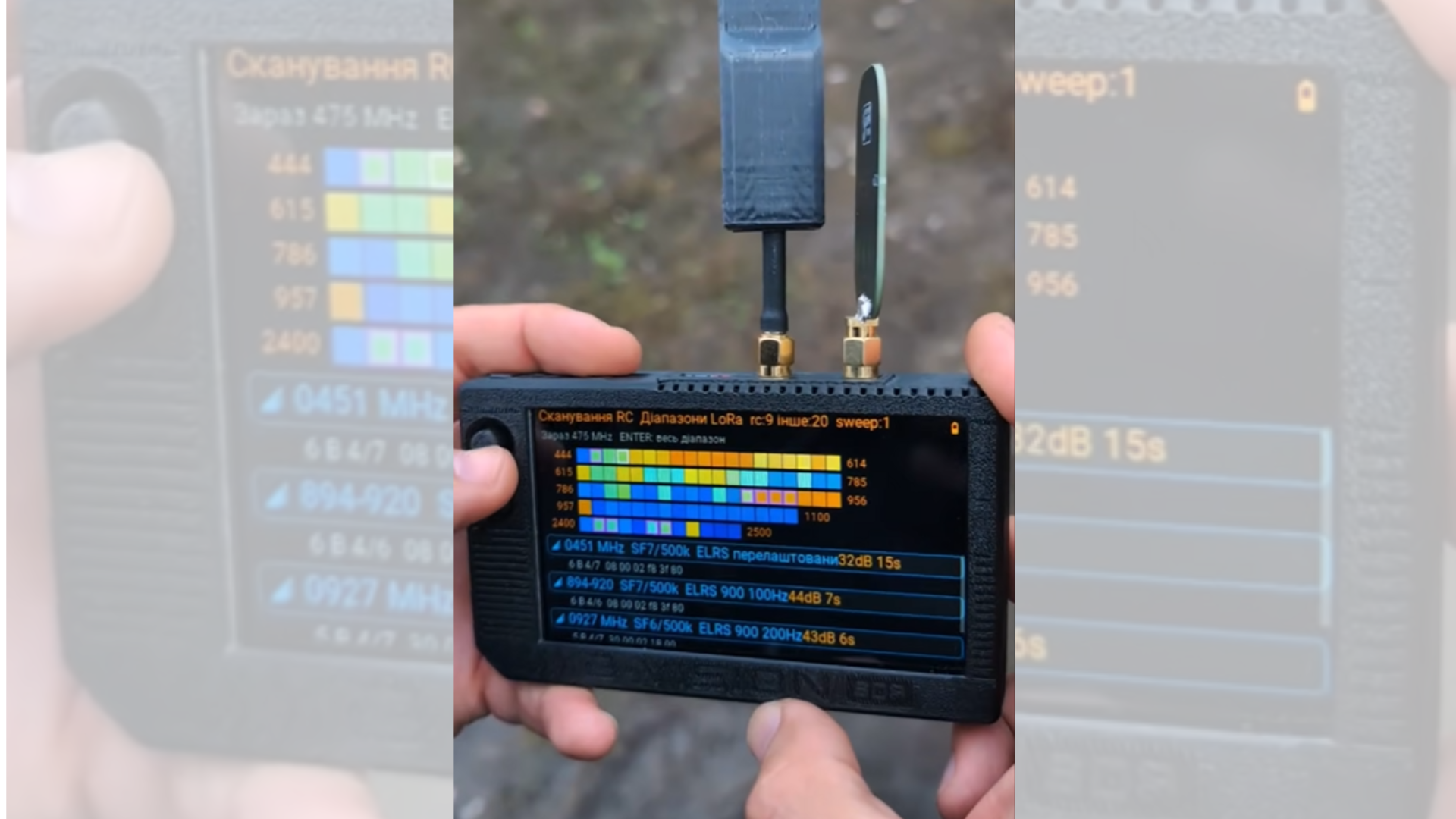
At 290 grams, or about 10 ounces, the D·Vision SDR is among the lightest passive drone detectors produced in Ukraine so far. For comparison, an iPhone 18 Pro Max weighs roughly 249 grams, or 8.78 ounces.
Other Ukrainian receivers offer similar roles but carry more weight. The Vydun 7.5 tips the scales at around 900 grams, or 2 pounds, and can intercept signals up to 7.5 GHz. The Chuyka 3.0 weighs 650 grams, or 23 ounces, and detects signals up to 8.8 GHz. The SENSE-4, at 600 grams or 21 ounces, can pick up drone signals up to 8.2 GHz.
Focus on the 4.1 to 4.5 GHz band
All of these receivers cover the 4.1 to 4.5 GHz band, which Russian Molniya strike drones began using in June to send video back to their operators, according to Presidential advisor Serhii “Flash” Beskrestnov.
Beskrestnov cautioned against treating any detector as a standalone shield. In a social media post, he said most detectors either do not see these frequencies or see them poorly, and he warned that misplaced trust in a detector could cost lives.
Such receivers are typically deployed alongside other sensors, including radar, acoustic sensors, and drone interceptors, as part of a broader anti-drone defense system.
Analog limits and digital questions
Most of these units are designed to intercept analog signals. That means they would lose effectiveness against video feeds if Russia shifts to digital transmissions. The D·Vision SDR is claimed to offer digital UAV detection, though for now it is tuned only to DJI drones.
It remains unclear what types of radios Russian drones use. The company would need to recover downed units to inspect their hardware and develop appropriate countermeasures.
The receiver would also be ineffective against fiber optic drones. Those aircraft use a physical connection to communicate with their home base, making them both jam- and intercept-proof.


