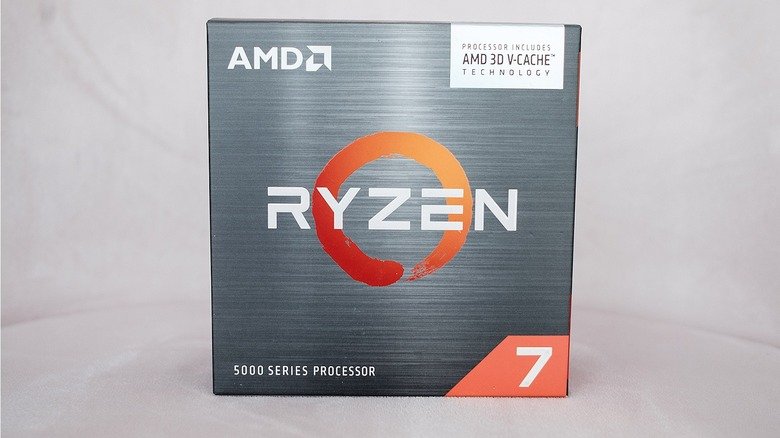
With DDR5 memory prices soaring, building a new PC has become a costly endeavor. That reality has pushed AMD to resurrect its flagship AM4 gaming chip, the Ryzen 7 5800X3D. But is the Ryzen 7 5800X3D in 2026 still a wise purchase? The answer hinges on what you already own and what you hope to gain.
A Proven Performer on AM4
For anyone who bought the 5800X3D years ago, the processor has aged gracefully. In demanding titles like The Witcher 3: Wild Hunt — Remastered, the chip handles dense city scenes without breaking a sweat. With an RX 9070 graphics card, frame rates stay in the 80 to 90 range at 1440p with ray-traced lighting enabled, and 1 percent lows remain above 70 frames per second. Similar results appear in Kingdom Come: Deliverance 2, Marathon, and Assassin’s Creed Black Flag Resynced.
The 5800X3D’s strength lies in its ability to keep up with modern GPUs, even as the AM4 socket reaches its tenth year. But that longevity comes with a caveat: AM4 is effectively a dead platform. AMD has no plans to release faster AM4 processors, so any upgrade here is a final stop rather than a stepping stone.
The DDR5 Dilemma

Normally, the advice would be to move to AM5 or LGA 1851 for future upgrade paths. However, memory prices have upended that logic. A 32GB kit of 6,000MHz CL30 DDR5 from Corsair can cost nearly $600, and even 16GB of DDR5 can reach $300. For someone with an existing AM4 system, reusing DDR4 memory makes the 5800X3D far more attractive.
Yet the CPU itself is priced at $349, which is steep for a four-year-old processor. Before AMD discontinued it the first time, the 5800X3D often sold for $300 or less. That premium raises a fair question: is the 5800X3D the best use of your money?
Consider the GPU First
If gaming performance is your main concern, a graphics card upgrade often delivers a bigger leap than a new CPU. Even with a processor bottleneck, a faster GPU reduces system latency and improves the overall experience. AMD’s recent offerings, such as the RX 9060 XT or RX 9070, can make more sense than a 5800X3D, especially since a new GPU can move with you to a future AM5 or LGA 1851 build.
For those sticking with NVIDIA, be aware that Team Green’s drivers tend to place more overhead on the processor, so pairing a high-end NVIDIA card with an older CPU may not yield the same benefits as an AMD GPU.
Cheaper AM4 Alternatives
You don’t have to spend $349 to get a meaningful uplift. The Ryzen 5 5500, often available for under $100, offers a substantial jump over older chips like the Ryzen 5 2600X. In Cyberpunk 2077 Phantom Liberty, the 5500 paired with an RX 9070 averaged 102 frames per second with 1 percent lows of 72.9, compared to 85.7 average and 55.8 lows for the 2600X. That difference in consistency is immediately noticeable.
The Ryzen 5 5600X and Ryzen 7 5700X are also solid, more affordable options at under $150. Saving money on the CPU leaves more budget for a GPU, which typically has a larger impact on gaming.
When the 5800X3D Makes Sense
There are two scenarios where the 5800X3D justifies its price. First, if you already own 32GB of high-performance DDR4 RAM at 3,200MHz or 3,600MHz, replacing it with DDR5 would cost $500 or more. In that context, the 5800X3D is a relative bargain. Second, if you have a high-end GPU like the RTX 5070 Ti or RTX 5080 paired with a weaker AM4 processor, the 5800X3D can unlock more of that card’s potential.
With neither AMD nor NVIDIA expected to launch next-gen GPUs until late 2027 or 2028, a 5800X3D could realistically carry a system through the end of that generation. For the right user, that makes it a sensible final upgrade rather than a stopgap.