New Zealand’s tightest election in years did not produce a decisive winner, but it did deliver an unmistakable message: the country is exhausted, anxious and increasingly doubtful that politics can fix what ails it. As fog settled over Wellington on Saturday, voters described a mood that matched the weather — flat, tired and tinged with dread.
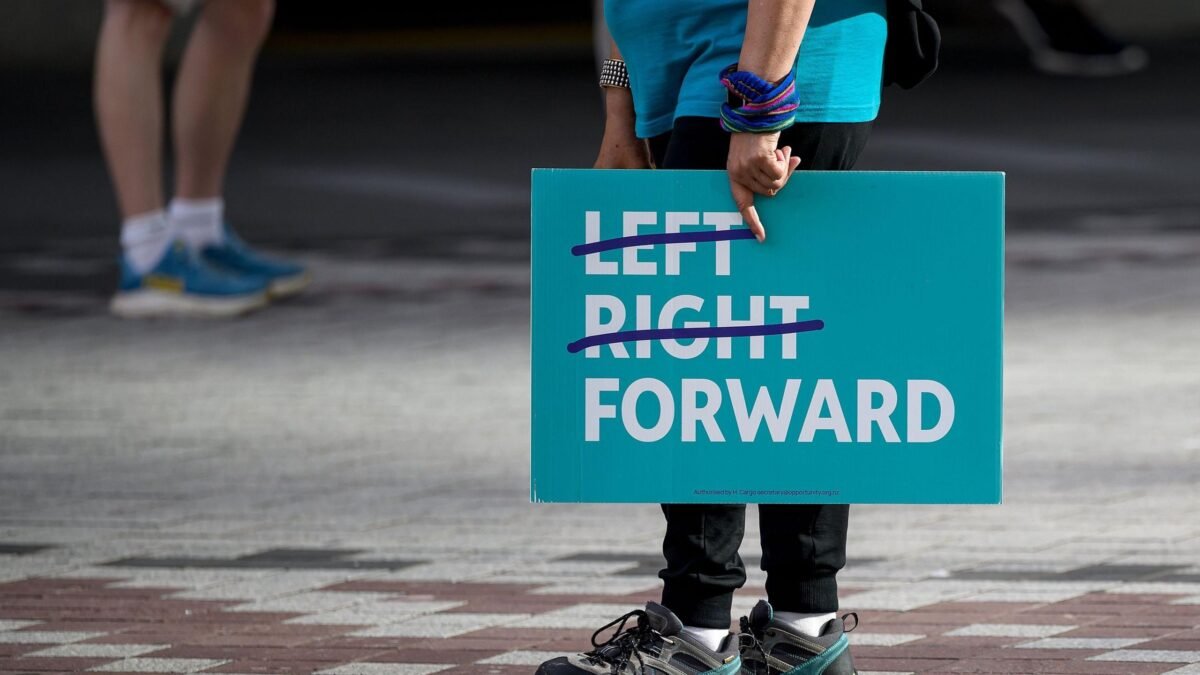
The result was historic in its fragmentation. Record numbers deserted the two major parties, leaving neither with a clear mandate, while smaller parties on the left, right and centre all gained ground. Among the winners was the centrist Opportunity Party, which had never held a seat in parliament and could now command the balance of power with seven seats.
A country at a crossroads

The frustration is not confined to the capital. Surveys cited in the reporting found more than half of New Zealanders no longer regard their country as a land of opportunity, and a similar share expect the future to be worse. Many point to a battered economy, scarce jobs, soaring living costs and a fraying sense of community.
Unemployment is at an 11-year high and still climbing. For those under 24, the situation is the bleakest in three decades: one in three either cannot find enough work or has none at all. Michael Dawson, 20, followed the path he was told would lead to security — finishing school, completing a trade qualification — only to spend a year applying for dozens of jobs without a single interview. He now views the future with cynicism.
Household electricity bills have jumped sharply, partly because of global supply shocks, and New Zealand remains one of the least affordable places on earth to rent or buy. Although the country produces enough food to feed its population eight times over, about a quarter of adults skip meals because grocery prices — set by a supermarket duopoly — rank among the highest in the developed world.
Healthcare headlines add to the strain: long waiting lists, chronic understaffing, decaying infrastructure and rising patient costs. The death of a man who collapsed in an emergency department toilet after a nine-hour wait in July became a symbol of the system’s condition.
An exodus and a trust deficit

About 180 people leave the country every day — a record exodus that is splitting families and draining talent. Siblings Sam and Emily say they love New Zealand but struggle to find reasons to stay. Their friends are leaving in large numbers, and even their parents have considered a move to Australia. Sam argues that staying feels less like a neutral choice than an active penalty.
Faith in institutions has eroded. Only two in five New Zealanders trust the government to do the right thing, and fewer than half trust the courts. Former prime minister Helen Clark, whose foundation surveys social cohesion annually, says the result is a crisis of confidence about what the country is and where it is heading. Young people feel more isolated than a generation ago, attitudes toward multiculturalism are souring, and hope is in short supply.
Public debate has grown more polarised around Māori rights and the Treaty of Waitangi, healthcare for LGBT+ people and immigration. Some communities feel used as political footballs, according to Lara Greaves, who studies Indigenous politics.
Political disappointments pile up

The disillusionment has deep roots. Jacinda Ardern’s promised transformation on housing and healthcare never materialised, and many of her achievements — world-leading smoking reforms, emissions reduction policies, Māori language initiatives — were later rolled back. Her legacy, like that of her successor Chris Hipkins, is dominated by divisive Covid decisions.
The National Party won power in 2023 promising to rebuild the economy and get the country back on track. Political commentator Grant Duncan says its success has been very limited, and that the Luxon government cannot blame its predecessor indefinitely. National delivered an education overhaul, but its tenure was marked by a massive Māori-led protest march against a coalition partner’s bill to redefine the Treaty of Waitangi, followed by two leadership challenges that Christopher Luxon survived.
Duncan says neither major party has produced a sufficiently strong and inspiring leader, and both have records of disappointing results. Both governments have blamed crises beyond their control — Covid, the Iran war and US trade antagonism — but voters are not persuaded.
Not everyone shares the gloom. At the country’s largest livestock saleyard in Fielding, farmer Stu Morton says the past year was the best of his 30-year career. Agriculture, about 3% of GDP, struggled under the previous Labour government’s emissions scheme but has turned a corner under National, he says, and he believes the wider economy will follow. A stable government and a positive attitude, he argues, make the difference.
Still, for many voters the prevailing sentiment is staleness. Sam is unconvinced that a change of government will bring real improvement. With a wry smile, he notes that both major party leaders are white men named Chris.
Coalition negotiations are likely to take weeks, and the next prime minister will inherit a country whose confidence is as thin as the Wellington fog. The election has redrawn the political map; whether it can restore faith in politics is another question entirely.