When her second marriage ended, Andrea Javor found herself alone in a house that had once been loud with family life. The silence pressed in, and she couldn’t stop mentally replaying arguments and missed warnings. Her best friend handed her a beginner’s cross-stitching kit—a craft that seemed almost comically mismatched to her raw emotional state. Cross-stitching demands patience, precision, and the kind of focus that a single miscounted thread can shatter. Yet that unlikely gift became the tool she used to rebuild her life, one tiny X at a time. Over more than 2,000 hours of cross-stitching after divorce, Javor learned a lesson that had nothing to do with thread and everything to do with moving on.
A Craft That Demanded Impossible Precision
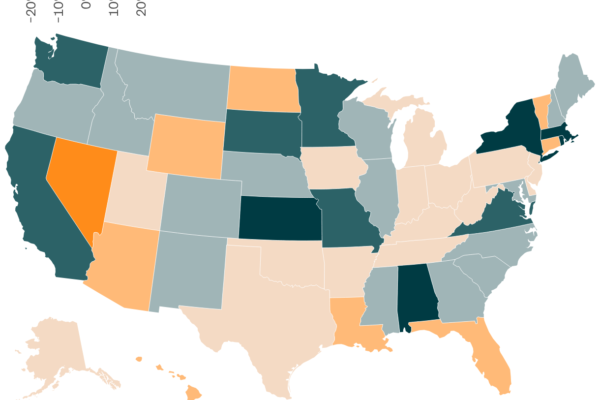
At first, Javor approached each project with rigid intensity. She sat under a harsh overhead light, counting stitches once, twice, then a third time to avoid errors. Her early pieces—a small “Happy Camper” scene with a pine tree, lettering, and a tiny camping vehicle—gave her a brief sense of accomplishment. But as she moved to more complex designs, like a map of the United States with each state rendered in its own pattern, the mistakes multiplied. Texas, a collage of pink and teal flowers, tripped her up repeatedly. Hours of work would vanish under her scissors as she unraveled entire sections to start over.
Each mistake felt like a personal failure. Javor would spend whole evenings undoing misplaced stitches, convinced that anything less than perfect would ruin the entire project. It mirrored the way she was picking apart her marriage, retracing decisions as if she could somehow go back and fix the outcome. She struggled to accept that some things couldn’t be repaired, no matter how much effort she poured in.
Learning to Live With Imperfection
The turning point came during an outdoor scene project. Javor made a significant error that went unnoticed for weeks. By the time she spotted it, she had stitched so much surrounding pattern that unraveling the whole section seemed impossible. She considered abandoning the project entirely. Instead, she cut out a section of the fabric and stitched in a clean piece of cloth. She worried the repair would be obvious—a permanent scar reminding her of her mistake. But as she kept working, the seam nearly disappeared.
That experience shifted something inside her. She hadn’t considered that the finished piece could still be beautiful, even if it was technically flawed. It was a lesson she needed far beyond the embroidery hoop. The mistakes she couldn’t erase simply became part of the .
From the Hoop to Real Life
After thousands of hours of cross-stitching, Javor’s nightly ritual gave her an unexpected framework for life after divorce. She began to distinguish between mistakes worth correcting and imperfections she could learn to live with. There was a counterintuitive comfort in practicing such an unforgiving hobby while trying to forgive herself. She couldn’t undo two failed marriages, but she could choose how much time and energy to spend dwelling on what had gone wrong.
That shift laid the groundwork for a healthy relationship with her partner, Jason, which has lasted five years. Recently, as she sat next to him on the couch and unfurled her canvas, he remarked that her creativity was still one of his favorite things about her. It’s now easier for her to see the whole beautiful .