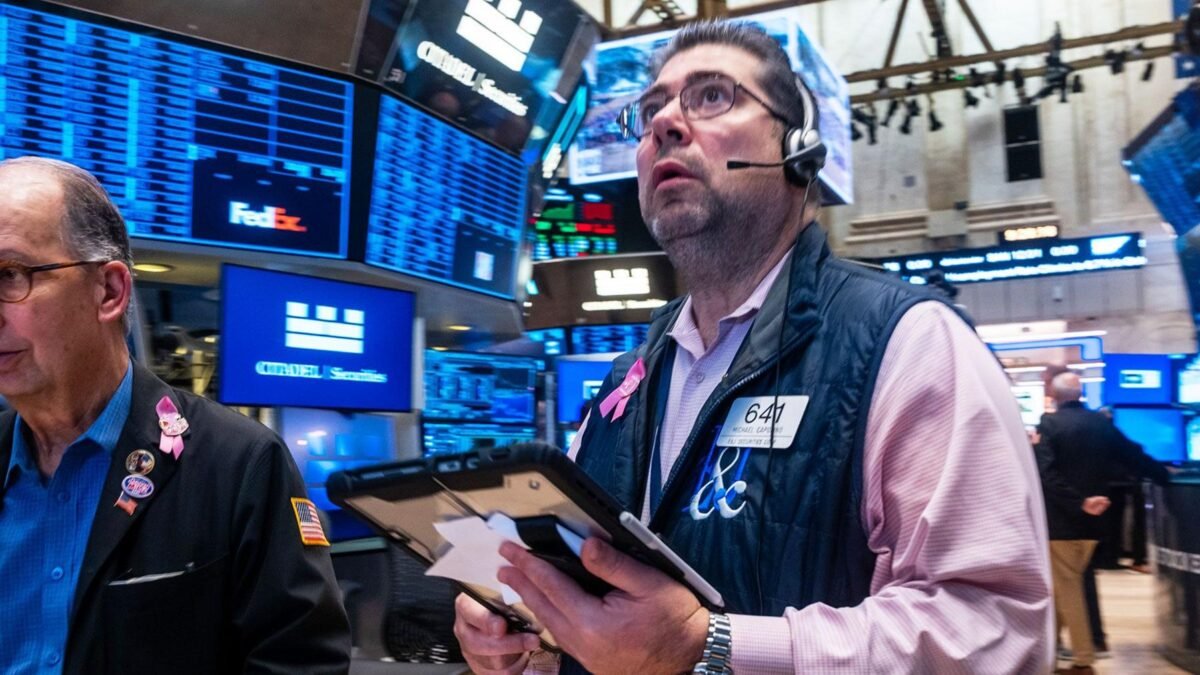
The AI stocks selloff that rippled through global markets this week has a clear political trigger: sweeping Democratic gains in the US midterm elections, which handed the party full control of Congress. The Nasdaq, home to tech giants including Alphabet, Nvidia, Meta and Apple, saw the steepest declines on Thursday as investors digested the results.
The reaction stems from a wave of Democratic campaigns that directly challenged the unchecked expansion of data centres—the physical backbone of the artificial intelligence industry. Several winning candidates made local opposition to these facilities a central plank of their platforms.
Data centre backlash turns electoral

While the Trump administration has championed AI development, many Democratic contenders tapped into grassroots unease about the energy and water consumption of data centres, as well as the noise, land use and disruption they bring. A Gallup poll from May found that 71% of Americans would oppose a data centre being built in their community—a higher share than the 53% who said the same about a nuclear power station.
James Talarico, who won a Senate seat in traditionally Republican Texas, framed the issue as one of balance. He said that while America’s AI leadership should be protected, the country still needs to grapple with how the technology affects work and children’s education, and that clear, consistent laws for businesses are needed to protect Americans.
Texas also elected a Democratic governor, Gina Hinojosa, who campaigned against data centres and pledged a moratorium on new construction. Her victory could create a long-term obstacle for Elon Musk, the tech billionaire who has shifted large parts of SpaceX and Tesla’s operations to the state and who spent nearly $450m backing Republican campaigns in these midterms.
Investor nerves extend beyond politics
For some time, concerns have been building that the AI boom may not deliver the returns investors expect. Since ChatGPT’s release in late 2022, money has poured into chipmakers, networking infrastructure, data centres and energy suppliers, driving tech valuations sharply higher. Goldman Sachs research estimates AI investments will reach $1 trillion in 2026 alone, and the sector has absorbed so much capital that borrowing costs have risen for other industries.
Yet doubts have mounted over whether those investments can produce the anticipated riches. Public comments from AI researchers questioning the safety of the technology—some even suggesting it could pose an existential threat to humanity—have added to speculation that tighter rules may be coming.
Tudor Brown, co-founder of British chip designer Arm Holdings, noted that stock values rest on future earnings rather than current ones. If the rewards look likely to be smaller than expected, some investors will sell. He described the valuations as having been inflated by expectations of almost infinite AI growth, followed by a period of panic, but argued there is a natural floor and that these companies are still making a lot of money.
Nandini Roy Choudhury of Future Market Insights said investors will now assess whether the political shift could lead to restrictions on data centre construction, energy consumption and AI deployment. She expects no immediate broad recovery in tech stocks, with traders likely to be more selective and favour companies with stronger balance sheets.
The selloff may have been set off by the midterm results, but the underlying anxiety about overvaluation was present well before election day. The question now is whether this is merely froth being removed from an exuberant market—or the first sign that the AI rush is a bubble nearing its burst.