Intel’s forthcoming Nova Lake desktop processors will require fresh motherboards built around the LGA 1954 socket, and the platform details are beginning to take shape. Nova Lake motherboards will mark the end of LGA 1851 and bring a new chipset family codenamed Nova Point, with the Z990 leading a lineup that also includes Z970, B960, W980, and Q970.
A new socket and a wider chipset family
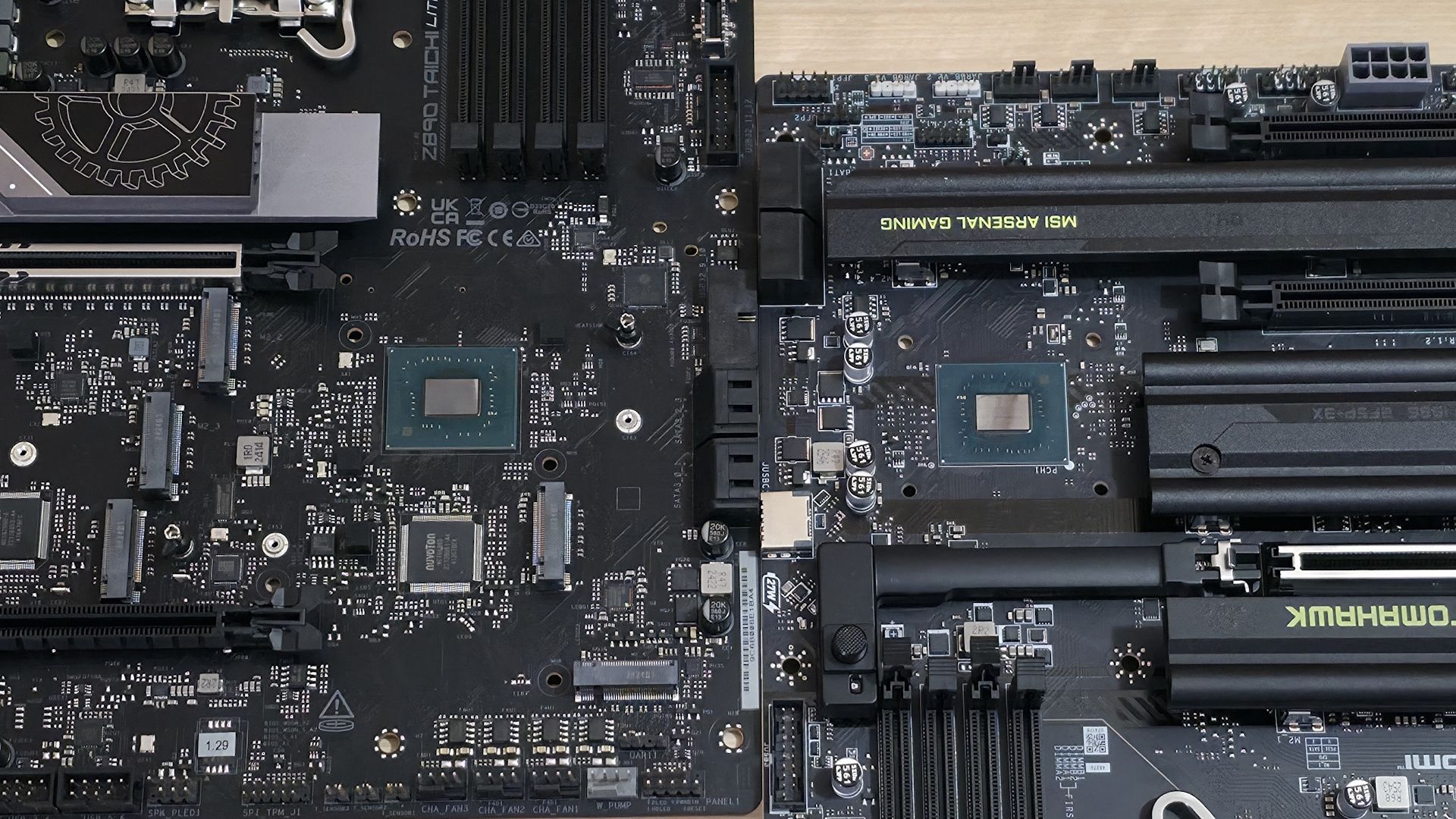
The LGA 1851 socket has reached its end with Core Ultra Series 2 chips such as the Core Ultra 7 270K Plus. Nova Lake’s higher I/O and power demands make a new socket necessary. Intel CEO Lip-Bu Tan has said Nova Lake is coming at the end of 2026, while rumors point to mass production in Q4 2026 and a launch in Q1 2027.
The chipset stack has been reshuffled. Z990 remains the flagship enthusiast option, offering more PCIe lanes, a DMI Gen5 x4 link, and 12 Gen5 lanes from the chipset. Z970 sits below it as a less expensive enthusiast part, reportedly built on the same silicon as B960. It allows CPU multiplier overclocking but not BCLK adjustment, and it carries fewer ports and lanes than Z990. B960 covers mainstream builds, while W980 and Q970 serve workstation and corporate segments. Noticeably absent is an H910 entry-level platform.
What Nova Point changes under the hood
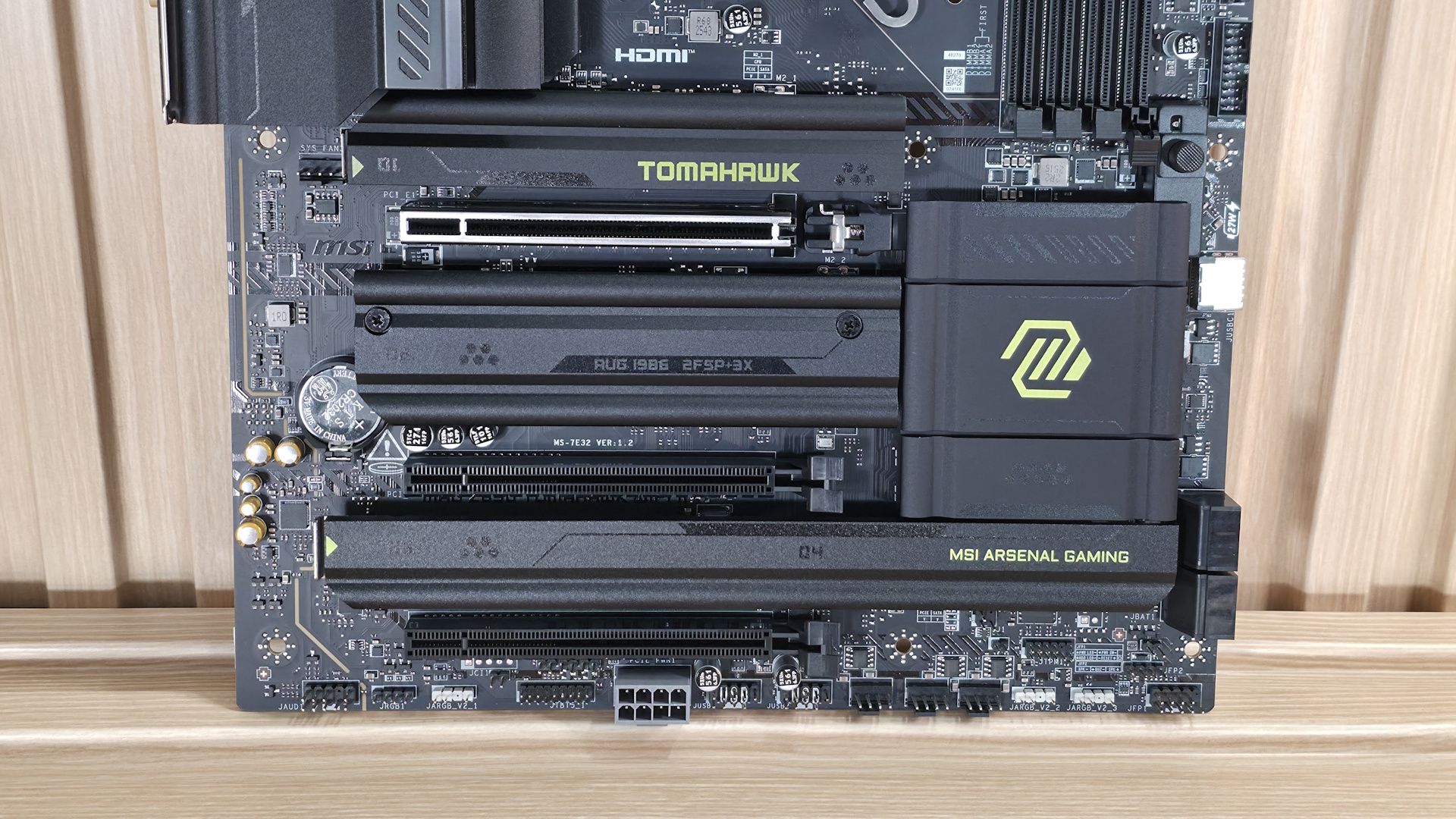
The Nova Point package itself is smaller than Z890: 600 mm² versus 658 mm² for the package, and a die measuring 72.5 mm² (11.15 x 6.5mm) compared with 92.9 mm² (11.15 x 8.33mm), roughly 22% smaller. Base power rises to 7.9 W from 6 W, with a maximum of 14 W while working. That higher power density is said to explain rumored active-cooling guidelines for the chipset, particularly on high-end boards with more lanes and bandwidth to support.
Memory support takes a jump. The platform’s base memory speed is DDR5-8000, up 800 MT/s over the Arrow Lake refresh. Reaching that speed with a new kit will cost at least $700 from a reputable brand, so the cost of entry is steep unless existing DDR5 can be reused. Slower memory will run, but it may create a performance ceiling depending on the workload.
PCIe 5.0 and Thunderbolt 5 expand
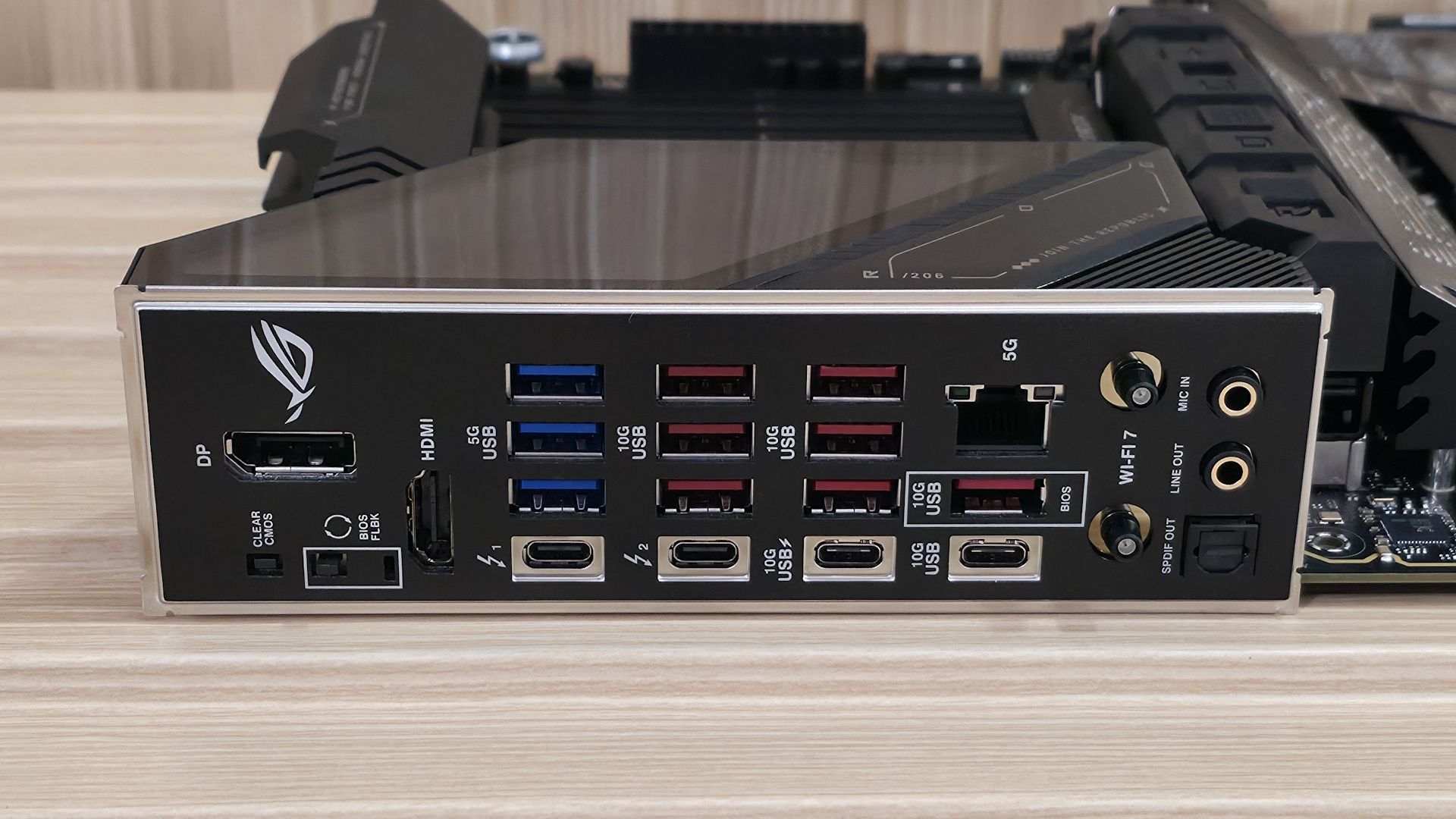
Nova Lake processors are said to provide 36 PCIe Gen5 lanes: 16 for graphics, eight for storage, eight reserved for Thunderbolt 5 controllers, and four for the DMI link. The chipset adds 12 dedicated PCIe 5.0 lanes on Z990, allowing board makers to include multiple PCIe 5.0 NVMe slots without sharing bandwidth from the primary graphics slot or diverting USB4 bandwidth. In theory, five PCIe 5.0 M.2 sockets can operate without sharing lanes among slots and drives, a meaningful upgrade over Z890.
Thunderbolt 5 should appear more often, typically through an Intel JHL9580 controller. It offers 80 Gbps bidirectional or up to 120 Gbps in a single-direction boost mode, and supports DisplayPort 2.1, USB4, and USB Power Delivery. Networking will likely center on 2.5- to 5GbE Realtek and Killer chips, with 10GbE handled by Marvell AQtion controllers on premium boards. Wi-Fi 7 is expected across most SKUs, with MediaTek, Intel, and Realtek supplying chips; faster 320 MHz support will be reserved for higher-end models.
Boards on the way, pricing unclear
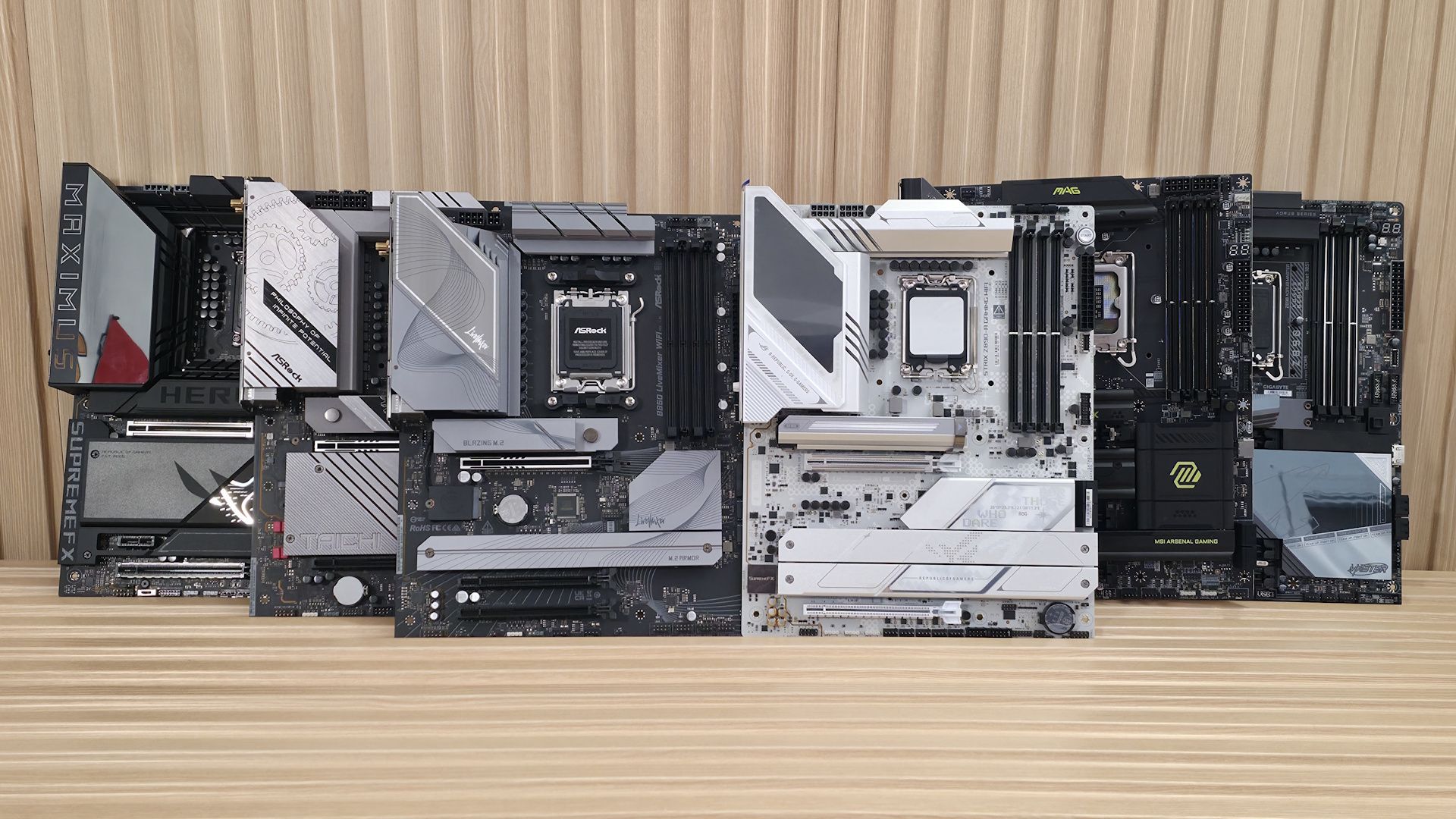
Leaks from the Eurasian Economic Union database, reported via Videocardz, list 24 Gigabyte SKUs, including Aorus Xtreme, Aorus Master in three variants, six Aorus Pro and Elite models, rear-connect Stealth options, Eagle boards, and wood-accent Aero models. ASRock shipping records, reported via Club386, point to six models including Taichi, Taichi Creator, Steel Legend Wi-Fi, Pro RS Wifi, and Z990 Challenger, with no Micro ATX, Mini-ITX, Z970, or B960 boards visible at the outset. Asus and MSI have not leaked details, though their usual ROG, ProArt, TUF, Prime, MEG, MPG, and MAG families are expected.
Pricing has not been listed. Given the added PCIe 5.0 bandwidth, copper requirements, and hardware upgrades, most SKUs are likely to cost more than previous-generation boards, or at best hold steady. For buyers who want the most PCIe 5.0 storage and Thunderbolt 5 connectivity, the platform is built for those needs. Anyone with a capable system may prefer to wait for official lineups, performance results, and prices before committing.