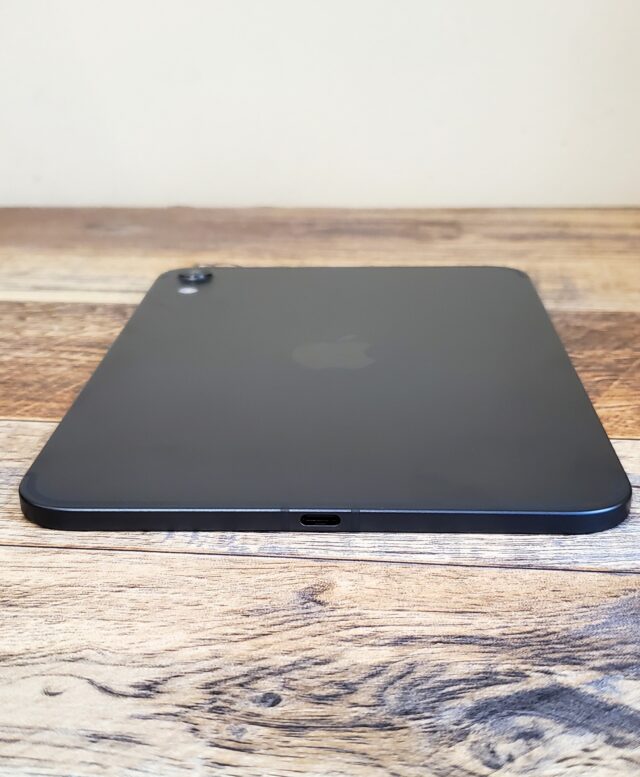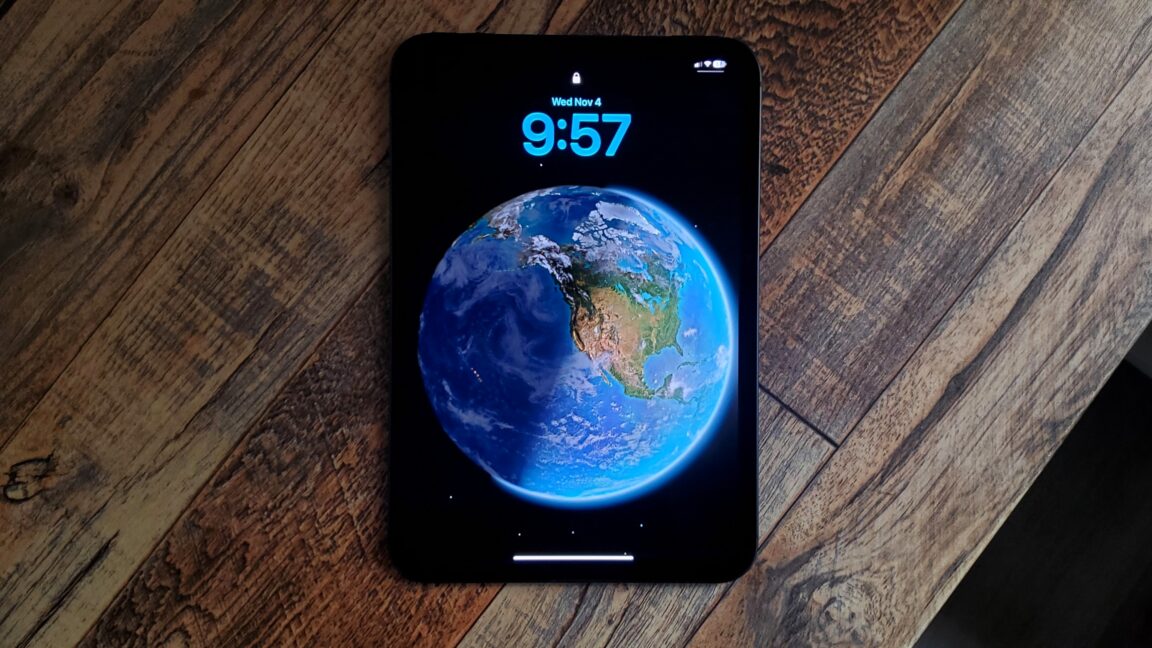
The iPad Mini 2026 review lands at a moment when Apple’s smallest tablet has become notably more capable, yet also harder to justify on price alone. The new model starts at $699 for 128GB, only $50 below the 11-inch iPad Air with an M4 chip. That tension between improved hardware and a higher entry point runs through the entire device.
A display that finally feels premium
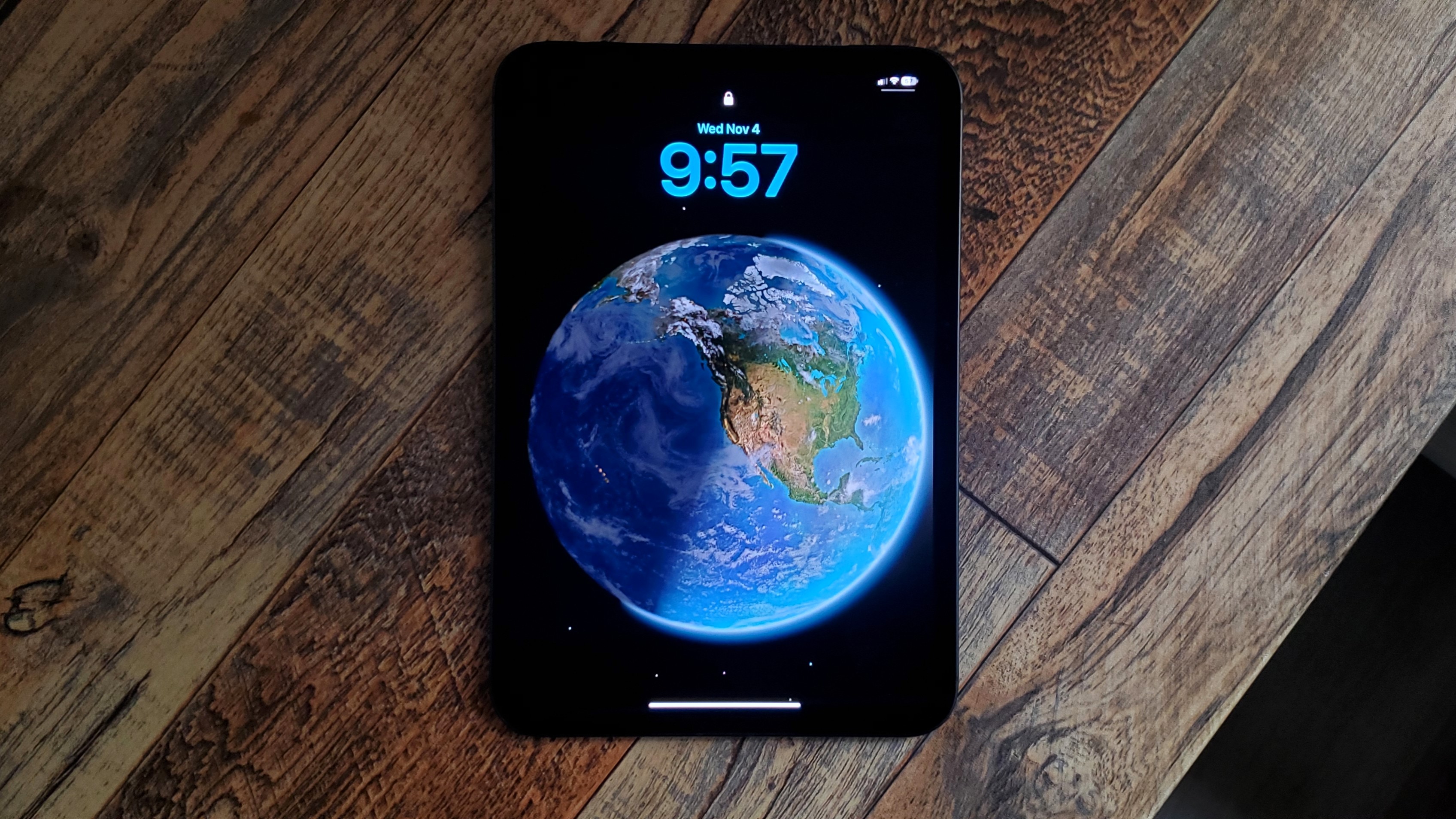
The headline change is an 8.5-inch OLED panel, up from the previous model’s 8.3-inch IPS screen. The extra 0.2 inches is modest on paper, but on a tablet this compact it creates room for photos, video, and long documents to breathe. It also makes split-screen work less cramped, since two windows have more space to share.
Apple reduced the bezels by 24 percent, which let the company fit the larger display into a slightly smaller chassis. The 2026 Mini measures 7.69 × 5.22 × 0.21 inches and weighs 0.56 pounds, compared with 7.69 × 5.3 × 0.25 inches and 0.65 pounds for the 2024 version. The result is a cleaner front face that looks more current than the outgoing model.
The OLED screen has a resolution of 2316 × 1512 at 326 pixels per inch. Apple claims full-screen brightness of up to 600 nits, versus 500 nits on the prior Mini, and peak HDR brightness of 1,200 nits with a 2,000,000:1 contrast ratio. Those figures matter because media consumption remains one of the strongest reasons to buy a tablet this size, and the Mini now handles HDR content with more authority.
Where the display still trails
Refresh rate stays at 60 Hz. A 120 Hz panel remains exclusive to the iPad Pro, and while that difference is less pronounced on a smaller screen, scrolling through long documents will not look as fluid as it does on Apple’s top-tier tablet. Apple has also pointed to OLED’s faster response times, but independent measurement using Blur Busters’ MPRT Indicator put the Mini at roughly 17 ms, in line with what a 60 Hz IPS display would produce. Anyone who needs a high-refresh screen should still look at the Pro lineup.
One feature carried over from the iPad Pro is optional nano-texture glass, which is designed to cut glare. It adds $100 and is available only on the 256GB and 512GB configurations.
A current-generation chip in a small body
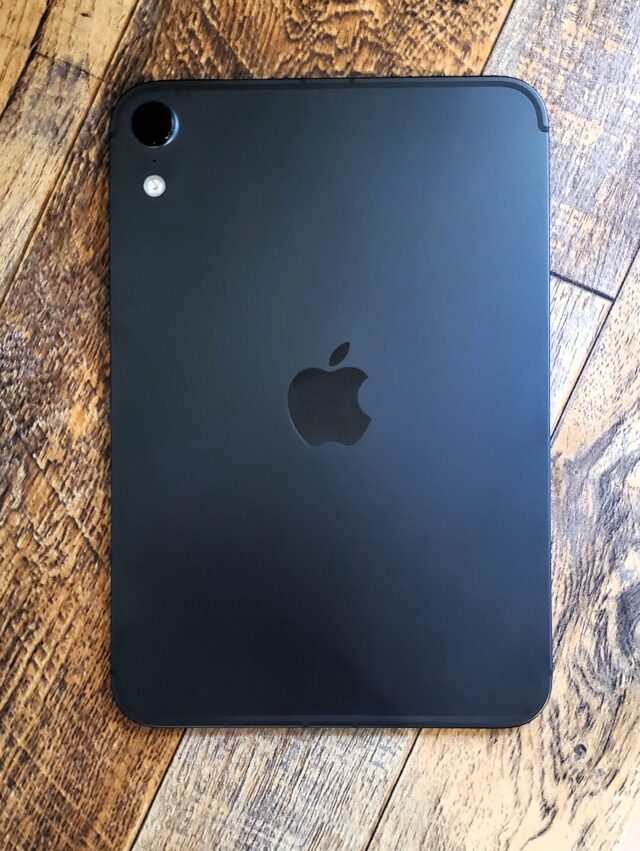
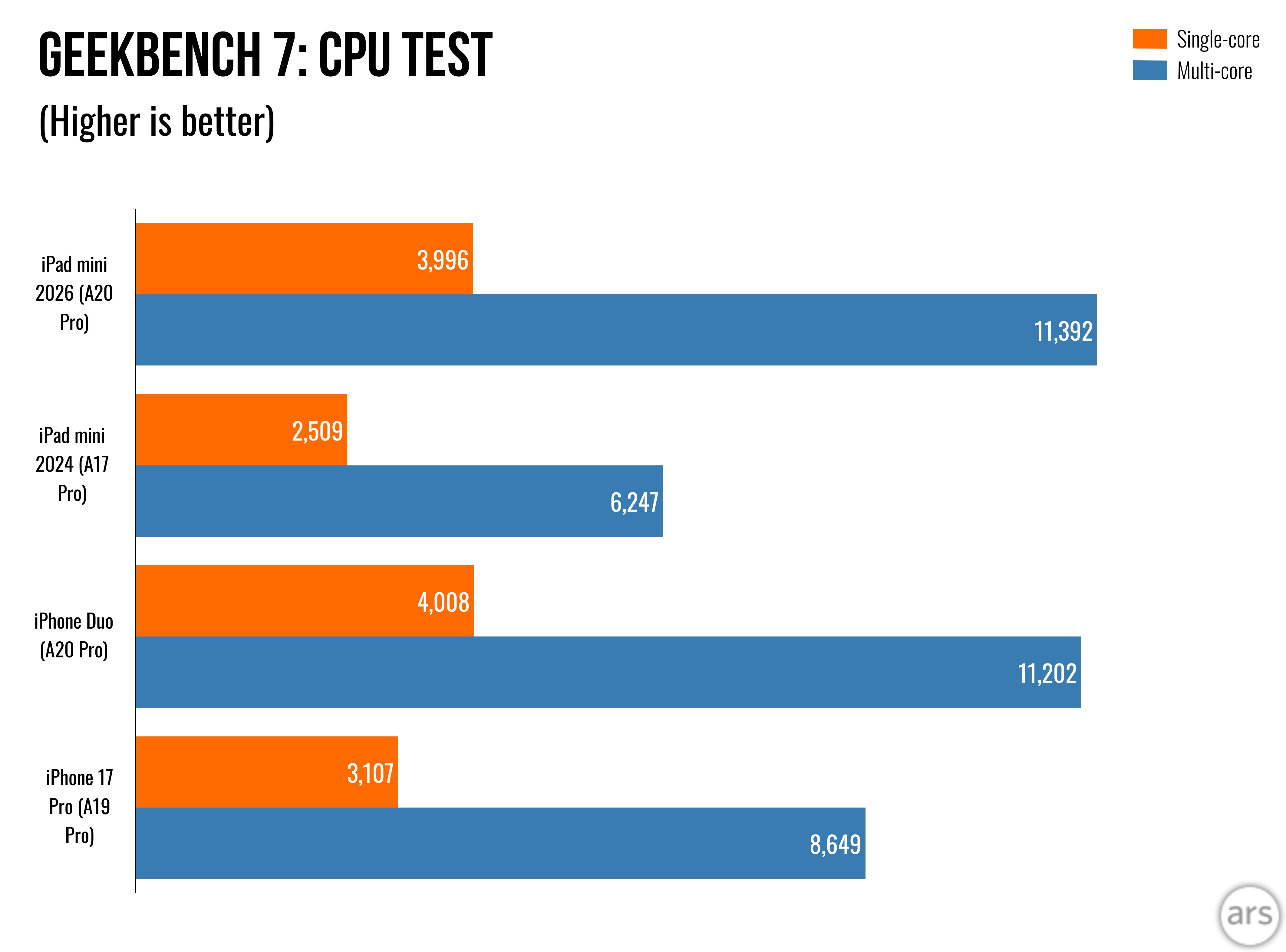
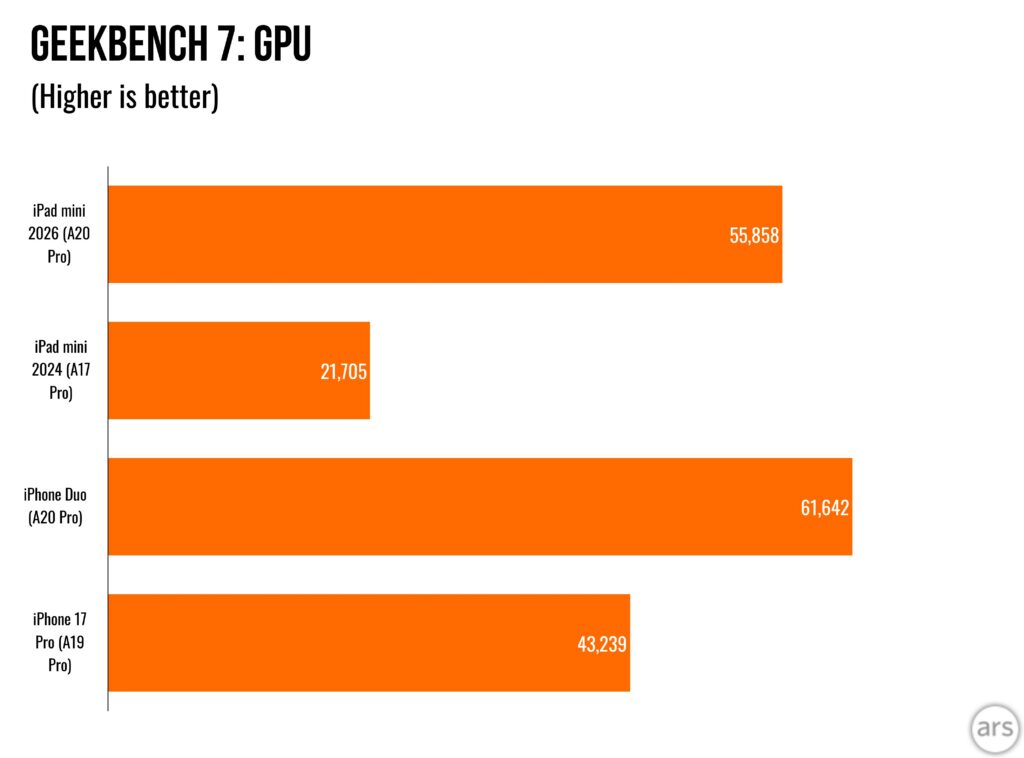
Last year’s Mini shipped with a chip that was already a generation old. This time Apple has used the A20 Pro, a 2-nanometer processor that debuted in the iPhone 18 Pro. Compared with the A17 Pro in the 2024 Mini, the new chip offers up to 60 percent faster performance and 50 percent more memory bandwidth, which particularly benefits graphics work.
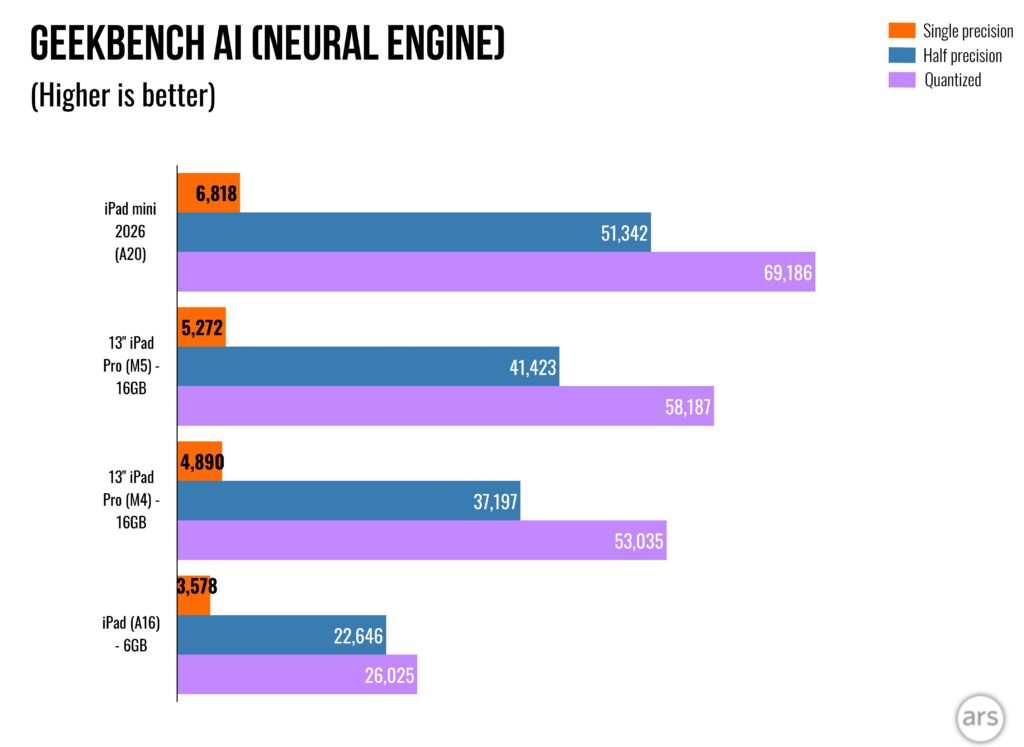
The 512GB model tested also steps up from five CPU cores to six and doubles the number of 16-core Neural Engines from one to two. That should help with on-device AI tasks such as generation. In practice, editing, light video editing, and running many apps at once all felt smooth. The Mini is now clearly more powerful than the standard iPad 11 and its A16 chip, though the iPad Pro with M5 and the iPad Air with M4 remain better suited to demanding work like video editing and 3D rendering.
Apple Intelligence features are supported, including generative tools for removing objects from photos, changing perspective, and extending borders. Those tasks took roughly 20 seconds on the 512GB Mini, about the same as on the iPhone 18 Pro. Siri AI remains in beta and was not part of this review.
Speakers, durability, and connectivity
The Mini is surprisingly loud for its size. Two woofers aim to deliver more volume and stronger bass than before, while a pair of custom tweeters sit between the glass and aluminum enclosure to improve high-frequency clarity. Dialogue remained easy to follow even with background noise, and music playback surpassed expectations for a tablet this small. There are no visible speaker holes in the chassis.
That design choice helped the Mini become the first iPad with an IP67 rating. The Ingress Protection rating means the device is dust-tight and protected against temporary immersion in water, according to the International Electrotechnical Commission.
Wireless upgrades include Wi-Fi 7, Bluetooth 6, and Thread support through Apple’s N1 networking chip. Cellular versions use the C2 modem that Apple introduced in the iPhone 18 Pro and iPhone Duo. Battery life matches the previous generation despite the smaller body and larger screen, and the tablet now supports fast charging.
Camera changes and small trade-offs
The front and rear cameras remain 12 MP, but the front-facing camera has moved from a short side to a long side. That makes portrait orientation place the user off-center during video calls, while landscape use becomes awkward when holding the tablet on the go. The change works better when the Mini is propped on a stand.
The rear camera gains an Adaptive True Tone flash that Apple positions as a document-scanning aid. When the Camera app recognizes a piece of paper or a book, it adjusts which LEDs fire to reduce shadows and improve text clarity. In testing, the tablet quickly identified documents and offered a Scan Document option that captured just the page. It is a niche feature, but a useful one when needed.
The price problem
The 2026 Mini is a much more complete tablet than its predecessor. The OLED screen, current chip, stronger speakers, and IP67 rating make it feel less like a compromise. Yet the starting price of $699 places it uncomfortably close to the 11-inch iPad Air, which offers a more powerful M4 processor and a larger IPS display. The 512GB Mini tested costs $999.
For buyers who mainly want the smallest possible iPad for streaming, reading, and light productivity, the Mini now